 EN
EN

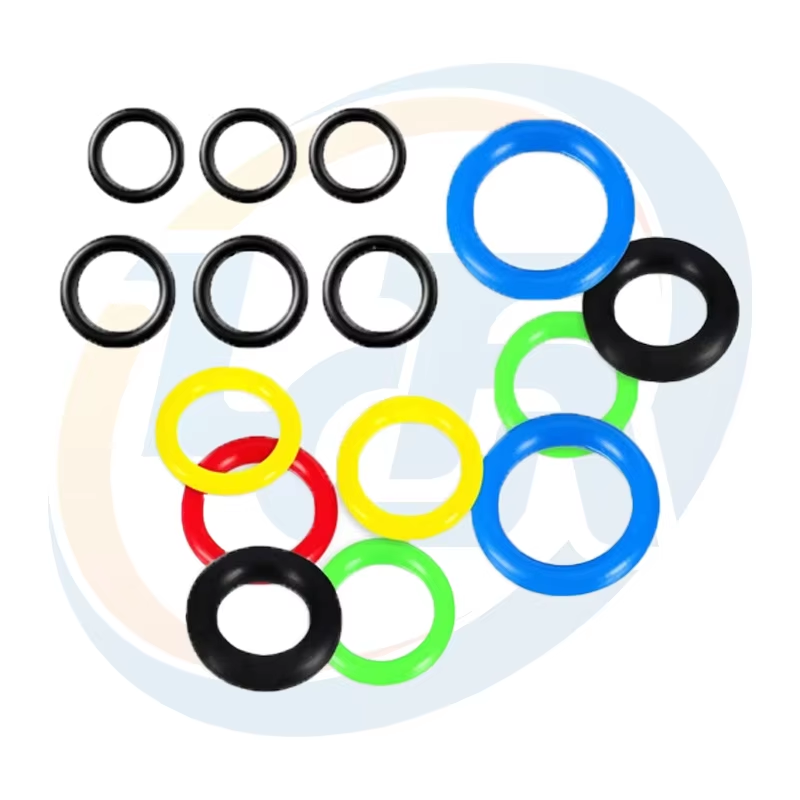
An O seal ring, commonly referred to as an O-ring, is a donut-shaped elastomer ring designed to prevent liquid or gas leakage between two mated surfaces. Its primary function is to create a reliable, reusable static or dynamic barrier across high-pressure hydraulic cylinders, pneumatic valves, fluid pumps, pipe flanges, and medical devices. Despite its simple geometry, an O seal ring functions as a highly engineered seal, where precise elastomer compounding, hardness selection, and groove design determine long-term operating life.
How an O Seal Ring Functions Under Pressure
An O seal ring seals through initial mechanical compression combined with system pressure self-energization. Upon installation into a machined gland, the ring experiences a controlled cross-sectional compression, typically ranging from 15% to 30%. This squeeze creates an initial seal against both contact surfaces. As fluid or gas system pressure rises, it forces the elastomeric ring against the low-pressure wall of the groove, increasing surface contact stress and sealing integrity. Maintaining elasticity over extended operational periods requires selecting compounds with low compression set properties.
Material Selection Criteria for Industrial O Seal Rings
Elastomer compound selection determines chemical compatibility, thermal limits, and physical durability. Nitrile (NBR) serves as the industry baseline for petroleum oils, hydraulic fluids, and fuels across operating temperatures from -30°C to 100°C. EPDM excels in steam, hot water, and weather exposure, though it remains incompatible with petroleum lubricants. Fluorocarbon (FKM) provides broad chemical resistance and thermal stability up to 200°C for aggressive solvents and chemicals. Silicone (VMQ) delivers extreme temperature flexibility from -60°C to 200°C for food processing and medical equipment. Hardness typically ranges from 50 to 90 Shore A, balancing sealing compliance against high-pressure extrusion resistance.
Sizing Standards and Dimensional Specifications
Industrial O seal rings adhere to international sizing standards to ensure cross-supplier interchangeability and precise gland fitting. The AS568 standard serves as the primary standard in North America, utilizing a dash-number classification system corresponding to specific inner diameters and cross-sections. Internationally, ISO 3601 defines metric dimensional frameworks along with gland design tolerances. Specifying an O seal ring requires confirming the standard size code, exact metric or inch dimensions, elastomer compound, and Shore A durometer to ensure proper gland compression prior to installation.
Primary Industrial Applications and Operating Environments
O seal rings provide versatile sealing across static and dynamic equipment configurations. In hydraulic systems, they seal piston rods, cylinder heads, and valve manifolds under high operating pressures. Pneumatic circuits utilize low-friction elastomer compounds to seal moving spool valves and air actuators. Chemical processing and fluid transfer systems specify FKM or PTFE-coated O-rings to seal pump housings, pipe flanges, and metering instruments. Matching compound chemistry, Shore hardness, and groove dimensions to operating temperature and media prevents premature fluid bypass.
Application Example: Custom NBR O Seal Ring Integration in Hydraulic Valves
A precision hydraulic valve manufacturer required an integrated O seal ring design to eliminate external flange gaskets and prevent fluid bypass under high impulse pressure. The engineering team selected a 70 Shore A NBR compound, calculated gland dimensions to achieve a 20% radial compression rate, and specified smooth tool surface finishes along the groove walls. Qualification testing confirmed zero fluid leakage across extended pressure cycles, allowing the manufacturer to streamline subassembly procedures, reduce component counts, and ensure consistent field performance.
Frequently Asked Questions
What is the primary difference between an O seal ring and a gasket?
An O seal ring is a circular elastomer ring with a round cross-section designed to compress inside a machined groove, whereas a flat gasket seals between two broad, planar surfaces without requiring a dedicated retaining groove.
What factors determine the operational lifespan of an O seal ring?
Service life depends on fluid compatibility, operating pressure, temperature range, correct radial squeeze, and compression set resistance. Selecting the correct compound prevents premature swelling, hardening, or extrusion failure.
Can an O seal ring be reused during equipment maintenance?
Static O seal rings may be reused if they show no signs of flattening, swelling, cracking, or permanent compression set. However, replacing O-rings during routine maintenance is standard industry practice to ensure zero fluid bypass.
Table of Contents
- How an O Seal Ring Functions Under Pressure
- Material Selection Criteria for Industrial O Seal Rings
- Sizing Standards and Dimensional Specifications
- Primary Industrial Applications and Operating Environments
- Application Example: Custom NBR O Seal Ring Integration in Hydraulic Valves
- Frequently Asked Questions


