 EN
EN

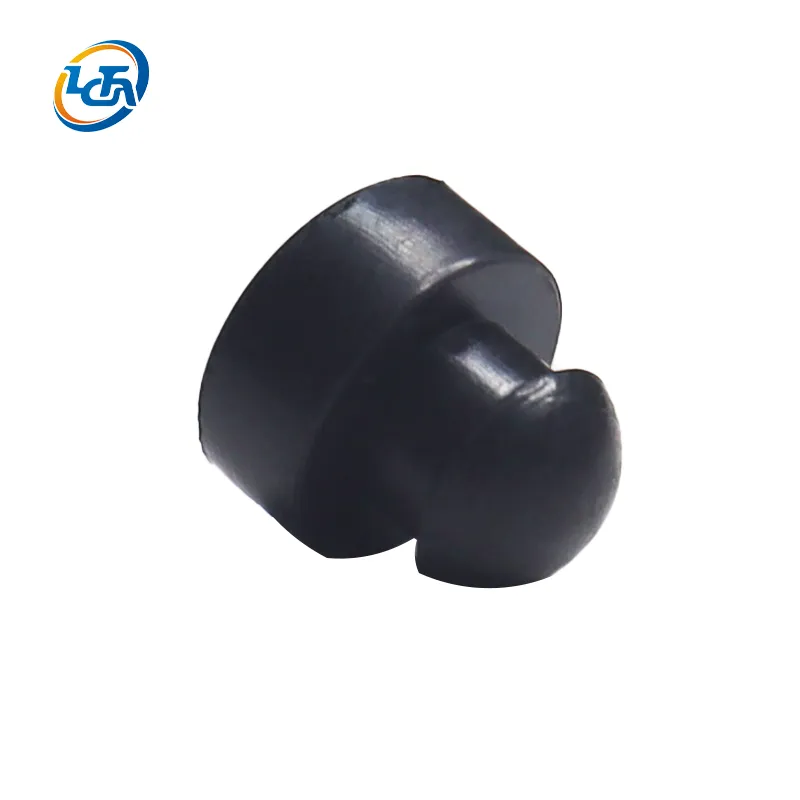
Understanding Chemical Resistance Requirements for Rubber Plugs
When rubber plugs are used to seal containers, cap pipe ends, or protect threaded ports in chemical processing environments, standard off-the-shelf products may not provide the required level of chemical resistance. Different chemicals interact with rubber materials in distinct ways: some cause swelling, others lead to hardening and cracking, and certain aggressive media can completely degrade the elastomer within hours. For industrial buyers, the question is not simply whether rubber plugs can be customized, but rather how to specify the right material and design parameters to achieve reliable chemical resistance for their particular application. Customization begins with understanding the chemical environment, including the type of media the plug will contact, the concentration levels, the exposure temperature, and whether contact is continuous or intermittent. With this information, a capable rubber manufacturer can recommend an appropriate base elastomer and, if necessary, adjust the compound formulation to enhance resistance to specific chemicals. NBR, EPDM, and FKM represent three commonly used material families, each offering different chemical resistance profiles that determine their suitability for particular industrial environments.
Material Selection: NBR, EPDM, and FKM for Chemical Environments
Selecting the right material for a custom rubber plug starts with understanding how each elastomer family performs against different chemical classes. Nitrile rubber (NBR) provides excellent resistance to petroleum-based oils, fuels, and greases, operating effectively in a temperature range from minus 30 degrees Celsius to 100 degrees Celsius. This makes NBR plugs suitable for hydraulic system ports, fuel tank caps, and oil reservoir seals. However, NBR has limited resistance to ketones, esters, and strong oxidizing chemicals. Ethylene propylene diene monomer (EPDM) rubber resists water, steam, polar solvents, and many dilute acids and alkalis, with an operating range typically extending to 120 degrees Celsius. EPDM plugs are commonly specified for water treatment equipment, cooling system components, and outdoor electrical enclosures. Fluoroelastomer (FKM) offers the broadest chemical resistance of the three, withstanding aggressive fuels, aromatic hydrocarbons, chlorinated solvents, and concentrated acids at temperatures up to 200 degrees Celsius. The tradeoff is that FKM costs significantly more than NBR or EPDM and may not be necessary for applications involving only mild chemical exposure. Buyers should request chemical compatibility data for the specific media, concentration, and temperature range of their application before confirming a material choice.
Custom Design Factors Beyond Material Selection
Chemical resistance is not only about material choice; the physical design of a rubber plug also affects its performance in chemical environments. Wall thickness must be sufficient to prevent permeation of aggressive chemicals through the plug body, but excessive thickness can make installation difficult in tight spaces. The plug's sealing surface geometry, whether ribbed, tapered, or flanged, determines the contact pressure distribution and the effectiveness of the seal against liquid or gas ingress. Surface finish matters as well: a smooth, defect-free surface reduces the area available for chemical attack and facilitates cleaning in hygienic applications. Hardness, measured in Shore A units, should be selected based on the required interference fit and the pressure the plug must withstand; plugs used in pressurized systems may need higher hardness values, typically 70 Shore A or above. For applications involving repeated insertion and removal, abrasion resistance and tear strength should also be considered during the compound formulation stage. A manufacturer with the ability to design and produce custom molds can optimize all of these parameters for the specific chemical environment, rather than forcing the buyer to compromise with a standard product.
Compound Formulation Adjustments for Enhanced Resistance
Beyond selecting the base elastomer family, rubber compounders can adjust the formulation to improve chemical resistance for specific applications. The choice of filler system, for example, affects permeation rates and swelling behavior. Carbon black fillers generally provide better resistance to swelling than mineral fillers in oil-exposed applications, while some specialty mineral fillers improve acid resistance. The crosslink density of the vulcanization system also influences chemical resistance: higher crosslink density typically reduces swelling by creating a tighter polymer network that restricts solvent penetration. Plasticizers, which are added to improve processing and adjust hardness, must be carefully selected because they can be extracted by certain chemicals over time, leading to shrinkage and hardening of the plug. Antioxidants and antiozonants protect the polymer from degradation caused by reactive chemical species and environmental exposure, extending the plug's service life. A knowledgeable rubber manufacturer will have developed proprietary compound formulations for common chemical environments, and buyers should inquire about the availability of application-specific compounds rather than assuming that any NBR or FKM plug will perform identically.
Application Example: Plug Selection for an Industrial Chemical Container
Consider a manufacturer of industrial cleaning equipment that needs rubber plugs for the drain ports of stainless steel chemical mixing tanks. The tanks will contain a cleaning solution composed of a mild alkaline detergent, water, and a small percentage of isopropyl alcohol at operating temperatures between 20 and 60 degrees Celsius. The plugs must create a watertight seal at low pressure, withstand daily removal for tank cleaning, and maintain their dimensional stability over at least 12 months of service. After evaluating material options, the manufacturer works with a rubber supplier who recommends an EPDM compound with a Shore A hardness of 65 and a ribbed sealing surface design. EPDM is chosen because it resists the alkaline detergent and the alcohol content without significant swelling, unlike NBR which would degrade in contact with the polar alcohol component. The ribbed design provides multiple sealing points along the plug body, compensating for minor surface irregularities on the tank interior. The supplier provides accelerated aging test data showing less than 5 percent change in hardness and volume after 70 hours of immersion in a simulated cleaning solution at 60 degrees Celsius. This example demonstrates how matching material chemistry to the specific chemical environment leads to a reliable, long-lasting sealing solution.
Quality Verification and Supplier Evaluation
When sourcing custom rubber plugs for chemical resistance, verifying the supplier's technical capabilities is as important as specifying the correct material. Buyers should request that the supplier provide chemical compatibility test data for the proposed compound against the specific media that will be encountered in service. Immersion testing according to ASTM D471 or ISO 1817 measures changes in hardness, tensile strength, elongation, and volume after exposure to the test fluid under controlled temperature and duration, providing quantitative data rather than subjective compatibility ratings. A supplier operating under an ISO 9001 certified quality management system is more likely to maintain consistent compound formulations and batch-to-batch uniformity. The supplier's in-house mold design and fabrication capability ensures that custom plug geometries can be produced without relying on third-party tooling suppliers, which can introduce delays and quality variability. Buyers should also verify that the manufacturer can provide material certifications, including RoHS compliance declarations if the plugs are destined for regulated markets. Establishing these verification requirements at the inquiry stage helps buyers identify technically qualified suppliers and avoid producers who cannot substantiate their chemical resistance claims.
Frequently Asked Questions
Q: How do I determine which rubber material is compatible with my chemical application?
A: Start by listing the chemicals the rubber plug will contact, including concentration levels and maximum exposure temperature. Then request chemical compatibility data or immersion test results from your supplier for each candidate material. ASTM D471 and ISO 1817 are standard test methods that measure changes in a rubber's physical properties after fluid exposure. If your application involves a mixture of chemicals, ask whether the supplier can perform immersion testing in the actual process fluid rather than only in individual reference chemicals.
Q: Can a rubber plug be designed to resist both oil and water-based chemicals?
A: This is challenging because materials that perform well against oils, such as NBR, often have limited resistance to polar solvents and water-based chemicals, while EPDM handles water and polar media well but swells in oil. For applications involving both oil and water exposure, FKM may be the most practical choice because of its broad chemical resistance profile. Alternatively, a manufacturer may be able to develop a specialty compound that balances both requirements, though buyers should expect to invest in compound development and testing.
Q: What is the typical lead time for custom rubber plugs designed for chemical resistance?
A: Lead time depends on whether the plug can be produced using an existing mold or requires new tooling. If the geometry matches an existing mold and only the compound needs to be specified for chemical resistance, samples may be available within two to four weeks. New mold fabrication typically adds three to six weeks to the lead time. Buyers should discuss mold availability early in the inquiry process and confirm whether the supplier has a library of standard mold sizes that might accommodate the required plug dimensions without custom tooling.
Table of Contents
- Understanding Chemical Resistance Requirements for Rubber Plugs
- Material Selection: NBR, EPDM, and FKM for Chemical Environments
- Custom Design Factors Beyond Material Selection
- Compound Formulation Adjustments for Enhanced Resistance
- Application Example: Plug Selection for an Industrial Chemical Container
- Quality Verification and Supplier Evaluation
- Frequently Asked Questions


