EN
EN

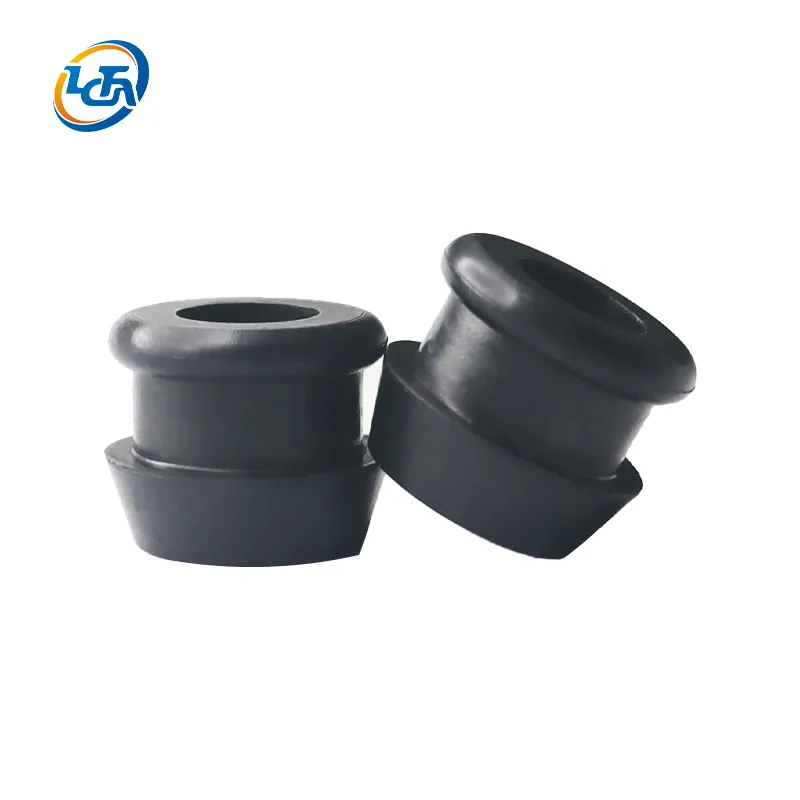
In modern industrial design, mechanical vibration and noise are more than just minor inconveniences; they are significant hurdles that can lead to premature component fatigue and system failure. While standard off-the-shelf components often provide a baseline solution, they frequently fall short when faced with specific environmental stressors or non-standard load requirements. A custom rubber bushing serves as a critical interface between moving parts, engineered specifically to absorb shock, reduce friction, and accommodate misalignment. By tailoring the physical and chemical properties of the elastomer to the specific application, engineers can resolve complex design dilemmas that generic parts simply cannot address.
Mitigating Excessive Vibration and Resonance Issues
One of the primary challenges in mechanical engineering is managing the harmonics and vibrations generated by motors, pumps, or heavy machinery. Standard isolation mounts may not have the correct dampening coefficient for a specific frequency, leading to resonance that can damage sensitive electronics or structural frames. A custom-engineered rubber bushing allows for the precise adjustment of dynamic stiffness. By selecting the optimal elastomer—such as high-grade Natural Rubber for superior resilience or Neoprene for balanced vibration control—designers can "tune" the bushing to cancel out specific vibration frequencies. This level of expertise in dampening ensures that energy is dissipated as heat within the rubber rather than being transmitted through the mechanical assembly, significantly extending the service life of the entire system.
Overcoming Space Constraints and Non-Standard Geometries
As industrial equipment becomes more compact and complex, the physical space available for protective components shrinks. Often, a standard cylindrical bushing is too bulky or does not fit the irregular housing of a specialized piece of equipment. Customization allows for the development of unique shapes, such as flanged, tapered, or eccentric designs, that fit perfectly into tight envelopes without sacrificing performance. Utilizing precise molding techniques, a custom rubber bushing can be manufactured to meet tight dimensional tolerances that align with unique hardware interfaces. This flexibility in geometry means that engineers no longer have to compromise their overall machine design to accommodate a standard-sized part; instead, the part is engineered to support the design.
Addressing Harsh Chemical and Thermal Environments
Standard rubber components often fail prematurely when exposed to extreme temperatures or aggressive industrial fluids. For instance, a generic bushing used in an outdoor automotive application might degrade quickly due to UV exposure and ozone, while one used in a food processing line might swell when in contact with animal fats or cleaning agents. Customization solves this by allowing for specific material compounding. Depending on the application, a rubber bushing can be fabricated from EPDM for excellent weather and heat resistance, or Nitrile (NBR) for applications requiring high oil and fuel resistance. By matching the polymer’s chemical "DNA" to the operating environment, the component maintains its structural integrity and flexibility, preventing the costly downtime associated with frequent seal and mount replacements.
Balancing Load Bearing Capacity with Flexibility
Finding the "sweet spot" between a component that is rigid enough to support a heavy load and flexible enough to allow for necessary movement is a common design struggle. If a bushing is too hard, it transmits too much vibration; if it is too soft, it may deform under load and lose its alignment. Through expertise in Durometer (hardness) selection, a custom rubber bushing can be produced in various Shore A ratings to meet specific deflection requirements. For heavy-duty industrial pivots, a harder compound (such as 80-90 Shore A) might be used to prevent excessive compression, while lighter-duty applications might benefit from a more compliant 50 Shore A compound. This tailored approach ensures that the bushing provides the necessary support while still allowing for the multidimensional movement required in complex mechanical joints.
Enhancing System Reliability Through Quality Manufacturing
The ultimate goal of any custom component is to increase the overall trustworthiness and reliability of the final product. Choosing a custom-manufactured rubber bushing means moving away from mass-produced parts that may have inconsistent material density or hidden structural flaws. High-quality manufacturing involves rigorous testing of tensile strength, elongation at break, and compression set. By adhering to international quality standards and providing traceable material certifications, manufacturers ensure that each bushing performs exactly as predicted in the design phase. This transparency in the production process—from raw material selection to final inspection—gives engineers the confidence that their custom solution will withstand the rigors of real-world operation without the risk of catastrophic failure.