EN
EN

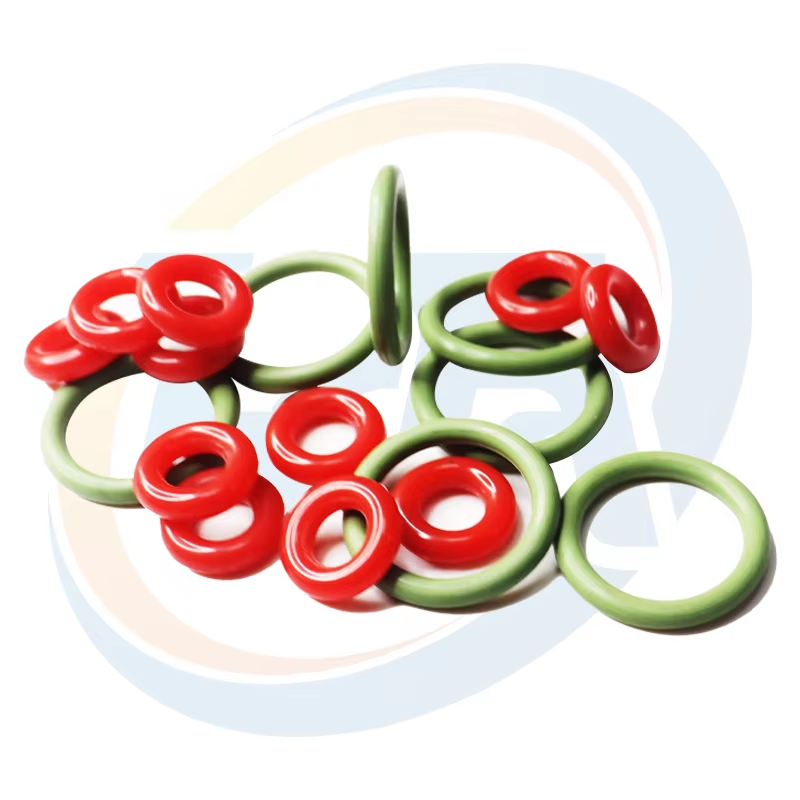
In the industrial sealing sector, selecting the ideal solution is rarely as straightforward as identifying a part number from a standard catalog. While standard seals cater to a broad range of general equipment, specialized industrial systems—such as high-pressure hydraulics or chemical processing lines—often encounter environmental rigors that lead to premature failure of off-the-shelf components. When a standard oring lacks the specific chemical resilience or the exact dimensional tolerances required for a high-stakes application, shifting toward a custom manufacturing approach becomes a strategic necessity to ensure long-term operational integrity.
Define Your Operating Environment and Media Compatibility
The foundation of securing a high-performance custom oring lies in a comprehensive analysis of its intended operating environment. Material science expertise is essential during this phase, as selecting an incompatible elastomer can cause the seal to swell, degrade, or become brittle within a very short timeframe. Professional procurement teams must identify the precise fluids or gases the seal will encounter. While Nitrile (NBR) is highly effective for general oil resistance, unique applications involving high-temperature steam or aggressive acids may demand advanced materials like FKM (Viton) or even FFKM (Perfluoroelastomer) to prevent system failure.
A thorough assessment of temperature ranges—including constant operating temperatures and potential thermal spikes—is equally critical. By narrowing down media compatibility and thermal requirements at the outset, engineers can prevent costly downtime and ensure the material retains its essential elasticity under stress.
Determine Precise Dimensions and Tolerance Requirements
Precision is the most critical factor in the world of custom sealing solutions. A custom oring is typically required when hardware designs do not align with standard AS564 or ISO 3601 groove dimensions. When initiating a custom build, it is vital to provide the Inner Diameter (ID) and the Cross-Section (CS) with extreme accuracy. However, technical success depends not only on the nominal size but on the specific tolerances achieved during production.
Advanced molding techniques allow manufacturers to maintain strict dimensional integrity, even for large-diameter rings. In dynamic applications where parts are in motion, friction and squeeze calculations are far more sensitive than in static setups. Providing a technical drawing of the gland (the groove where the seal sits) allows experts to calculate the exact stretch and squeeze percentages required to maintain a leak-free interface under varying pressures.
Select the Right Hardness and Physical Properties
A frequent oversight in the procurement of a custom oring is the failure to specify the correct Durometer, or material hardness. While a 70 Shore A hardness is standard for many applications, unique environments often demand specialized ratings. For high-pressure scenarios, a harder material (such as 90 Shore A) is often necessary to prevent "extrusion," a phenomenon where pressure forces the rubber into the minute gaps between metal components.
Conversely, applications involving low closure forces—such as delicate plastic housings—may require a softer 50 or 60 Shore A oring to establish a seal without risking damage to the hardware. Balancing tensile strength, elongation at break, and compression set is the technical "secret" to a durable seal. Relying on rigorous testing data ensures that the physical properties of the custom batch align perfectly with the theoretical requirements of the design.
Evaluate Manufacturing Methods: Molded vs. Vulcanized
The manufacturing method chosen for a custom oring significantly impacts both its cost-efficiency and its mechanical performance. For high-precision, high-volume, or complex geometries, Compression Molding or Injection Molding is considered the industry gold standard. This process involves creating a dedicated metal tool to the exact specifications of the part, resulting in a seamless ring with consistent physical properties throughout its entire structure.
For exceptionally large diameters or rapid prototyping where a seamless finish is less critical, Vulcanized Joining serves as a viable alternative. This method involves taking high-quality extruded cord, cutting it to a specific length, and bonding the ends using heat and pressure. However, for unique applications involving high vacuum levels or intense high-pressure cycling, molded solutions are generally recommended to eliminate the risk of a "weak point" at the joint.
Prioritize Quality Assurance and Certifications
Trust in custom manufacturing is built through rigorous verification and transparency. When sourcing a custom oring, it is essential to ensure the manufacturer adheres to international quality management standards. Leading suppliers maintain strict traceability for every custom batch, ensuring that the material used matches the specifications ordered. Depending on the industry, specific certifications may be required, such as FDA compliance for food and beverage, NSF for potable water, or UL recognition for electronic components.
A reliable manufacturing partner will provide a Certificate of Conformance (CoC) and material test reports upon request. This level of transparency guarantees that the custom oring received has been engineered to exact standards. In high-stakes sectors like aerospace or medical device manufacturing, the cost of seal failure is prohibitive, making the verification process as vital as the manufacturing itself.