 EN
EN

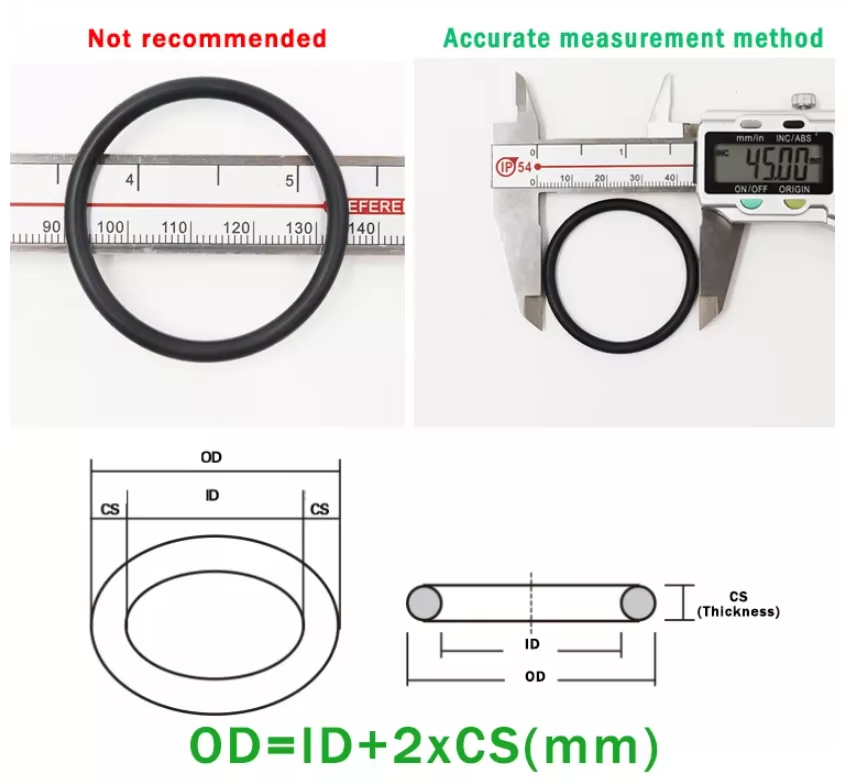
Industrial rubber seals prevent leakage by deforming under compression to fill the microscopic gaps between two mating surfaces, creating an continuous physical barrier that blocks the passage of fluids, gases, and external contaminants. This core working mechanism, known as squeeze or interference fit, provides reliable fluid containment across hydraulic power systems, pneumatic cylinders, industrial pumps, valves, and heavy-duty pipe connections.
How a Rubber Seal Blocks Leakage
When a seal such as an O-ring, X-ring, or custom gasket is installed into a machined groove and assembled, it undergoes a controlled compression—typically 15% to 30% for static sealing applications. This mechanical compression stores elastic energy within the rubber, forcing the seal firmly against both contacting metal surfaces. As system pressure builds, the fluid pushes the flexible seal against the low-pressure side of the gland. This auto-frettage effect increases the contact stress against the housing walls, enhancing the sealing barrier rather than defeating it. A material's elasticity and recovery, evaluated through compression set parameters, determine whether the seal retains this initial contact force over long-term operation or gradually relaxes and causes fluid loss.
Why Material Choice Decides Sealing Performance
Matching the correct elastomer to the operating media, temperature range, and environmental exposure is essential to preventing seal failure. Nitrile Butadiene Rubber (NBR) offers strong resistance to mineral oils, hydraulic fluids, and fuels across -30°C to +100°C, making it a standard choice for fluid power applications. Ethylene Propylene Diene Monomer (EPDM) excels against water, steam, weathering, and ozone in plumbing and outdoor equipment, though it degrades rapidly when exposed to petroleum products. Fluorocarbon Rubber (FKM) withstands aggressive chemicals and high temperatures up to 200°C, providing long-term stability in harsh chemical environments. Silicone provides flexibility across extreme temperatures from -60°C to +225°C, making it suitable where thermal stability and compliance are required over mechanical wear resistance.
Design Factors That Keep the Seal in Place
Proper gland design directly dictates seal service life and sealing integrity. Groove dimensions must maintain the compression ratio within specified boundaries, while the surface finish on mating components should stay within 0.4 to 1.6 micrometers Ra to ensure a tight dynamic seal without causing mechanical abrasion. Elastomer hardness, typically specified between 50 and 90 Shore A, balances initial squeeze against high-pressure extrusion resistance. Under high operating pressures, a seal that is too soft extrudes into the clearance gap, whereas an overly hard compound requires excessive assembly force and may fail to conform to surface imperfections. In dynamic machinery, adequate lubrication and wear resistance serve as secondary constraints against early failure.
Common Failure Modes and How to Prevent Them
Most premature seal leakage stems from identifiable mechanical or environmental factors. Compression set—the permanent deformation of rubber after extended stress—causes loss of contact force over time and is mitigated by choosing low-set elastomer formulations rated for the system's operating temperature. Chemical degradation, characterized by swelling, softening, or cracking, requires thorough chemical compatibility verification prior to material selection. Pressure extrusion, where high fluid forces push the rubber into the housing clearance gap, is prevented by using higher Shore hardness compounds or integrating anti-extrusion backup rings. Mechanical damage during installation, such as cuts and tears from sharp threads or unchamfered edges, can be minimized through proper lead-in chamfers, installation tooling, and pre-assembly lubrication.
Application Example: Stopping Leaks in a Hydraulic Power Unit
A industrial facility encountered recurrent oil leakage on the cylinder head seals of a hydraulic power unit operating at 15 MPa. The original seals, made from a standard 70 Shore A NBR compound, failed repeatedly within months due to pressure extrusion on the low-pressure side of the housing. The replacement process involved evaluating the precise gland dimensions, verifying fluid compatibility, upgrading the elastomer to an 80 Shore A NBR compound, and installing anti-extrusion backup rings on the high-pressure side. The re-engineered seal configuration maintained pressure without leakage during extended field operation, demonstrating how combining proper material selection with anti-extrusion design eliminates recurrent field failures.
Frequently Asked Questions
Why does my rubber seal leak after a few months?
Early seal failure is commonly caused by thermal compression set from exceeding compound limits, chemical swelling due to fluid incompatibility, or minor surface damage sustained during installation. Inspecting the failed seal's physical appearance helps identify the primary failure mode.
Can one rubber material seal all fluids?
No single rubber compound is compatible with all media. NBR is suited for petroleum oils, EPDM for steam and water, FKM for aggressive chemicals, and Silicone for extreme temperatures. Selecting a single material across different applications risks premature chemical degradation.
How do I know the right seal hardness?
A hardness of 60 to 70 Shore A is typical for standard static applications. High-pressure operating environments require harder compounds (80 to 90 Shore A) or backup rings to resist gap extrusion, while low assembly force requirements benefit from softer elastomers.


