EN
EN

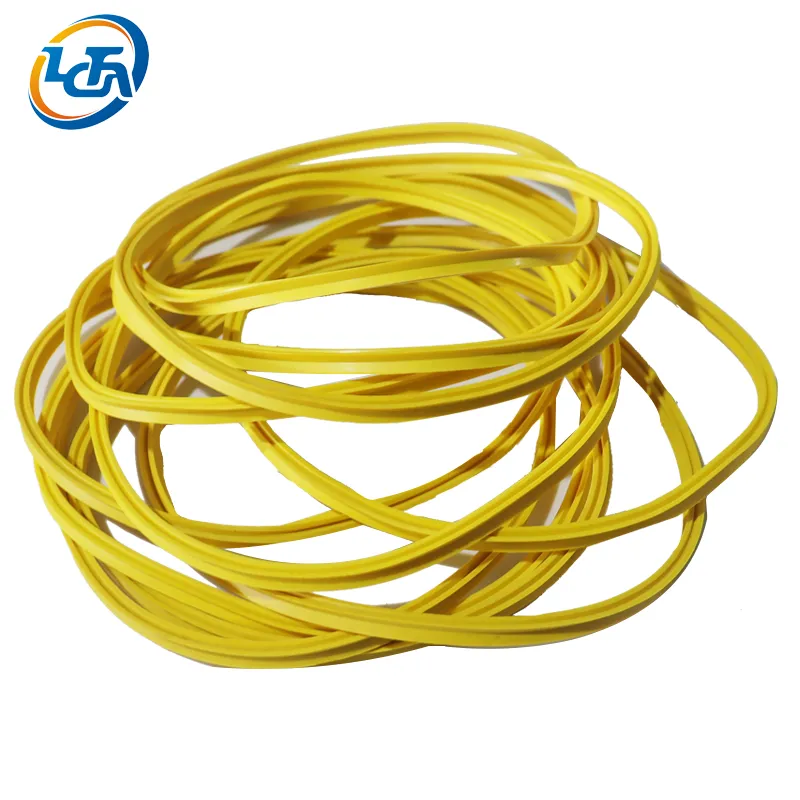
Understanding the Basic Structure of O Ring and X Ring
In the sealing industry, both O rings and xring products are widely used to prevent leakage in hydraulic systems, pneumatic equipment, automotive parts, and industrial machinery. Although they may appear similar at first glance, their structures and sealing performance are quite different.
An O ring has a simple circular cross-section. It is one of the most common sealing components because of its low cost, easy installation, and broad application range. Manufacturers often produce O rings in different elastomer materials such as NBR, FKM, EPDM, and silicone to meet various temperature and chemical resistance requirements.
An xring, also called a quad ring, has an X-shaped cross-section with four sealing lips. This design creates two sealing contact points on each side, improving sealing efficiency and reducing rolling or twisting during movement. Many manufacturers recommend xring products for dynamic sealing applications where stability and durability are important.
Sealing Performance Differences Between O Ring and X Ring
The main difference between an O ring and an xring lies in sealing performance. Traditional O rings create a single sealing line, which works well in many static sealing applications. However, under high pressure or repeated movement, O rings may experience deformation, rolling, or wear.
An xring provides multiple sealing contact points, helping distribute pressure more evenly. This design improves leak prevention and reduces friction during operation. In dynamic systems such as hydraulic cylinders or rotating shafts, an xring can often provide more reliable long-term sealing performance than a standard O ring.
From a manufacturer’s perspective, the xring structure also helps maintain lubricant retention. The grooves between the sealing lips can trap lubricating oil, reducing heat buildup and minimizing friction. This advantage makes xring products suitable for equipment operating at higher speeds or under continuous motion.
Material Selection and Manufacturing Considerations
Professional sealing manufacturers usually offer both O rings and xring products in several material options depending on the application environment. Common materials include nitrile rubber (NBR), fluorocarbon rubber (FKM), silicone, and EPDM.
For industrial equipment exposed to oil and fuel, NBR materials are often selected because of their excellent oil resistance and cost efficiency. FKM materials are preferred in high-temperature or chemically aggressive environments. Silicone materials are widely used in food-grade or medical applications because of their flexibility and temperature stability.
Manufacturing precision is also important. A high-quality xring requires accurate mold design and strict dimensional control to ensure consistent sealing performance. Compared with ordinary O rings, xring manufacturing can be slightly more complex due to the unique X-shaped profile. Reliable manufacturers usually perform strict quality inspections on surface finish, hardness, elasticity, and dimensional tolerance before shipment.
Friction and Service Life Comparison
Another important difference between O rings and xring products is friction performance. In dynamic applications, excessive friction may lead to faster wear, increased energy consumption, and shorter service life.
Because an O ring has a larger contact surface area, friction can increase during repeated movement. Under certain conditions, the O ring may twist or spiral inside the groove, especially in reciprocating systems. This issue may eventually cause seal failure or leakage.
The xring design helps reduce contact surface area while maintaining effective sealing pressure. Lower friction means smoother movement and less wear over time. As a result, many equipment manufacturers choose xring solutions for hydraulic pistons, pneumatic cylinders, and rotating equipment where long service life is required.
From practical manufacturing experience, xring seals are often considered more suitable for demanding industrial environments involving continuous motion, vibration, or pressure fluctuation.
Installation and Maintenance Differences
Although xring products provide several performance advantages, installation requirements are also important. O rings are relatively simple to install because of their basic round shape. They are commonly used in general maintenance applications where quick replacement is necessary.
An xring requires slightly more attention during installation to ensure the sealing lips are properly positioned inside the groove. Incorrect installation may reduce sealing efficiency or damage the seal. Professional manufacturers usually recommend proper lubrication and groove design to achieve optimal xring performance.
In maintenance terms, xring products may offer longer replacement intervals because of their improved wear resistance and reduced friction. This can help reduce equipment downtime and maintenance costs in industrial production environments.
Which One Should You Choose for Your Application?
Choosing between an O ring and an xring depends on the operating conditions of the equipment. For simple static sealing systems with moderate pressure and limited movement, O rings remain a cost-effective and practical option.
However, for dynamic applications involving reciprocating motion, rotation, high pressure, or frequent operation, an xring may provide better sealing reliability and longer service life. Many industrial manufacturers prefer xring products because of their anti-twisting performance, lower friction, and improved lubricant retention.
When selecting sealing solutions, it is important to work with an experienced manufacturer that can recommend suitable materials, dimensions, and designs based on the actual application environment. A reliable supplier can help ensure the sealing system performs efficiently and safely over the long term.
Conclusion
Both O rings and xring products play important roles in industrial sealing systems, but their structural differences directly affect sealing performance, friction characteristics, and service life. O rings are simple, economical, and widely used, while xring seals offer enhanced stability and improved dynamic sealing performance.
For manufacturers and equipment users seeking higher efficiency, reduced leakage risk, and longer operational life, xring solutions are becoming increasingly popular across hydraulic, pneumatic, automotive, and industrial applications. Understanding the differences between these two sealing products can help businesses choose the most suitable sealing solution for their equipment needs.
Table of Contents
- Understanding the Basic Structure of O Ring and X Ring
- Sealing Performance Differences Between O Ring and X Ring
- Material Selection and Manufacturing Considerations
- Friction and Service Life Comparison
- Installation and Maintenance Differences
- Which One Should You Choose for Your Application?
- Conclusion