 EN
EN

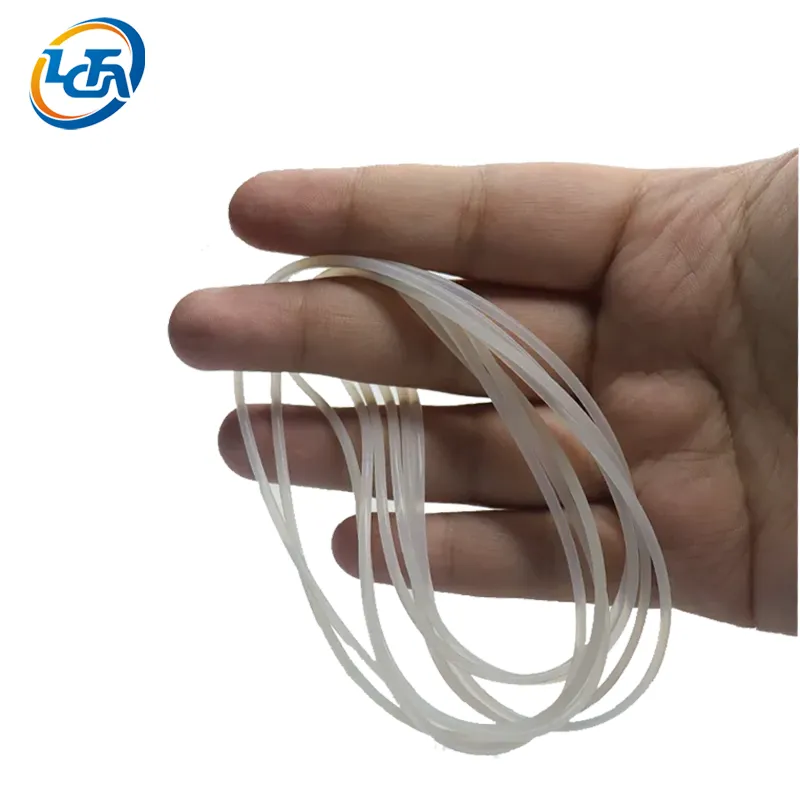
Understanding Rubber Ring Sealing in Pipe Systems
Selecting the right rubber ring for pipe sealing is a decision that affects the long-term reliability of plumbing systems, industrial fluid transport networks, and hydraulic assemblies. Rubber rings, most commonly manufactured as O-rings with a circular cross-section, create a seal by deforming within a groove between two mating surfaces, filling the microscopic gaps that would otherwise allow fluids or gases to escape. The effectiveness of this seal depends on four interacting factors: the chemical compatibility between the rubber material and the fluid being contained, the temperature range the ring will experience during operation, the pressure the seal must withstand, and the mechanical fit between the ring dimensions and the groove geometry. A rubber ring that works perfectly for a drinking water pipe may fail rapidly if installed in a hydraulic oil line, not because of a manufacturing defect, but because the material was not matched to the application. Understanding these selection factors helps buyers and maintenance engineers avoid costly seal failures and the downtime they cause.
Material Selection for Pipe Sealing Rubber Rings
The base elastomer material is the single most important decision when specifying a rubber ring for pipe sealing. EPDM rubber is the standard choice for water, steam, and polar solvent applications because of its excellent resistance to hot water, weathering, and ozone, with a typical operating temperature range from minus 40 degrees Celsius to 120 degrees Celsius. EPDM rings are widely used in potable water systems, HVAC piping, and outdoor plumbing connections. NBR rubber, with its strong resistance to petroleum-based oils, fuels, and greases, is the preferred material for hydraulic systems, fuel lines, and lubricating oil circuits, operating effectively from minus 30 degrees Celsius to 100 degrees Celsius. Silicone rubber, capable of operating from minus 60 degrees Celsius to 200 degrees Celsius, is selected for applications requiring extreme temperature tolerance and biocompatibility, such as food processing and pharmaceutical piping. Fluoroelastomer (FKM) provides the broadest chemical resistance and the highest temperature capability at up to 200 degrees Celsius, making it suitable for aggressive chemical and high-temperature industrial pipe systems. The following comparison provides a reference for matching rubber ring materials to common pipe sealing applications.
Material Performance Comparison for Rubber Rings
Material: EPDM. Best For: Water, steam, and outdoor pipe systems. Temperature Range: -40 to 120 C. Key Limitation: Swells severely in petroleum oils and hydrocarbon solvents. Material: NBR. Best For: Oil, fuel, and hydraulic pipe systems. Temperature Range: -30 to 100 C. Key Limitation: Poor resistance to ozone, weathering, and polar solvents like ketones. Material: Silicone (VMQ). Best For: High-temperature and food-grade pipe systems. Temperature Range: -60 to 200 C. Key Limitation: Low tensile strength and tear resistance; not suitable for high-pressure dynamic applications. Material: FKM. Best For: Aggressive chemical and high-temperature pipe systems. Temperature Range: -20 to 200 C. Key Limitation: Higher material cost; limited low-temperature flexibility compared to silicone. Selecting the right rubber ring material requires balancing these performance characteristics against the specific fluid, temperature, and pressure conditions of the pipe system. For mixed-fluid applications, FKM often provides the most practical solution despite its higher cost, because it offers acceptable performance across a wider range of chemical environments. For straightforward water sealing, EPDM is typically the most cost-effective and reliable choice.
Dimensional and Hardness Considerations for Rubber Rings
Beyond material selection, the dimensions and hardness of a rubber ring directly determine its sealing performance in pipe applications. The ring's cross-sectional diameter must be sized such that when installed in its groove and compressed between the mating pipe surfaces, it achieves a compression ratio typically between 15 and 30 percent for static seals and 10 to 20 percent for dynamic seals. Under-compression results in leaks, while over-compression can cause permanent deformation and accelerated aging. The groove dimensions are equally important: the groove width must accommodate the ring's cross-section when compressed, and the groove depth must provide the correct compression ratio based on the ring diameter. Rubber ring hardness, measured in Shore A units, affects both the sealing pressure and the ease of installation. Softer rings in the 50 to 60 Shore A range conform more easily to surface irregularities, making them suitable for low-pressure water pipe connections where the mating surfaces may not be perfectly smooth. Harder rings in the 70 to 90 Shore A range resist extrusion under high pressure and are specified for hydraulic and high-pressure fluid systems. Buyers sourcing custom rubber rings should provide their supplier with the pipe bore diameter, groove dimensions, fluid type, operating pressure, and temperature range to ensure correct sizing and material specification.
Common Failure Modes and How to Avoid Them
Understanding why rubber rings fail in pipe sealing applications helps buyers specify products that avoid these failure mechanisms. Compression set failure occurs when a rubber ring loses its elasticity after prolonged compression and no longer exerts sufficient sealing force against the pipe surfaces. This is particularly common in systems that experience temperature cycling, as the rubber expands and contracts repeatedly over time. Selecting a material with low compression set properties and ensuring the compression ratio does not exceed the manufacturer's recommendation reduces this risk. Chemical degradation failure happens when the rubber ring material reacts with the fluid in the pipe, causing swelling, hardening, or disintegration. This is almost always the result of a material-fluid mismatch and can be prevented by verifying chemical compatibility before installation. Extrusion failure occurs in high-pressure systems when the rubber ring is forced into the clearance gap between the mating pipe surfaces, causing permanent damage. Using a higher hardness ring or installing backup rings (anti-extrusion devices) addresses this issue. Installation damage, including cuts, nicks, and twisting, is a common but avoidable failure mode; using appropriate installation tools and lubricants compatible with the ring material reduces the risk of damage during assembly.
A Practical Application Scenario: Pipe Sealing in an Industrial Cooling System
Consider the case of a manufacturing facility that operates a closed-loop cooling water system with pipe joints sealed by rubber rings. The original installation used general-purpose rubber rings, and after approximately 18 months of service, several joints began to leak. Investigation revealed that the cooling water contained a corrosion inhibitor additive that had caused the rubber rings to swell and soften, reducing their sealing force. The rings had also taken a compression set from continuous exposure to water temperatures cycling between 15 and 85 degrees Celsius. The facility consulted a rubber product supplier who recommended replacing the rings with an EPDM compound specifically formulated for hot water and chemical inhibitor resistance. The supplier provided immersion test data showing that the recommended EPDM compound exhibited less than 5 percent volume change after 70 hours in the cooling water solution at 85 degrees Celsius, compared to over 20 percent swelling in the original general-purpose material. The replacement rings were also specified with a Shore A hardness of 70 to provide adequate sealing force at the system's operating pressure. After installation, the new rings provided leak-free service for over three years, demonstrating how proper material selection and specification can dramatically extend seal life and reduce maintenance costs.
Supplier Evaluation for Rubber Ring Procurement
When sourcing rubber rings for pipe sealing applications, evaluating potential suppliers involves more than comparing unit prices. Buyers should verify that the supplier can provide material certifications that identify the specific elastomer compound and confirm it meets the required performance specifications. For critical applications, request test data showing the material's performance in immersion tests per ASTM D471 or ISO 1817 using the actual fluid that will be sealed, rather than relying on generic compatibility charts. A supplier with ISO 9001 certification provides confidence in process control and batch consistency, while the ability to produce custom sizes and compounds ensures that non-standard pipe configurations can be accommodated. Buyers should also inquire about the supplier's quality control procedures for dimensional inspection, as even small deviations in ring cross-section diameter can affect the seal compression ratio. For high-volume requirements, confirming the supplier's production capacity and lead times helps prevent supply chain disruptions. A technically capable supplier will ask detailed questions about the application, including fluid type, temperature range, pressure, and groove dimensions, rather than simply quoting a standard product. This consultative approach indicates that the supplier understands the relationship between rubber ring specifications and actual sealing performance.
Frequently Asked Questions
Q: Can I use the same rubber ring for both hot water and cold water pipe systems?
A: While EPDM rubber rings work well in both hot and cold water, the temperature rating of the specific compound should be verified. Standard EPDM compounds are typically rated for continuous service up to 120 degrees Celsius in water, but the hardness and compression set properties should also be checked. For steam systems operating above 120 degrees Celsius, silicone or FKM rings may be required. Always confirm the temperature rating with the rubber ring supplier before installation.
Q: How do I measure the correct size for a replacement rubber ring in an existing pipe joint?
A: Measure the inner diameter of the groove where the ring sits, the groove width, and the groove depth. The rubber ring's inner diameter should match the groove's inner diameter, and its cross-sectional diameter should be selected so that the ring fills approximately 70 to 85 percent of the groove depth when installed, achieving the recommended compression ratio. If you cannot access the groove to take measurements, provide the supplier with the pipe outer diameter and the coupling inner diameter, and ask them to recommend the appropriate ring size.
Q: What is the expected service life of a rubber ring in a pipe sealing application?
A: Service life depends on the operating conditions, including fluid type, temperature, pressure, and whether the seal experiences static or dynamic loading. Under stable conditions with the correct material selection, a rubber ring in a static pipe seal can last 10 years or more. Factors that reduce service life include temperature cycling, exposure to UV radiation or ozone, contact with incompatible chemicals, and mechanical damage during installation. Regular inspection of accessible joints and replacing rings at scheduled maintenance intervals is recommended for critical systems.
Table of Contents
- Understanding Rubber Ring Sealing in Pipe Systems
- Material Selection for Pipe Sealing Rubber Rings
- Material Performance Comparison for Rubber Rings
- Dimensional and Hardness Considerations for Rubber Rings
- Common Failure Modes and How to Avoid Them
- A Practical Application Scenario: Pipe Sealing in an Industrial Cooling System
- Supplier Evaluation for Rubber Ring Procurement
- Frequently Asked Questions


