 EN
EN

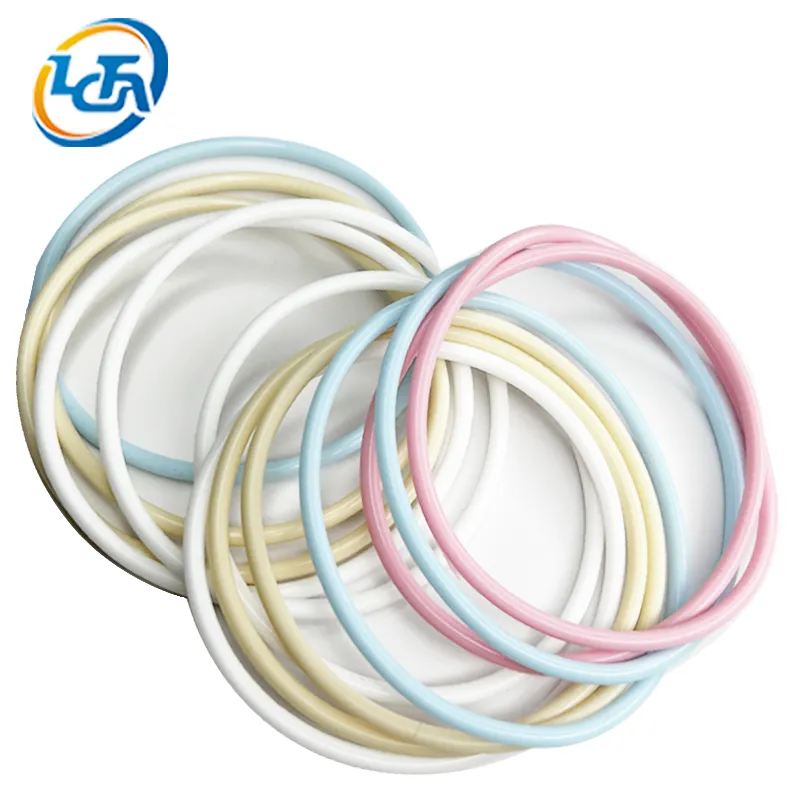
Understanding X-Ring Sealing Technology for Valve Applications
X-rings, also known as quad rings, are a specialized type of elastomeric seal with a four-lobed cross-section that provides two distinct sealing surfaces on each side of the ring. In valve applications, X-rings are used in both static and dynamic sealing positions, including valve stem seals, actuator piston seals, and bonnet gaskets. The primary advantage of an X-ring over a conventional O-ring is its four-point contact design, which distributes sealing pressure across two contact lines on the inner diameter and two on the outer diameter. This geometry reduces friction during reciprocating or rotary motion by creating smaller contact areas per sealing point compared to an O-ring's single broad contact band. The reduced friction translates to lower actuator force requirements, less wear on the seal and mating surfaces, and extended service intervals for valves that cycle frequently. Additionally, the groove formed between the four lobes can retain lubrication, which further reduces friction and helps the seal maintain performance over its operating life. Understanding these fundamental design characteristics is the starting point for specifying a custom X-ring that will perform reliably in a specific valve application.
Material Selection for X-Rings in Valve Environments
The choice of elastomer material for a custom X-ring must account for the full range of conditions the seal will encounter in the valve, including the process fluid, operating temperature, pressure, and mechanical cycling frequency. Nitrile rubber (NBR) is the most commonly specified material for general-purpose valve X-rings because of its good balance of oil resistance, mechanical strength, and cost. NBR X-rings are typically formulated to 70 to 75 Shore A hardness for valve applications, balancing the need for extrusion resistance under pressure with the flexibility required for proper sealing contact. For valves handling aggressive chemicals or operating at elevated temperatures up to 200 degrees Celsius, fluoroelastomer (FKM) compounds offer broader chemical resistance and higher temperature capability at a higher material cost. Ethylene propylene diene monomer (EPDM) X-rings are suited for hot water, steam, and brake fluid applications but should not be used in contact with petroleum-based oils and fuels. Silicone X-rings can handle extreme temperature ranges but have lower mechanical strength and are generally limited to static sealing applications. When specifying a custom X-ring, buyers should work with the supplier to identify the compound that provides the best balance of chemical compatibility, temperature resistance, and mechanical durability for the specific valve service conditions.
Groove Design and Dimensional Considerations
The performance of an X-ring in a valve is heavily dependent on the groove geometry into which it is installed. Unlike O-ring grooves, which are typically rectangular with a recommended width approximately 1.3 to 1.5 times the seal cross-section, X-ring grooves are designed to be approximately equal to the seal cross-section diameter. This tighter fit ensures that the four lobes maintain their intended orientation and contact geometry during operation. The groove depth is calculated to achieve a compression ratio that slightly differs from O-ring applications; X-rings generally require less squeeze because the four-lobed geometry creates effective sealing with lower compression forces. The clearance gap between the mating valve components is another critical dimension; excessive clearance can allow the X-ring to extrude under pressure, particularly when the seal material is on the softer end of the hardness range. For valve applications with operating pressures exceeding 10 MPa, backup rings or anti-extrusion devices should be considered, especially if the X-ring will experience pressure reversals or pulsating loads. The surface finish of the groove and the mating dynamic surface also affects seal performance, with a recommended surface roughness typically between 0.4 and 0.8 micrometers Ra for dynamic sealing applications. Rougher surfaces accelerate seal wear, while excessively smooth surfaces may not retain enough lubrication.
Pressure Rating and Extrusion Resistance
Custom X-rings for valve applications must be designed to withstand the maximum system pressure without failing through extrusion or blowout. NBR X-rings with a hardness of 70 Shore A can typically handle operating pressures up to 10 MPa in static applications and 5 MPa in dynamic applications without backup rings. For higher pressures up to 40 MPa, harder compounds in the 75 to 90 Shore A range or the addition of backup rings may be required. FKM X-rings often have slightly lower extrusion resistance than NBR at equivalent hardness, so pressure derating may apply when switching between materials. The direction of pressure loading is also important: X-rings perform differently under unidirectional pressure, where the pressure consistently acts from one side, compared to bidirectional or reversing pressure, where the seal must maintain performance when pressure alternates between directions. In bidirectional applications, symmetrical groove designs and the use of backup rings on both sides of the X-ring should be considered. Buyers should communicate the maximum operating pressure, pressure cycling characteristics, and whether the application is static or dynamic to the X-ring supplier to ensure the recommended seal design and material grade can handle the expected pressure conditions.
Dimensional Standards and Customization Options
Standard X-ring dimensions are defined by ISO 3601 and AS568, which specify cross-section diameters and inner diameters for a range of standard sizes. Many common valve seal positions can be served by these standard X-ring sizes, which reduces lead time and tooling costs compared to fully custom dimensions. However, valves with proprietary bore and groove dimensions or those designed around non-standard metric or imperial sizing may require fully custom X-ring tooling. When custom dimensions are needed, the supplier's in-house mold fabrication capability becomes a critical differentiator, as the ability to quickly produce and modify molds directly affects project lead times. Customization also extends beyond dimensions to include the compound formulation, color coding for material identification, and surface treatments such as coatings that reduce installation friction or improve seal performance in dry-start conditions. A supplier with broad material compounding expertise and in-house mold design and fabrication can offer a wider range of customization options and respond more quickly to design changes during the valve development process.
Practical Design Scenario: X-Ring Specification for a Hydraulic Directional Control Valve
Consider an engineering team developing a new hydraulic directional control valve rated for 25 MPa operating pressure with mineral oil as the working fluid. The valve spool requires dynamic seals that can withstand continuous reciprocating motion at up to 60 cycles per minute while maintaining consistent leakage control over a design life of one million cycles. The team initially tests standard NBR O-rings of 70 Shore A hardness, but after approximately 200,000 cycles, friction increases noticeably and oil leakage exceeds the acceptable threshold. Analysis of the failed seals shows that the O-rings developed a compression set and experienced surface abrasion from the reciprocating motion. The team then evaluates X-rings in the same NBR 70 Shore A material. The four-point contact design reduces sliding friction compared to the O-ring's continuous contact band, and the lubrication-retaining groove between the lobes helps maintain a thin oil film on the sealing surface. In endurance testing, the X-rings achieve the one million cycle target with leakage rates within specification. The final design incorporates X-rings sized to AS568 standard dimensions with a groove design optimized for the four-lobed cross-section. This scenario illustrates how the choice of seal geometry, not just material, can determine whether a valve meets its performance and durability targets.
Quality Verification and Supplier Selection
When sourcing custom X-rings for valve applications, verifying the quality and consistency of the product is essential to avoid field failures that can lead to valve leakage, process downtime, or safety incidents. Buyers should request that the supplier provide dimensional inspection reports confirming that each batch of X-rings meets the specified cross-section diameter, inner diameter, and lobe symmetry tolerances. Material certification documents should identify the specific elastomer compound and include hardness measurements from each production batch. For critical valve applications, additional testing such as compression set per ASTM D395 or ISO 815, tensile properties per ASTM D412 or ISO 37, and immersion testing per ASTM D471 or ISO 1817 using the actual process fluid provides quantitative verification of seal performance. A supplier operating under ISO 9001 certified quality management demonstrates commitment to process control and traceability. Buyers evaluating X-ring suppliers should also consider the supplier's technical support capability: a knowledgeable supplier will ask detailed questions about groove dimensions, pressure conditions, fluid compatibility, and cycling requirements rather than simply quoting a standard product. This consultative approach is particularly valuable for custom X-ring applications where standard catalog products may not meet the application requirements.
Frequently Asked Questions
Q: What is the primary advantage of an X-ring over an O-ring in valve applications?
A: The X-ring's four-lobed cross-section provides two sealing contact lines on each side instead of one broad contact band, which reduces sliding friction by approximately 30 to 50 percent compared to an equivalent O-ring. This lower friction reduces actuator force requirements, decreases seal wear, and extends service life in dynamic valve applications. The lubrication-retaining groove between the lobes also helps maintain a fluid film on the sealing surface during dry-start conditions.
Q: Can X-rings be used in both rotary and reciprocating valve applications?
A: Yes, X-rings are suitable for both rotary and reciprocating motion. In rotary applications, the lower friction of the four-point contact design reduces torque requirements and heat generation compared to O-rings. However, the groove design must account for the different motion type: rotary applications may require slightly wider grooves to accommodate the twisting motion that X-rings can experience under rotation.
Q: How do I determine whether a standard or custom X-ring size is needed for my valve?
A: First, check whether your valve's bore and groove dimensions match standard sizes defined in ISO 3601 or AS568. If an exact match exists, a standard X-ring is the most cost-effective option and will have shorter lead times. If your valve uses proprietary dimensions that fall between standard sizes, or if the groove geometry was designed around a different seal type, a custom X-ring may be necessary. Provide your supplier with the bore diameter, groove diameter, groove width, and groove depth, and ask them to recommend the best approach for your specific application.
Table of Contents
- Understanding X-Ring Sealing Technology for Valve Applications
- Material Selection for X-Rings in Valve Environments
- Groove Design and Dimensional Considerations
- Pressure Rating and Extrusion Resistance
- Dimensional Standards and Customization Options
- Practical Design Scenario: X-Ring Specification for a Hydraulic Directional Control Valve
- Quality Verification and Supplier Selection
- Frequently Asked Questions


