 EN

What Changes Inside a Transmission
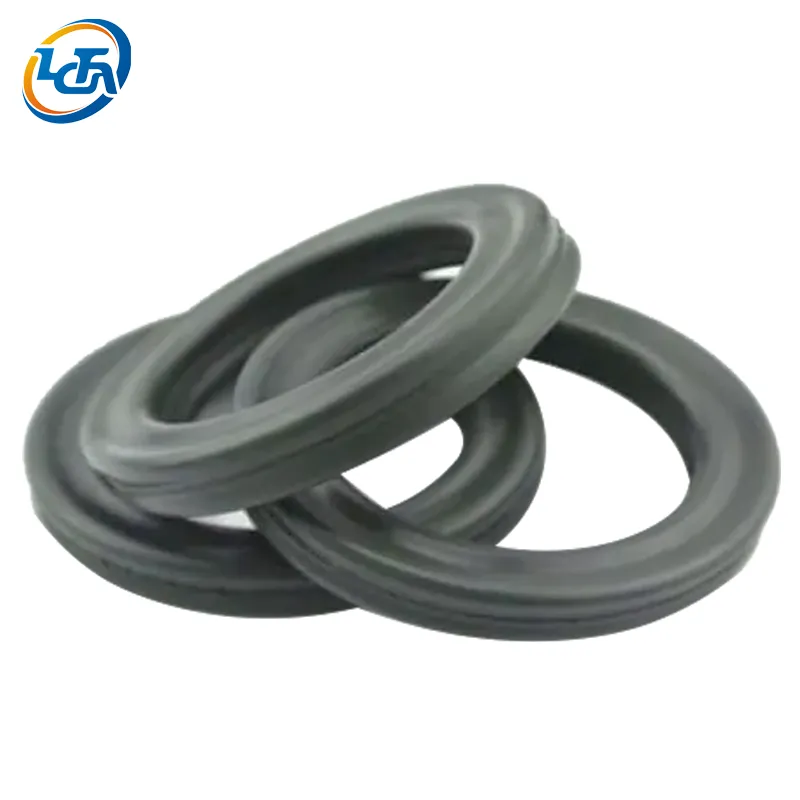
A transmission is a hostile place for an xring seal, and the conditions are different from most other automotive positions. Fluid is hot and chemically active, the X-ring sits in a narrow cavity with limited room, pressures fluctuate as gears and clutches engage, and the assembly may rotate or reciprocate thousands of times per journey. In that environment the X-ring is asked to do two things at once: hold fluid in, and keep doing it while something moves against it. An X-ring, also written xring, is chosen over a plain O-ring in many transmission positions because its cross-section handles that combination better. The four-lobe X shape changes how the seal contacts the surface, and that change is the whole argument.
Four-Point Contact and Lower Friction in a Rotating Assembly
The X cross-section gives the X-ring four lobes instead of a single round face. Under compression two lobes seal while the geometry keeps the other two in reserve, so the contact band is broader than a round cord of similar size. A broader contact band is more forgiving of a slightly imperfect surface and holds a sealing line more consistently as pressure moves the X-ring. At the same time, the X profile reduces the area in sliding contact compared with some round-cord designs, and less contact area means less friction. In a transmission, friction matters twice: it wears the X-ring, and it converts motion into heat at the sealing line. Less friction therefore means slower wear and a cooler X-ring, and both extend the interval before replacement. That is the practical meaning of longer component life.
Extrusion Under Pressure
Pressure is the second reason. Any X-ring or seal in a narrow cavity is pushed toward the gap between the moving parts, and if the gap is wide or the compound too soft, the rubber is extruded into it and damaged. An X-ring resists this better because the quadrilateral section supports itself against the cavity walls rather than deforming as a single round lobe would. Where an X-ring is supplied for hydraulic or pressure duty, a service pressure rating is stated, and a common rating for this type of X-ring seal is 40 MPa, which covers many transmission and hydraulic positions. Buyers should confirm that the rating covers the working pressure with a sensible margin rather than assuming that an X-ring of the right diameter will hold. In a transmission, pressure peaks during clutch engagement are what damage a marginal X-ring, not the average pressure.
Heat, Fluid and Compound Choice
Geometry only helps if the compound survives the environment. Nitrile, or NBR, resists oil and transmission fluid across roughly -30 to 100 degrees Celsius and is the standard choice for driveline duty, with a common automotive specification for an NBR X-ring around 70 to 75 Shore A. Fluororubber, FKM, extends to about -20 to 200 degrees Celsius with strong chemical resistance and is used where temperatures run higher or the fluid is more aggressive. EPDM handles water, steam, and weather but is not the choice for petroleum-based fluids, and silicone (VMQ) covers roughly -60 to 200 degrees Celsius for wide temperature swings. Hardness controls both deflection and extrusion behaviour, so the same X-ring geometry in two hardness values can behave very differently in the same cavity. Material and hardness should be confirmed against the actual fluid and the measured working temperature, not against a general assumption about transmissions.
Where an O-Ring Is Still the Better Choice
An X-ring is not automatically superior, and recommending it everywhere would be poor engineering. An O-ring remains the better choice for a simple static joint at low pressure, where the broader contact band brings no benefit and the round cord is cheaper and easier to source. It is also adequate in a face-seal groove that is well supported and where the pressure is modest. The X-ring earns its place where the X-ring seal is dynamic, where pressure is significant, or where friction and heat are limiting the life of the X-ring. That distinction matters commercially: a buyer who specifies an X-ring for every position pays more than necessary, and a buyer who specifies an O-ring in a high-pressure dynamic position replaces seals more often than necessary.
A Transmission Rebuild Scenario
Consider a transmission rebuild where the rod X-ring seal in an actuator developed a slow leak within a few thousand kilometres. The original part was a round cord in a general-purpose compound, and inspection showed two things at once: polishing wear along the contact line, and extrusion into the clearance gap under peak pressure. Replacing it with an X-ring in NBR at 70 to 75 Shore A, matched to the service pressure rating and confirmed against the fluid, addressed both. The broader contact reduced the wear pattern, and the quadrilateral section resisted being pushed into the gap. In a second position in the same unit, an O-ring was retained because the joint was static and low pressure, and changing it would have added cost with no benefit. The rebuild worked because the X-ring was matched to the position rather than to a rule.
Specifying an X-Ring for Transmission Duty
A clear specification records the cross-section, the inner diameter and cord size, the material and grade, the hardness in Shore A, the rated service pressure, the temperature range, and the fluid being sealed. Standards matter for interchangeability: sizes following AS568 and similar systems reduce lead time and make replacement predictable, and non-standard sizes are produced to a drawing, a 3D model, or a sample. Buyers should ask for the material grade and the pressure rating in writing, confirm the quality system such as ISO 9001, and review any CE and RoHS documents against their own requirements. Where the position is critical, request a sample before mass production, because fit, hardness, and finish are easier to check on a physical X-ring than on a drawing.
Questions Buyers Ask About X-Rings in Transmissions
Is an X-ring always better than an O-ring? No. An X-ring is better in dynamic, higher-pressure positions where friction and extrusion matter. An O-ring remains adequate and more economical for static, low-pressure joints, so the choice should follow the position rather than a general preference. What pressure can an X-ring handle? A common service pressure rating for this type of X-ring is 40 MPa, but the rating depends on the compound, the hardness, and the cavity. The working pressure and its peaks should be compared with the stated rating, with a margin. Can an X-ring replace an O-ring without changing the groove? Often yes, because both are seated in a rectangular groove, but the squeeze and the groove width should be checked. A groove that worked for a round cord may need review before an X-ring is fitted.
Table of Contents
- What Changes Inside a Transmission
- Four-Point Contact and Lower Friction in a Rotating Assembly
- Extrusion Under Pressure
- Heat, Fluid and Compound Choice
- Where an O-Ring Is Still the Better Choice
- A Transmission Rebuild Scenario
- Specifying an X-Ring for Transmission Duty
- Questions Buyers Ask About X-Rings in Transmissions


