 EN

Why Leaks Usually Come From the Wrong Seal, Not a Weak One
When a joint starts to leak, the instinct is to look for a better seal. In most investigations the seal was not weak; it was the wrong type for the duty. A static flange and a rotating shaft place completely different demands on a sealing element, and a seal that performs well in one position can fail within days in the other. Leakage is therefore usually a selection problem rather than a quality problem. The productive question is not which seal is strongest, but which sealing principle matches the motion, the pressure, the media, and the hardware that already exists. Answering that question first removes most of the guesswork, and it also explains why two plants running similar equipment can report very different leak rates.
The Seal Types That Cover Most Leakage Problems
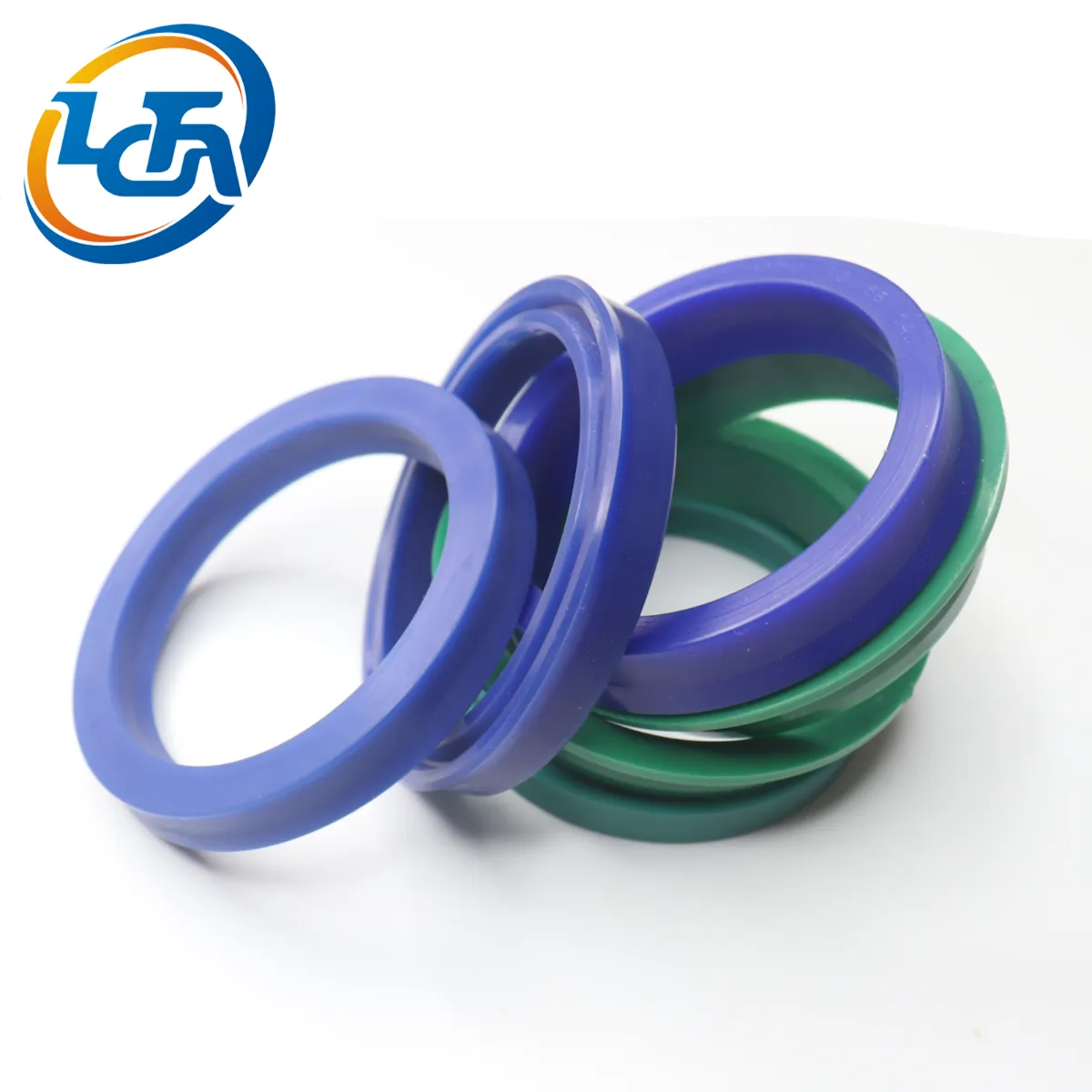
Five families handle the majority of industrial leakage cases. The O-ring is a round cross-section compressed as a seal in a rectangular groove and works in both static and dynamic duty; it is compact, widely available, and the default starting point. The X-ring uses a four-lobe cross-section that gives broader contact and lower friction, which suits dynamic positions better than a round cord. The gasket seal is a flat or shaped element compressed between two faces, and it is the practical choice for covers, housings, and flanges with large or irregular mating areas. The polyurethane oil seal is a lip-type seal element for rotating shafts, used where oil or grease must be retained around a moving shaft. The rubber washer is a fastener seal element under a bolt, sealing the bolt hole rather than the joint face. Each family seals by a different mechanism, and mixing them up is the most common cause of a repeat leak.
Matching the Seal to the Motion
Motion is the first filter. A static joint, such as a cover or a flange, needs a seal that holds compression for years without relaxing, so compression set matters more than friction. A reciprocating joint, such as a cylinder rod, needs a seal that maintains contact while sliding, so wear resistance and friction become decisive. A rotating shaft needs a lip seal that keeps contact as the shaft turns, which is why an oil seal exists as a separate family rather than as a variant of an O-ring. A joint that only moves occasionally, such as an adjustment collar, can often use a static seal with a slightly higher hardness. Getting this classification wrong is expensive: a round cord used as a rotary shaft seal will usually leak, and an oil seal used on a static cover adds cost without benefit.
Pressure, Extrusion and the Groove
Pressure changes the answer again. As pressure rises, a soft seal is pushed toward the gap between the mating parts, and if that gap is wide or the compound too soft, the seal extrudes and is damaged. This is why high-pressure positions often use a harder compound, a back-up ring, or a different cross-section rather than a thicker seal. Groove design is part of the seal, not a separate detail: a groove that is too shallow over-compresses the seal and shortens its life, while one that is too deep lets the seal lose contact and leak. Surface finish matters as well, because a rough face abrades a moving seal. Where the hardware already exists and cannot be changed, the seal must be chosen to suit that groove, which is why an accurate groove measurement is often more useful to a supplier than a photograph of the failed seal.
Media and Temperature Decide the Compound
Within any seal type, the compound decides whether the seal survives. Nitrile, or NBR, resists oil and fuel across roughly -30 to 100 degrees Celsius and is the standard for hydraulic and driveline duty. EPDM handles water, steam, and weather but not petroleum oils, so it suits washdown, outdoor, and steam service. Fluororubber, FKM, extends to about -20 to 200 degrees Celsius with strong chemical resistance for hot oil and aggressive media. Silicone, or VMQ, stays flexible from about -60 to 200 degrees Celsius and is used where wide temperature swings or food and medical contact matter. Polyurethane offers high wear resistance and is widely used for oil seals, with a working range of roughly -40 to 120 degrees Celsius. Hardness is quoted in Shore A and standard production covers roughly 30 to 90 Shore A, so the same family can be tuned to a soft static joint or a hard high-pressure gland.
A Practical Leak Investigation
Consider a gearbox that leaked at the inspection cover after every service. The cover had been sealed with an O-ring, replaced each time with a new seal of the same size, and each replacement leaked within weeks. Measurement showed that the cover groove was shallow and the cover itself slightly distorted, so the O-ring could not maintain uniform compression. A flat gasket of the correct hardness, cut to the cover outline, distributed the bolt load across the distorted face and stopped the leak. In a second case, a hydraulic cylinder leaked at the rod because a round cord had been used where a lip seal belonged; the cord could not follow the shaft and wore through. Neither seal failure was a material quality issue. Both were the result of a sealing principle that did not match the joint.
A Selection Checklist Before You Order
Record the joint type first: static face, reciprocating, or rotating. Then record the medium, the working and peak pressure, the working and peak temperature, the available groove or housing dimensions, and the surface finish of the mating parts. Decide whether the seal must also resist cleaning chemicals or outdoor weather. State the required hardness, and confirm which compound the supplier proposes and why. Ask whether a back-up ring or a change of cross-section is needed at the working pressure, because that decision affects the groove. For critical joints, request a sample and check fit before production, and confirm that the same compound will be used in repeat batches. A supplier working to ISO 9001 with CE and RoHS compliance offers a documented baseline, and the documents should still be checked against your own specification rather than accepted as sufficient.
Questions Buyers Ask About Seal Selection
Is an O-ring always the best choice for stopping a leak? No. An O-ring is an excellent default for compact static and moderate dynamic joints, but it is a poor substitute for a lip seal on a rotating shaft and can be the wrong choice on a distorted or large flange face where a flat gasket distributes load better. Should I use a harder seal to stop a leak under pressure? Only after checking the gap. A harder compound resists extrusion, but if the groove is worn or the gap is wide, hardness alone will not solve the problem. A back-up ring or a revised groove is often the correct fix. How do I choose between EPDM and NBR? Choose NBR where oil, fuel, or grease is present, and EPDM where water, steam, ozone, or outdoor weather dominates. EPDM swells in petroleum oils, so it should not be used for hydraulic or fuel service.
Table of Contents
- Why Leaks Usually Come From the Wrong Seal, Not a Weak One
- The Seal Types That Cover Most Leakage Problems
- Matching the Seal to the Motion
- Pressure, Extrusion and the Groove
- Media and Temperature Decide the Compound
- A Practical Leak Investigation
- A Selection Checklist Before You Order
- Questions Buyers Ask About Seal Selection


