 EN

Why Agricultural Equipment Is Hard on Rubber Parts
A tractor or a harvester spends its working life in conditions that most industrial machinery never sees. It runs in abrasive dust, stands in ultraviolet light for years, is washed down with high-pressure water, and in many regions also meets fertiliser, slurry, and crop chemicals. Each of those exposures attacks rubber in a different way, and they usually arrive together. That combination is why agricultural equipment so often develops leaks, cracked boots, torn bushings, and brittle seals long before the metal around them wears out. Choosing a rubber part for this environment is not a matter of picking a general-purpose compound and a convenient size. It is a matter of matching the elastomer, the hardness, and the geometry to the specific position on the machine, because no single rubber part suits every position.
The Rubber Parts That Do Most of the Work
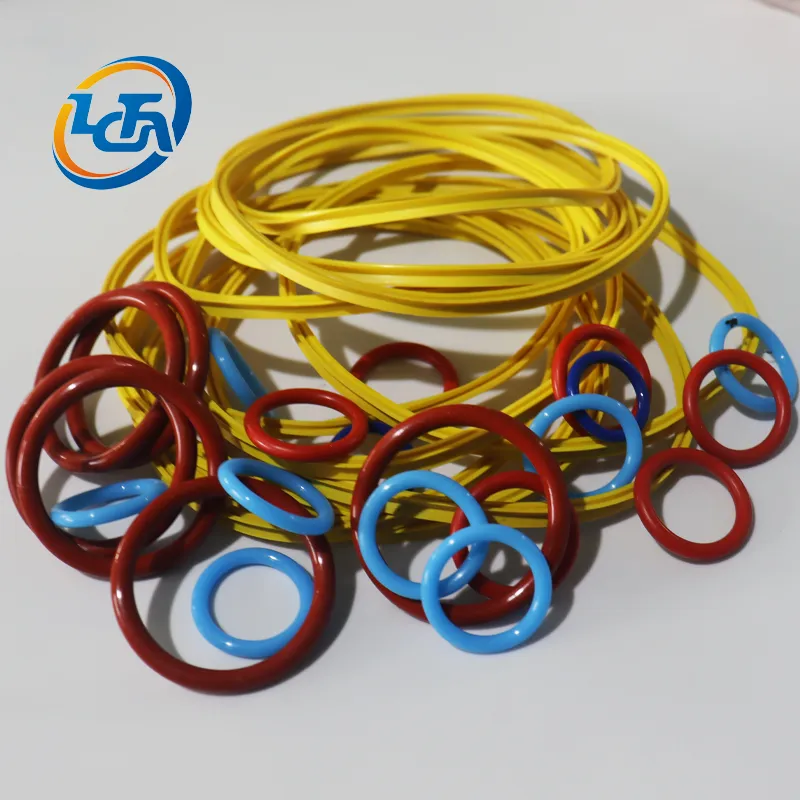
Most of the rubber parts on a farm machine falls into a small number of families, and each family fails for its own reason. Seals, including O-rings, X-rings, and gaskets, keep oil, fuel, coolant, and hydraulic fluid inside the places they belong. Diaphragms flex thousands of times in pumps and valves, so their flex life matters more than their hardness. Bushings carry vibration and allow a controlled amount of movement at mounts and linkages, which makes bond strength and load path critical. Grommets protect wiring harnesses where they pass through panels, and on modern machines with sensors and controllers that protection has become an electrical reliability issue rather than a cosmetic one. Washers seal under fasteners and spread bolt load. Caps and stoppers blank off ports during transport and storage. A rubber part in any of these positions is a small component with a disproportionate effect on downtime, because a failed seal can stop a machine in the middle of a short harvest window.
Compounds That Survive Field Conditions
Four elastomers cover most agricultural rubber part positions, and the differences between them matter more than any catalogue description. Nitrile butadiene rubber, or NBR, resists oil, fuel, and grease across roughly -30 to 100 degrees Celsius, which makes it the default for hydraulic and driveline seals. EPDM resists water, steam, ozone, and ultraviolet light but is not the right choice for petroleum oils, so it suits outdoor covers, weather-exposed grommets, and washdown areas. Silicone rubber, or VMQ, holds flexibility from about -60 to 200 degrees Celsius and is used where wide temperature swings, food contact, or electrical insulation matter. Fluororubber, FKM, extends to about -20 to 200 degrees Celsius with strong chemical resistance and is chosen where hot oil or aggressive chemistry is present. SBR, HNBR, and FFKM are further options for abrasion, hydrogenated service, and extreme chemical duty. Hardness is quoted in Shore A and standard production covers roughly 30 to 90 Shore A, so the same rubber part compound can be supplied soft enough to seal a rough casting or hard enough to resist extrusion in a hydraulic gland.
Hardness, Fit and the Failures That Follow
Many field failures that look like material failure are actually fit failures. A seal that is too soft extrudes into the gap under pressure and takes a permanent set; a seal that is too hard will not conform to a worn shaft or a pitted flange face and leaks at the first temperature drop. A bushing that is too thin at the shoulder tears at the edge. A grommet that does not grip the panel falls out and leaves the harness rubbing on bare metal. Because agricultural machines are often repaired in the field with whatever is available, an undersized or oversized rubber part is common, and the resulting failure is then blamed on the rubber. Recording the actual bore, shaft, groove, or panel thickness of the failed rubber part before ordering removes most of this risk. Where the original drawing is unavailable, a physical sample plus a few measured dimensions is usually enough for a supplier to reproduce the rubber part.
A Field Failure Scenario
Consider a sprayer that developed repeated hydraulic leaks at the boom valve block during a single season. The seals had been replaced twice with the same general-purpose NBR rings, and each replacement failed within weeks. Inspection showed two separate problems. The groove was shallow for the pressure the circuit actually reached, so the rings were being extruded at the edges rather than worn. Separately, the circuit ran hotter than the original specification, and the compound hardened until it could no longer follow the gland. The fix was not a harder ring alone. It combined a compound rated for the higher temperature with a change of cross-section and a check on groove depth, and the leaks stopped. The same pattern appears on harvester knife drives, planter vacuum pumps, and hydraulic cylinders, and it is the reason a supplier who can discuss groove geometry as well as compound is more useful than one who only quotes a size.
Sourcing Rubber Parts for Older or Imported Machines
Farm equipment is kept in service far longer than most industrial assets, and original rubber parts often disappear from the supply chain years before the machine is retired. Manufacturers that hold a large library of existing molds can usually match a standard size, and a supplier holding more than ten thousand molds has a good chance of covering a common bore or groove without new tooling. When the size is genuinely non-standard, production to a drawing, a 3D model in IGES or STEP, or a physical sample is normal practice, and a sample batch of that rubber part should be approved before a seasonal order is committed. Lead time deserves particular attention in agriculture, because the difference between a rubber part arriving in two weeks and in eight weeks can mean missing a harvest.
A Specification Checklist for Seasonal Equipment
Before ordering a replacement rubber part, record the position on the machine, the medium being sealed or protected, the working and peak temperature, the pressure where relevant, the bore, shaft, groove, or panel dimensions, and the outdoor and chemical exposures the part will meet. State the required hardness in Shore A, the colour if the rubber part is used for identification, and the documents your own quality process requires. Ask which compound is proposed and why, and confirm that the same compound and hardness will be used in every batch, since a silent compound change alters both fit and service life. A supplier working to ISO 9001 with CE and RoHS compliance provides a documented baseline, and the certificates should still be checked against your own specification. For a critical position, request a sample rubber part and inspect it before the season starts rather than after the first breakdown.
Questions Buyers Ask About Agricultural Rubber Parts
Which rubber part fails most often on farm machinery? Hydraulic and driveline seals are the most common source of unplanned downtime, followed by bushings and grommets on machines with high vibration. The pattern depends on the machine, but seals usually fail first because they combine pressure, heat, and contamination. Is EPDM suitable for agricultural equipment? EPDM is a good choice for outdoor covers, weather-exposed grommets, and washdown areas because it resists water, steam, ozone, and ultraviolet light. It is not the right choice where petroleum oil or fuel is present, which is why hydraulic seals normally use NBR, HNBR, or FKM instead. Can a rubber part be matched to an older machine without the original drawing? In most cases yes. A supplier can work from a physical sample plus measured bore, shaft, or groove dimensions, and can produce a drawing for confirmation before tooling. A sample batch should still be checked before a full seasonal order is placed.
Table of Contents
- Why Agricultural Equipment Is Hard on Rubber Parts
- The Rubber Parts That Do Most of the Work
- Compounds That Survive Field Conditions
- Hardness, Fit and the Failures That Follow
- A Field Failure Scenario
- Sourcing Rubber Parts for Older or Imported Machines
- A Specification Checklist for Seasonal Equipment
- Questions Buyers Ask About Agricultural Rubber Parts


