EN
EN

Understanding Pressure Challenges for Rubber Washers
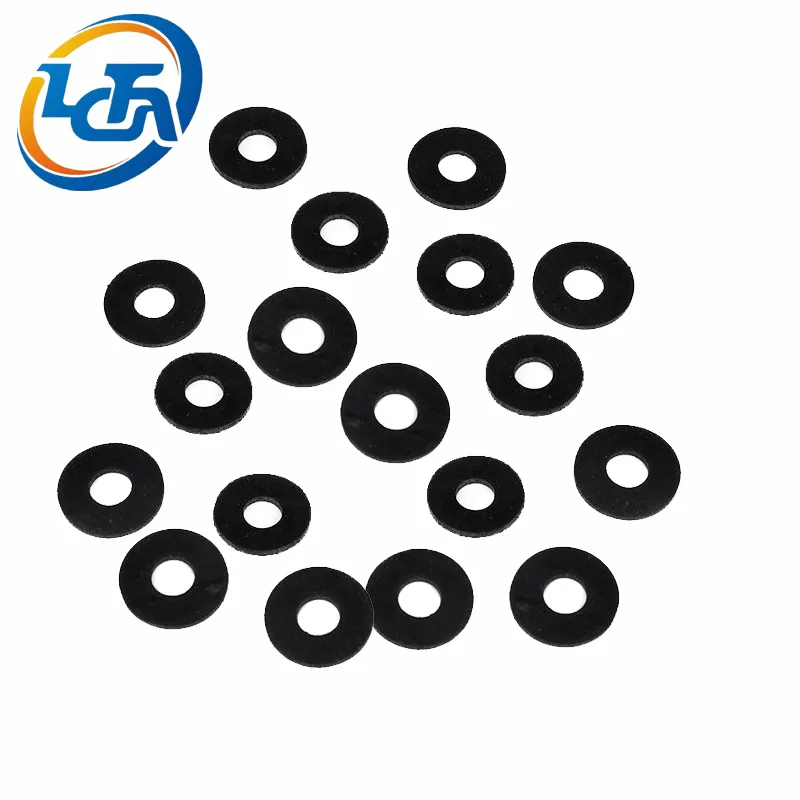
A rubber washer may appear to be a simple flat ring, but when it is required to seal against high pressure, its design becomes a serious engineering challenge. Under elevated pressure, a standard rubber washer faces multiple failure risks. Extrusion occurs when the rubber material is forced into the clearance gap between mating flanges, permanently deforming the washer and creating a leak path. Blowout happens when the internal pressure exceeds the washer's ability to maintain its position, potentially ejecting the washer entirely from the joint. Compression set, the tendency of rubber to lose its ability to recover after prolonged compression, accelerates under the combined effects of pressure and temperature, gradually reducing the sealing force until leakage begins. For industrial buyers who need rubber washers that can withstand high-pressure conditions in hydraulic systems, high-pressure pumps, pipeline flanges, pressure vessels, and industrial processing equipment, understanding how rubber washers can be customized for these demanding applications is essential. The answer is yes, rubber washers can be engineered for high-pressure service, but this requires careful attention to material selection, geometric design, reinforcement strategies, and validation testing.
Material Selection for High-Pressure Washer Performance
The rubber material chosen for a high-pressure rubber washer must balance several competing requirements. The material needs sufficient hardness to resist extrusion while retaining enough elasticity to conform to flange surface irregularities and create a reliable seal. For most high-pressure applications, rubber washers are specified in the 70 to 90 Shore A hardness range, significantly harder than general-purpose washers that typically fall between 40 and 60 Shore A. NBR, or Nitrile Butadiene Rubber, is one of the most commonly specified materials for high-pressure oil and fuel system washers because it combines good mechanical strength with excellent oil resistance. Its tensile strength and tear resistance help it withstand the mechanical stresses of pressurized environments. For applications involving water, steam, or brake fluids at high pressure, EPDM rubber washers are preferred due to EPDM's resistance to polar fluids, heat, and compression set. However, EPDM's lower tear strength compared to NBR means its maximum pressure rating is typically lower for a given washer geometry. FKM or Viton rubber washers provide the best combination of high-temperature tolerance, chemical resistance, and mechanical integrity, making them suitable for the most demanding high-pressure chemical processing applications, though at a substantially higher material cost. In extremely high-pressure scenarios exceeding 100 bar or 1,500 psi, fabric-reinforced rubber washers incorporate layers of woven fabric such as aramid or nylon within the rubber matrix to dramatically increase tensile strength and prevent extrusion, similar to the reinforcement principle used in high-pressure hydraulic hoses.
Geometric Design Factors That Influence Pressure Rating
The physical dimensions of a rubber washer directly determine its pressure-holding capability. A thicker washer cross-section provides more material volume to resist extrusion and more compression reserve to maintain sealing force as the rubber relaxes over time. However, increasing thickness also increases the potential for the washer to extrude laterally under pressure if the flange gap is not adequately controlled. The inside diameter to outside diameter ratio affects how the washer distributes stress under pressure. A narrower radial width relative to the bore diameter concentrates stress at the inner edge, which is where extrusion typically initiates. A washer with a generous radial width distributes the pressure load over a larger contact area, reducing peak stress concentrations. The groove or gland design in the mating flange is equally critical. A properly designed rectangular groove with controlled clearances constrains the rubber washer, limiting the gap into which the material can extrude. In high-pressure applications, the use of backup rings, typically made from a harder material such as PTFE or PEEK, placed on the low-pressure side of the rubber washer, physically blocks the extrusion gap and can increase the washer's pressure rating by a factor of two or more. These geometric and system-level design considerations mean that customizing a rubber washer for high pressure is rarely as simple as selecting a harder rubber. It requires evaluating the complete sealing system, including the flange design, bolt loading, surface finish, and operating temperature range.
Customization Options for High-Pressure Rubber Washers
When standard catalog rubber washers cannot meet a high-pressure requirement, several customization pathways are available. Custom compound formulation allows a manufacturer with in-house mixing capability to develop a rubber compound with the precise balance of hardness, tensile strength, elongation, and compression set resistance needed for the specific pressure, temperature, and media conditions. This might involve adjusting the carbon black loading to increase hardness and reinforcement, selecting a peroxide cure system for better compression set resistance over a sulfur cure, or incorporating specialized additives that improve the rubber's resistance to explosive decompression when the pressure is rapidly released. Custom mold tooling enables the production of rubber washers with non-standard dimensions, including unusual diameter ratios, chamfered edges that reduce installation damage, or integrated locating features that ensure correct placement during assembly. For the highest pressure requirements, fabric-inserted or metal-inserted rubber washers can be developed, where the reinforcement material is bonded within the rubber during the molding process to create a composite structure with dramatically higher burst strength. Xingtai Longcheng Sealing, with its dedicated rubber R&D team and over 8,000 existing molds, can support these customization pathways. The company's ISO 9001 certified quality system ensures that custom rubber washers are produced with documented material certifications and process parameters that can be referenced for future repeat orders.
Testing and Validation of High-Pressure Washer Designs
No high-pressure rubber washer should be put into service without appropriate validation testing. The specific tests depend on the application, but a typical validation protocol includes several key assessments. Burst pressure testing incrementally increases pressure on the sealed joint until failure occurs, establishing the safety margin between the rated working pressure and the ultimate failure point. This test reveals whether failure occurs through extrusion, blowout, or rupture of the rubber material itself, providing diagnostic information for design refinement. Cyclic pressure testing subjects the rubber washer to repeated pressure pulses from zero to working pressure and back, simulating the fatigue conditions of real-world hydraulic and pneumatic systems. A washer that passes a single burst test may fail after a few thousand cycles if the material has poor fatigue resistance or the design allows progressive extrusion. Elevated temperature pressure testing combines high temperature with high pressure, recognizing that rubber materials soften and lose mechanical strength as temperature increases. A rubber washer rated for 200 bar at room temperature may only sustain 100 bar at 120 degrees Celsius. Leak rate measurement using helium mass spectrometry or pressure decay methods quantifies the actual sealing performance rather than relying on a simple pass or fail visual inspection. These validation tests generate data that both the manufacturer and the buyer can use to confirm that the customized rubber washer meets the application requirements before production quantities are committed.
Application Scenario: High-Pressure Hydraulic Manifold Sealing
Consider a practical scenario involving a manufacturer of hydraulic manifold blocks used in mobile construction equipment. The manifold requires flat rubber washers to seal between stacked valve sections operating at a continuous pressure of 250 bar with occasional pressure spikes to 350 bar. The hydraulic fluid is a mineral oil at operating temperatures ranging from minus 20 to plus 100 degrees Celsius. A standard 60 Shore A NBR washer sourced from a catalog initially sealed acceptably at room temperature, but after several weeks of field operation, the washers exhibited progressive extrusion into the clearance gap between manifold sections, eventually causing external oil leaks. The solution involved working with a rubber washer manufacturer to develop a custom solution. The final design used a 85 Shore A NBR compound with a peroxide cure system for improved compression set resistance at elevated temperature. The washer thickness was increased by 20 percent to provide more material volume for extrusion resistance, and PTFE backup rings were added on the downstream side of each washer. Validation testing included a 1,000-hour endurance test at 250 bar and 100 degrees Celsius, during which leakage was monitored continuously. The customized rubber washer solution eliminated the field leakage problem and was subsequently adopted as the standard sealing specification for the entire manifold product line. This example illustrates how a systematic approach to rubber washer customization, combining material selection, geometric optimization, and validation testing, can solve high-pressure sealing challenges that off-the-shelf products cannot address.
How to Communicate High-Pressure Washer Requirements to a Supplier
To obtain an effective customized rubber washer for high-pressure service, buyers should provide the supplier with a complete set of application parameters. Specify the operating pressure, including both the normal working pressure and any transient pressure spikes or surge conditions. Define the temperature range, including the minimum cold start temperature and the maximum continuous operating temperature. Describe the media that the rubber washer will contact, including any additives, contaminants, or cleaning agents that could affect material compatibility. Provide the flange or gland dimensions, including the groove width, depth, surface finish, and the clearance gap between mating surfaces when the joint is tightened. State the required service life and any applicable industry standards such as ISO, DIN, ASTM, or SAE specifications that the washer must meet. Manufacturers like Xingtai Longcheng Sealing, with experience serving customers in over 70 countries across industries including automotive, railway, machinery, and medical devices, can use this information to recommend an appropriate material, design, and validation approach. The company's low MOQ policy also allows buyers to order small validation quantities before committing to full production volumes, reducing the financial risk of custom washer development.
Table of Contents
- Understanding Pressure Challenges for Rubber Washers
- Material Selection for High-Pressure Washer Performance
- Geometric Design Factors That Influence Pressure Rating
- Customization Options for High-Pressure Rubber Washers
- Testing and Validation of High-Pressure Washer Designs
- Application Scenario: High-Pressure Hydraulic Manifold Sealing
- How to Communicate High-Pressure Washer Requirements to a Supplier