EN
EN

Why Precision Matters for Silicone Washers
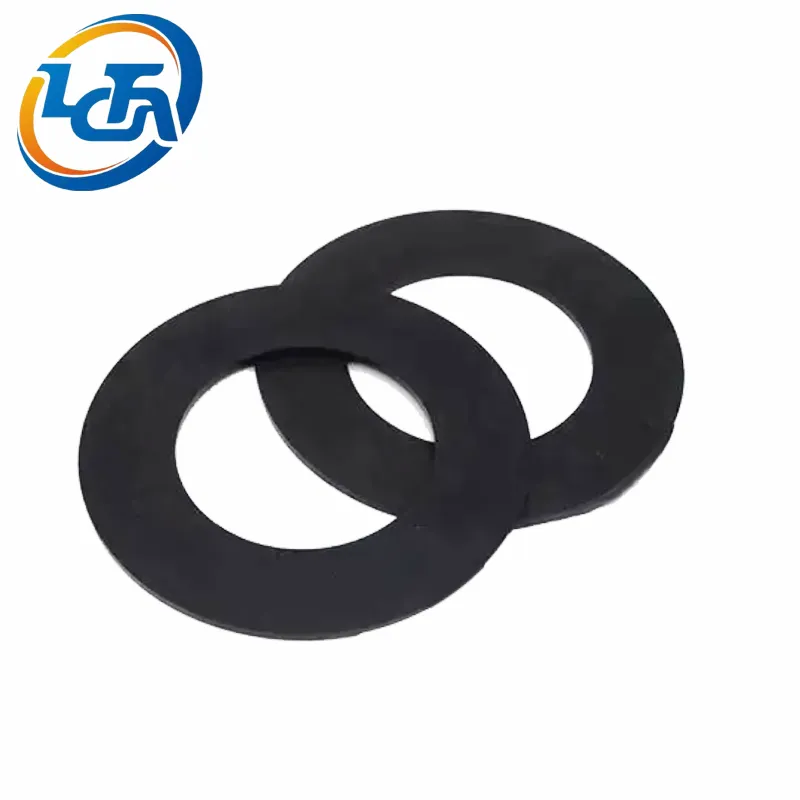
A silicone washer may be a simple component, but its dimensional accuracy can determine whether a medical device operates reliably, a food processing line avoids contamination, or an electronic enclosure maintains its environmental seal. Unlike general-purpose rubber washers that often tolerate wider dimensional variations, precision silicone washers are specified when the application demands tight tolerances on inner diameter, outer diameter, thickness, and flatness. In medical device assemblies, a silicone washer that is even 0.1 millimeters oversized may prevent proper instrument fit, while one that is undersized may create a dead space where bacteria can accumulate. In high-purity fluid handling systems for pharmaceutical or semiconductor manufacturing, surface finish and freedom from particulate contamination are equally critical. Achieving and verifying this level of precision requires careful attention to material selection, mold engineering, process control, and post-molding inspection throughout the production cycle.
Silicone Material Types and Their Impact on Precision
Not all silicones are equally suited for precision molding. The two broad categories are high consistency rubber, or HCR, and liquid silicone rubber, commonly known as LSR. HCR silicone is supplied as a solid gum that is compounded on a two-roll mill with fillers, curing agents, and pigments before being shaped into preforms for compression or transfer molding. The milling and preforming steps introduce small but unavoidable variations in material distribution and compound consistency, which translate into slightly higher dimensional variation in finished parts compared to LSR processing. HCR is still widely used for larger silicone washers and lower-volume production where its lower material cost and simpler tooling requirements provide economic advantages. LSR, in contrast, is a two-part liquid system that is pumped directly into an injection molding machine where the A and B components are mixed in a static mixer immediately before entering the heated mold cavity. Because LSR flows as a liquid with very low viscosity before curing, it fills mold cavities more completely and uniformly than HCR, reproducing fine surface details and achieving tighter dimensional tolerances. LSR injection molding is the preferred process for high-precision silicone washers, particularly in high-volume production where cycle times are short and part-to-part consistency is critical. The cured LSR material also tends to have lower shrinkage than HCR because of its more uniform filler distribution and more complete crosslinking, further contributing to dimensional stability.
Mold Engineering for Precision Silicone Washers
The precision of a silicone washer begins with the mold that forms it. Mold cavities for precision silicone washers are typically CNC-machined from hardened tool steel with tolerances held to plus or minus 0.01 millimeters or better, depending on the part specification. The mold must account for the thermal expansion of both the steel mold and the silicone material at the molding temperature, as well as the shrinkage that occurs as the silicone cools from the curing temperature to room temperature. These thermal effects are predictable but must be calculated and compensated for in the cavity dimensions. For LSR injection molds, the cold runner system is another critical precision element. Unlike HCR compression molds where the material cures in the cavity only, LSR molds use a cooled runner system to keep the liquid silicone from curing before it reaches the cavity, while the cavity itself is heated to initiate curing. The gate design, which is the point where the LSR enters the cavity, must be precisely sized and located to ensure uniform cavity filling without creating weld lines, air traps, or excessive gate vestige on the finished silicone washer. Gate location is particularly important for flat washers because any gate mark on the sealing surface could create a leak path. A mold designed for precision silicone washer production will also incorporate vacuum-assisted venting to evacuate air from the cavity before injection, eliminating bubbles and micro-voids that would compromise both dimensional accuracy and sealing performance.
Process Control During Silicone Washer Production
Maintaining precision over thousands or millions of silicone washer production cycles requires rigorous process control. For LSR injection molding, the key process parameters include injection pressure, injection speed, mold temperature, cure time, and the mixing ratio of the A and B LSR components. Injection pressure and speed determine how the liquid silicone fills the cavity. Too low a pressure or speed results in short shots where the cavity does not fill completely before curing begins. Too high can cause flash, where silicone leaks out of the cavity along the parting line, creating a thin web of material that must be removed and that can affect dimensional measurements if not completely trimmed. Mold temperature directly affects the cure rate. A consistent mold temperature across all cavities is essential for consistent part dimensions because the degree of cure influences shrinkage. Multi-zone temperature controllers with thermocouple feedback loops maintain mold temperature within a narrow band, typically plus or minus 2 to 3 degrees Celsius. The LSR mixing ratio must be precisely maintained because an incorrect ratio leads to incomplete curing, variable shrinkage, and inconsistent physical properties. Modern LSR injection molding machines use metering pumps that dispense the A and B components at the exact programmed ratio, with alarms that stop production if the ratio deviates from specification. Manufacturers such as Xingtai Longcheng Sealing, operating under ISO 9001 quality management, document these process parameters for each production batch, enabling traceability and supporting root cause analysis if quality issues arise.
Post-Molding Processing and Dimensional Inspection
After molding, silicone washers may require post-processing steps that must be carefully controlled to avoid degrading precision. Flash removal, when necessary, is performed using cryogenic deflashing, where the parts are chilled to make the thin flash brittle while the main washer body remains flexible, allowing the flash to be removed by tumbling or media blasting without affecting the washer dimensions. This method is gentler than manual trimming, which introduces operator-dependent variation. Some manufacturers use automatic robotic deflashing systems with optical recognition for high-precision applications. Post-curing, a secondary heat treatment typically at 200 degrees Celsius for two to four hours, is often applied to silicone washers to complete the crosslinking reaction, volatilize low-molecular-weight siloxanes, and stabilize the final dimensions. Post-curing is essential for silicone washers used in medical, pharmaceutical, or food-contact applications because it reduces extractable compounds that could leach into the product. After all processing is complete, dimensional inspection verifies that the silicone washers meet specification. For high-precision parts, automated optical inspection systems can measure inner diameter, outer diameter, thickness, and detect surface defects at production-line speeds, generating data for statistical process control charts. Coordinate measuring machines or laser micrometers provide higher accuracy for first-article inspection and periodic audits. The inspection data feeds back into the process to adjust mold temperature, injection parameters, or cycle time if dimensional trends indicate drift toward tolerance limits.
Application Example: Precision Silicone Washers in Laboratory Equipment
Consider a manufacturer of automated liquid handling instruments used in clinical diagnostic laboratories. These instruments use arrays of precision silicone washers as seals between disposable pipette tips and the aspiration manifold. Each silicone washer must have an inner diameter accurate to within plus or minus 0.05 millimeters to ensure a consistent interference fit with the pipette tip, a thickness variation of no more than 0.03 millimeters across the part to ensure uniform sealing force, and a surface finish free of flash, particles, or mold release residues that could contaminate biological samples. In an early production run using a non-specialized supplier, the instrument manufacturer experienced inconsistent tip seating forces, with some silicone washers gripping too tightly and others too loosely, causing occasional tip drop-off during automated processing. The root cause analysis traced the problem to two factors: the supplier's HCR compression molding process was producing washers with thickness variations up to 0.08 millimeters, and the parting line flash was not being completely removed by manual trimming. By transitioning to a precision silicone washer manufacturer using LSR injection molding with vacuum-assisted venting and automated optical inspection, the thickness variation was reduced to under 0.03 millimeters, and the flash issue was eliminated entirely. The improved silicone washer consistency allowed the instrument manufacturer to reduce calibration frequency and eliminate field service calls related to tip handling errors. This case demonstrates how investing in precision silicone washer manufacturing directly improves the performance and reliability of the end product.
How to Evaluate a Silicone Washer Supplier for Precision Capability
When sourcing precision silicone washers, a supplier evaluation should go beyond price and delivery time to assess the technical capabilities that determine dimensional quality. First, confirm whether the supplier uses LSR injection molding for precision parts, as this process inherently provides better dimensional control than HCR compression molding. Second, inquire about the supplier's mold-making capability, including whether molds are produced in-house or outsourced, the typical cavity tolerances achieved, and whether they account for silicone shrinkage in mold design calculations. Third, ask about process control documentation, including whether injection parameters, mold temperatures, and cure times are recorded and traceable for each production batch. Fourth, review the supplier's inspection capabilities, including the types of measurement equipment used, the sampling frequency for in-process checks, and whether they provide dimensional conformance certificates with each shipment. Fifth, consider the supplier's experience with similar precision applications and their understanding of industry-specific requirements such as USP Class VI, FDA, or ISO 10993 for medical-grade silicone washers. Xingtai Longcheng Sealing offers over 16 years of manufacturing experience with a dedicated R&D team, an in-house mold development capability, and ISO 9001, CE, and RoHS certifications that support documented quality assurance for precision silicone washer production. The company serves customers across over 70 countries in industries that include medical devices, food processing equipment, electronics, and laboratory instruments, providing relevant experience across the range of applications where precision silicone washers are required.
Table of Contents
- Why Precision Matters for Silicone Washers
- Silicone Material Types and Their Impact on Precision
- Mold Engineering for Precision Silicone Washers
- Process Control During Silicone Washer Production
- Post-Molding Processing and Dimensional Inspection
- Application Example: Precision Silicone Washers in Laboratory Equipment
- How to Evaluate a Silicone Washer Supplier for Precision Capability