 EN

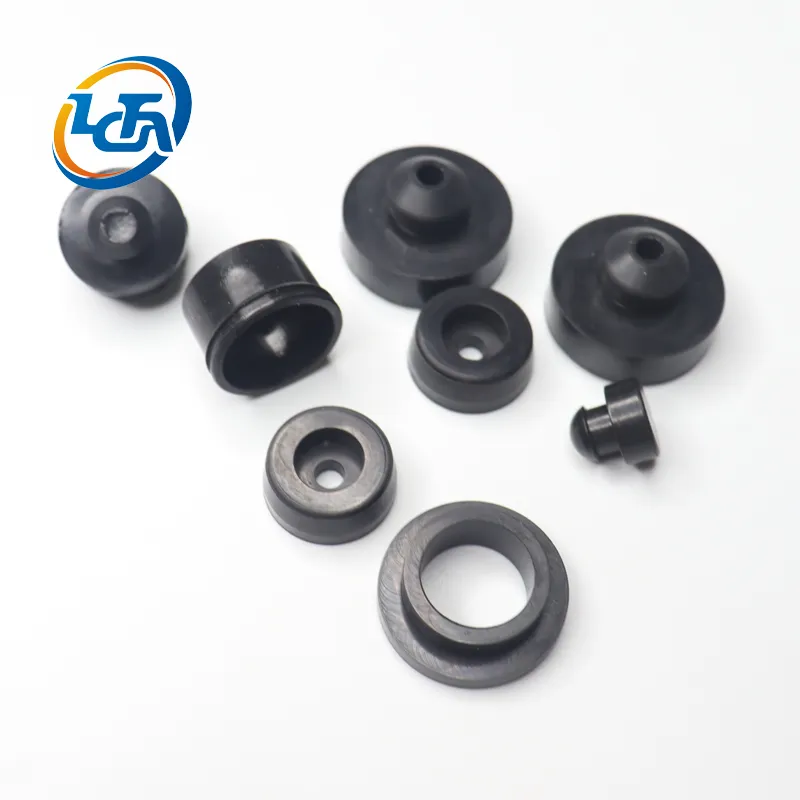
The Core Job of a Rubber Grommet
A rubber grommet is a small ring of rubber fitted into a hole in a metal or plastic panel, and its purpose is to protect whatever passes through that hole. In electrical work, that means protecting wires and cables. Without a grommet, a cable passing through a sharp metal edge rubs against the edge every time the equipment vibrates, and the insulation slowly wears through. A rubber grommet removes that failure mode by giving the cable a smooth, resilient surface to bear against. It is a low-cost part that prevents a whole class of faults, which is why it appears in appliances, control panels, vehicles, and industrial machinery.
Preventing Chafe and Abrasion at Panel Edges
The most direct protection a rubber grommet provides is against chafe. Punched or drilled holes usually have a burr or a sharp lip, and even a small burr acts like a blade against a moving cable. The rubber grommet covers that lip with rubber, so the cable slides against a soft material instead of metal. The effect depends on two things: how well the grommet grips the hole so it cannot fall out, and how well it resists wear itself. Abrasion resistance varies by compound, and silicone and fluorine rubbers are generally better at resisting long-term friction than softer general-purpose grades, which matters where cables move or vibrate continuously.
Insulation and Electrical Safety
Rubber is a good electrical insulator, and that property makes the grommet useful beyond mechanical protection. Where a cable passes through a conductive panel, the grommet adds a layer of insulation between the conductor and the metal, reducing the risk of a short circuit if the cable insulation is damaged. In equipment where a single fault could energise a metal enclosure, that extra barrier is a genuine safety feature rather than a convenience. Buyers specifying grommets for electrical work should confirm the intended application with the supplier, because the same grommet geometry may be offered in compounds chosen for different levels of electrical and environmental duty.
Sealing Against Dust, Moisture, and Vibration
Many grommets also seal. A grommet that fits the hole snugly, or one supplied as a closed grommet with a pierced centre, keeps dust and moisture out of an enclosure and keeps cables positioned. Sealing matters in washdown areas, outdoor installations, and equipment exposed to coolant or cleaning chemicals, where water ingress can corrode terminals and cause faults. At the same time, the rubber absorbs vibration, so the rubber grommet reduces the mechanical stress carried into the cable and the connector. One part thus performs three roles: edge protection, sealing, and damping.
Choosing Material and Hardness for the Environment
Material selection follows the same logic used for other seals. Nitrile, or NBR, resists oil and fuel across roughly -30 to 100 degrees Celsius and suits machinery exposed to lubricants. EPDM handles water, steam, ozone, and outdoor weather but is not the first choice for petroleum oils. Fluororubber, FKM, extends to about -20 to 200 degrees Celsius with strong chemical resistance for harsh environments. Silicone, or VMQ, keeps working from about -60 to 200 degrees Celsius and suits wide temperature swings and food, medical, and electronic contact. SBR, HNBR, and FFKM cover abrasion, hydrogenated service, and extreme chemical duty. Hardness is quoted in Shore A and standard production covers roughly 30 to 90 Shore A. A rubber grommet that is too soft may pull out of the panel; one that is too hard may not seal or damp well.
A Wiring Harness Application Example
Consider a control panel where cables repeatedly failed near the entry holes. Inspection found that the holes had been left with sharp edges and no grommets, and the cable jackets were worn through where they pressed against the metal. Adding grommets of a suitable hardness and an oil-resistant compound, sized to grip the panel thickness, eliminated the chafe. In a second case, an outdoor enclosure suffered water ingress through an oversized entry; a grommet matched to the hole and the cable diameter restored the seal. Both problems were solved by matching the part to the hole and the environment, not by changing the cable. A supplier able to produce non-standard grommet sizes from a drawing or sample can cover unusual panel thicknesses and hole diameters that stock parts miss.
A Sizing and Specification Checklist
Before ordering, record the panel thickness, the hole diameter, the cable or bundle diameter, the operating temperature, and the chemicals or weather present. Ask whether the rubber grommet is open or closed, whether a pierced centre is required, and what compound and hardness are being supplied. Confirm the quality system, such as ISO 9001, and review any CE and RoHS documents against your own requirements. For non-standard sizes, provide a 2D drawing in PDF or CAD, a 3D file in IGES or STEP, or a sample. Most suppliers accept these formats and can produce a sample batch before mass production so fit and hardness can be verified. For repeat production, it is worth confirming that the same compound and hardness will be used in every batch, because a change in compound can alter both grip on the panel and sealing performance.
Questions Buyers Ask About Rubber Grommets
Do I still need a grommet if the hole has been deburred?
Yes. Deburring removes the burr but leaves a hard metal edge, and vibration will still abrade a moving cable against it over time. A grommet replaces that edge with a resilient surface.
What is the difference between an open and a closed grommet?
An open grommet is a simple ring that protects the edge and allows cable entry from the side. A closed grommet includes a centre web, often pierced, which adds sealing against dust and moisture.
Which compound is best for an outdoor rubber grommet?
EPDM is often selected for outdoor use because of its resistance to water, steam, ozone, and weather, while FKM suits hotter and more chemically aggressive environments. The right choice depends on the full set of exposures.
Table of Contents
- The Core Job of a Rubber Grommet
- Preventing Chafe and Abrasion at Panel Edges
- Insulation and Electrical Safety
- Sealing Against Dust, Moisture, and Vibration
- Choosing Material and Hardness for the Environment
- A Wiring Harness Application Example
- A Sizing and Specification Checklist
- Questions Buyers Ask About Rubber Grommets


