 EN

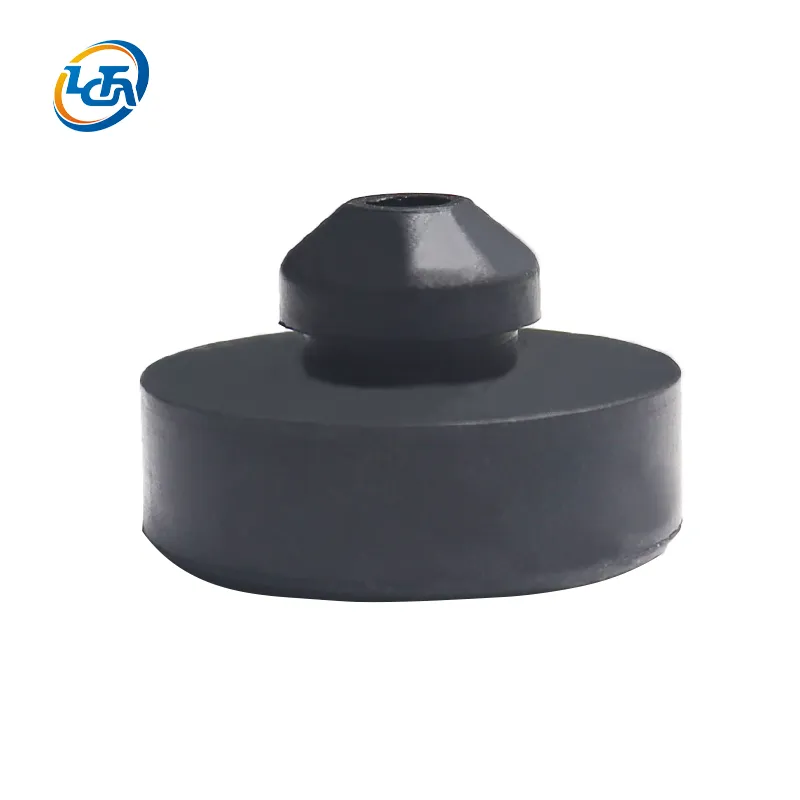
Why Property Balance Matters More Than Any Single Number
When buyers compare rubber products for sealing, they often look for one impressive number, such as the highest temperature rating or the greatest hardness. In practice, a seal is a compromise between several properties that pull in different directions. A compound that resists high temperature may be less flexible at low temperature; a compound that stays soft may not resist extrusion under pressure. Understanding the full set of properties, and how they balance against each other, is what allows a buyer to choose a rubber product that performs reliably instead of one that merely looks strong on paper. The properties below are the ones that decide whether a rubber product holds its shape, its dimensions, and its media resistance over its service life.
Elasticity and Compression Recovery
The defining property of rubber is elasticity, the ability to deform under load and recover its shape when the load is released. For a seal, this recovery is what maintains contact pressure against the sealing surface. If the rubber takes a permanent set and does not spring back, the seal loses contact and begins to leak. Compression recovery is therefore one of the first properties to check for any dynamic or repeatedly loaded joint, and it is closely linked to the choice of compound and to how the part is designed and cured. These are the properties that make a rubber product suitable for sealing.
Impermeability and Sealing Behaviour
A seal works by blocking the passage of a fluid or gas, so impermeability matters directly. Rubber is relatively impermeable compared with many materials, which is why it is an ideal sealing material for preventing the leakage of liquids and gases. The degree of impermeability depends on the compound and on the media, because some fluids permeate certain elastomers more than others. This is the reason a gasket or O-ring that seals oil well may pass water or vapour, and why media compatibility must be checked rather than assumed.
Hardness, Compression Set, and Temperature Range
Hardness is quoted in Shore A, and standard production for seals covers roughly 30 to 90 Shore A. It sets how much the seal deflects and how well it resists extrusion into a gap. Softer compounds conform better to rough surfaces and low bolt loads, while harder compounds resist pressure-driven extrusion. Compression set describes how much the material fails to recover after long compression, so a low compression set is desirable for a long-life seal. Temperature range ties these together, because both hardness and recovery change with temperature. Different rubbers have different heat and cold limits: NBR works across roughly -30 to 100 degrees Celsius, FKM reaches about -20 to 200 degrees Celsius, and silicone (VMQ) spans about -60 to 200 degrees Celsius. A seal must be rated for the whole range it will actually see, including start-up and cleaning.
Chemical, Weather, and Wear Resistance
In service, a seal meets more than the primary fluid. It may contact cleaning chemicals, coolant, or atmospheric ozone and ultraviolet light, all of which age rubber. Good chemical stability means the compound resists acids, alkalis, and other chemicals without swelling or hardening, while weather resistance means it resists ultraviolet light, ozone, and temperature change to prevent aging and cracking, which matters especially for outdoor use. Wear resistance matters where the seal is subject to friction, and some types of rubber, such as silicone rubber and fluorine rubber, resist long-term friction and wear better than general-purpose grades. Resistance to abrasion extends the life of any seal that moves against a surface. Rubber is also a good electrical insulator, which is useful when a seal also has to separate conductive parts or protect a cable entry. This should be considered alongside the mechanical properties where the seal sits near electrical components, and anti-aging behaviour is the final property that determines longevity: a compound that ages slowly keeps its hardness, its dimensions, and its sealing force for longer. Because aging is driven by heat, oxygen, ozone, and light, the environment of the application decides how much anti-aging resistance the compound needs. Buyers should ask for the material grade and the rated temperature range, and confirm that both match the service conditions.
How to Read a Rubber Product Specification
A clear specification for a rubber product used as a seal records several items: the compound and material grade, the hardness in Shore A, the size and whether it is standard or non-standard, the drawing format accepted, and the colour if identification is required. It also records the environment the rubber product must survive. Material options commonly include NBR, EPDM, SBR, HNBR, FKM, and FFKM, and custom shapes are produced to a 2D drawing in PDF or CAD, a 3D model in IGES or STEP, or a sample. Reading a rubber product specification this way turns a list of properties into a set of decisions, so the buyer can weigh temperature against flexibility and hardness against extrusion before choosing.
A Practical Sourcing Scenario
Consider a food-processing line where a seal was replaced frequently. The part had been chosen for its high hardness, on the assumption that harder meant longer lasting. In service it cracked, because the hardness was unsuitable for the low cleaning temperature and the compound had poor low-temperature flexibility. Testing the actual conditions, cleaning temperature, contact media, and dynamic load, showed that a softer, low-temperature-flexible compound held its seal far longer. The lesson is that properties must be matched to the environment as a set. A supplier with in-house rubber mixing and mold teams can advise on the balance between properties, since the compound and the geometry are developed together. For any rubber product, the lesson is the same: the properties must be matched as a set.
Questions Buyers Ask About Rubber Seal Properties
Which property matters most for a seal?
It depends on the application. For a static, low-pressure joint, impermeability and media compatibility matter most. For a dynamic or high-pressure joint, compression recovery, hardness, and extrusion resistance become the priority.
Does higher hardness mean a longer-lasting seal?
Not necessarily. Harder compounds resist extrusion but conform less and can crack if the application needs flexibility. The correct hardness follows the gap, the pressure, the surface finish, and the temperature.
How do I check a rubber product before a full order?
Ask for the material grade, hardness in Shore A, and rated temperature range, and request a sample part built to your drawing or sample. Reviewing a physical sample of the rubber product is the most reliable way to confirm that the properties match your application.
Table of Contents
- Why Property Balance Matters More Than Any Single Number
- Elasticity and Compression Recovery
- Impermeability and Sealing Behaviour
- Hardness, Compression Set, and Temperature Range
- Chemical, Weather, and Wear Resistance
- How to Read a Rubber Product Specification
- A Practical Sourcing Scenario
- Questions Buyers Ask About Rubber Seal Properties


