 EN

Why an X-Ring Outlasts a Simple Round Ring
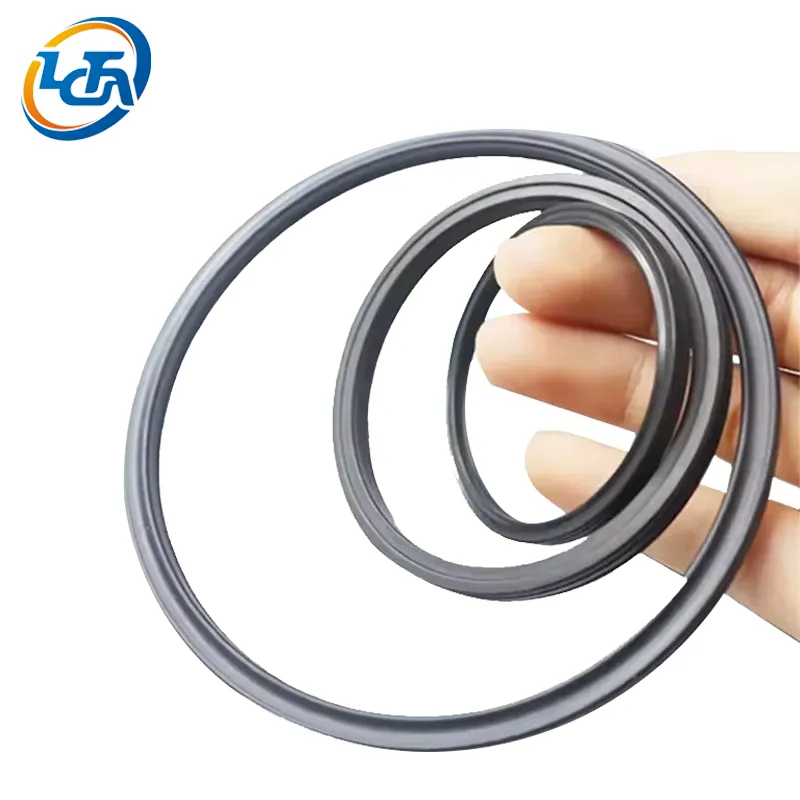
An X-ring seal, also written xring, is a sealing ring whose cross-section is shaped like an X rather than a circle. That single change in geometry produces a set of performance differences that matter most in dynamic sealing, where a surface moves against the seal thousands of times. In automotive components, from engine seals to shock absorbers, an X-ring often lasts longer than a plain round ring because it combines wider sealing contact with lower friction and better resistance to pressure. Understanding why the X cross-section behaves this way helps a buyer select the right seal for a given duty rather than defaulting to the most familiar shape. In practice, an X-ring is selected against the same factors as any seal, pressure, temperature, media, and movement, but its geometry shifts the balance in favour of longer service life.
Four-Point Contact and Lower Friction
The X cross-section gives the seal four lobes, and under compression two lobes seal while the geometry encourages the other two to act as a reserve. The X-section provides a larger contact area than a round cord, especially in dynamic seals, which helps prevent fluid or gas leakage more effectively. At the same time, the geometry reduces contact with the sealing surface compared with some round-cord designs, and that reduced contact lowers friction. Lower friction means less wear and less heat generation in service, and both of those extend the life of the seal. For an automotive component that cycles continuously, less heat and less wear translate directly into a longer interval before replacement, which is exactly the improvement a designer is looking for.
Extrusion Resistance Under Pressure
A common failure mode for any seal is extrusion, where pressure pushes the rubber into the gap between the moving parts. An X-ring resists this better because its quadrilateral design helps prevent the ring being squeezed out of the sealing cavity under pressure, improving sealing reliability. This matters in hydraulic and pneumatic systems where pressures can be high. Where an X-ring is supplied for such duty, a service pressure rating is specified, and buyers should confirm that the rating meets the working pressure of the application with an appropriate margin. Extrusion resistance is one of the reasons an X-ring is chosen for high-pressure automotive and industrial components rather than a simple round ring.
Temperature and Material Choices for Automotive Duty
Automotive components see a wide range of temperatures, from cold start to the heat of an engine bay, so the compound matters as much as the geometry. Nitrile, or NBR, resists oil and fuel across roughly -30 to 100 degrees Celsius and is widely used for automotive and mechanical seals. Fluororubber, FKM, extends to about -20 to 200 degrees Celsius with strong chemical resistance, so it is used where temperatures are higher or chemicals are present. EPDM handles water, steam, and weather but is not the first choice for petroleum oils, and silicone (VMQ) covers roughly -60 to 200 degrees Celsius for wide temperature swings. Hardness is quoted in Shore A and controls deflection and extrusion behaviour; a common automotive specification for an NBR X-ring is around 70 to 75 Shore A. Buyers should confirm the material and hardness against the real working conditions rather than assuming one grade fits every position.
Where X-Rings Improve Automotive Component Life
X-rings are widely used in automotive sealing positions because those positions combine pressure, movement, and heat. Typical examples include engine and transmission seals that must contain oil at temperature, hydraulic and pneumatic actuators that reciprocate continuously, and pump and valve internals where leakage must be prevented. Shock absorbers and other suspension components also rely on seals that resist both pressure and motion. In each of these, the benefit of an X-ring over a round ring comes from the same three effects: broader sealing contact, lower friction, and better extrusion resistance. The result is fewer leaks and a longer interval between replacements, which is the practical meaning of improved component life.
A Practical Automotive Example
Consider a hydraulic actuator on a vehicle that developed a slow leak at the rod seal after moderate service. The original part was a round-cord ring in a general-purpose compound, and inspection showed both wear on the seal and extrusion into the clearance gap under peak pressure. Replacing it with an X-ring of NBR in the 70 to 75 Shore A range, matched to the working pressure rating and confirmed against the fluid, addressed both problems: the wider contact reduced wear, and the quadrilateral section resisted extrusion under load. In a second case, a high-temperature position needed an FKM X-ring because the NBR grade hardened in service. Neither fix required a change of component design, only a better matched seal.
Specifying an X-Ring for Your Application
A clear specification for an xring records the cross-section, the inner diameter and cord size, the material and grade, the hardness in Shore A, the rated service pressure, the temperature range, and the media being sealed. Common materials are NBR, EPDM, SBR, HNBR, FKM, and FFKM, with hardness generally produced between 30 and 90 Shore A. Buyers should ask for the material grade and pressure rating, confirm the quality system such as ISO 9001, and review CE and RoHS documents against their own requirements. Where the application is critical, request a sample before mass production, because fit, hardness, and finish are easier to check on a physical seal. Standard sizes following AS568 and similar systems reduce lead time, and non-standard sizes are produced to a drawing, 3D model, or sample.
Questions Buyers Ask About X-Ring Seals
Is an X-ring always better than an O-ring?
Not always. An X-ring offers broader contact, lower friction, and better extrusion resistance in dynamic and high-pressure duty, but an O-ring can be perfectly adequate and more economical for a simple static, low-pressure joint. The right choice follows the application.
What does the service pressure rating mean?
It is the pressure at which the seal is rated to work. Buyers should confirm that the rating covers the working pressure of the application with a sensible margin, especially where pressure peaks occur.
Can an X-ring be supplied in a non-standard size?
Yes. X-rings are produced to a 2D drawing, a 3D model, or a sample, and can be made to standard systems such as AS568 or to non-standard dimensions, with material and hardness selected for the duty.
Table of Contents
- Why an X-Ring Outlasts a Simple Round Ring
- Four-Point Contact and Lower Friction
- Extrusion Resistance Under Pressure
- Temperature and Material Choices for Automotive Duty
- Where X-Rings Improve Automotive Component Life
- A Practical Automotive Example
- Specifying an X-Ring for Your Application
- Questions Buyers Ask About X-Ring Seals


