 EN
EN

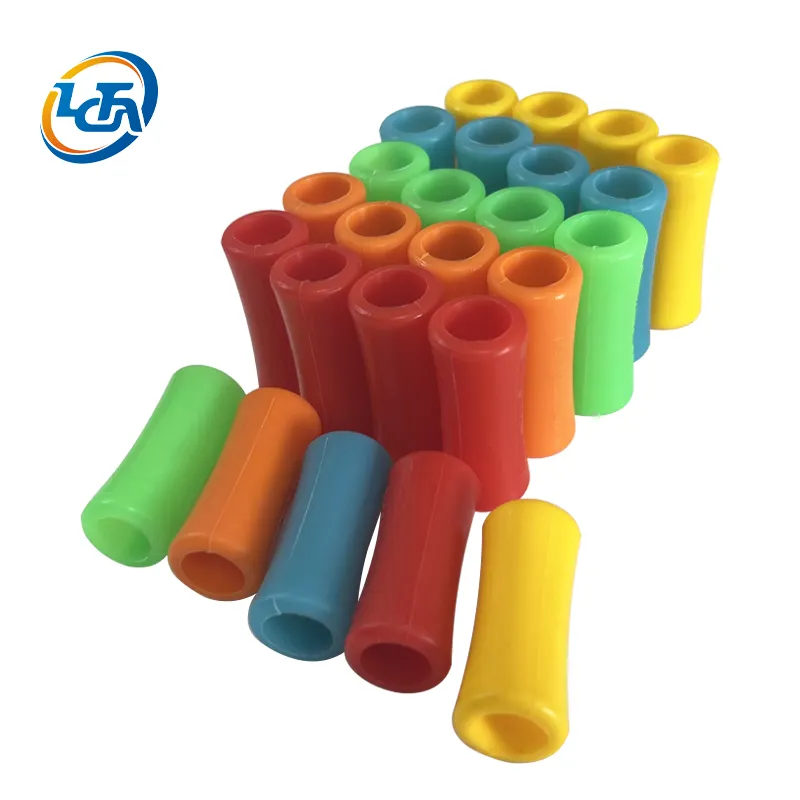
Understanding What Outdoor Exposure Does to Rubber Products
When rubber products are placed in outdoor environments, they face a combination of stressors that accelerate material degradation. Ultraviolet radiation from sunlight breaks down polymer chains at the molecular level, causing surface cracking, fading, and loss of elasticity. Ozone, a naturally occurring gas concentrated at ground level in many industrial zones, attacks unsaturated bonds in rubber compounds and creates characteristic cracking patterns perpendicular to stress lines. Temperature fluctuations ranging from sub-zero winter conditions to summer heat above 40 degrees Celsius cause repeated expansion and contraction cycles that weaken structural integrity over time. Moisture, whether from rainfall, humidity, or standing water, can penetrate micro-cracks and promote hydrolysis in certain rubber formulations. For industrial buyers sourcing rubber products for outdoor applications, understanding these degradation mechanisms is the first step toward making informed material and supplier decisions. A rubber product that performs reliably indoors for a decade may fail within eighteen months outdoors if it was not specifically formulated for environmental resistance.
Selecting the Right Rubber Material for Outdoor Conditions
The single most important decision for outdoor durability is material selection. Different rubber compounds offer vastly different resistance profiles to environmental factors. Ethylene Propylene Diene Monomer rubber, commonly known as EPDM, is widely regarded as the best-performing polymer for outdoor use due to its fully saturated backbone structure, which provides inherent resistance to UV radiation, ozone, and weathering. EPDM rubber products can maintain their mechanical properties through years of direct sunlight exposure, making them the default choice for roofing membranes, automotive weatherstripping, outdoor electrical insulators, and agricultural equipment seals. Silicone rubber also demonstrates excellent UV and ozone resistance, with the added benefit of maintaining flexibility across an extremely wide temperature range from approximately minus 60 degrees Celsius to above 230 degrees Celsius. However, silicone has lower tensile strength and tear resistance compared to EPDM, which limits its suitability for high-stress dynamic applications. Nitrile Butadiene Rubber, or NBR, offers good mechanical strength and oil resistance but performs poorly outdoors because its unsaturated backbone is vulnerable to ozone attack and UV degradation. Unless specially formulated with anti-ozonants and UV stabilizers, standard NBR rubber products should generally be avoided for continuous outdoor exposure. Fluoroelastomer materials such as FKM provide exceptional chemical and high-temperature resistance but come at a significantly higher cost, making them appropriate only when the outdoor environment also involves aggressive chemicals or extreme thermal cycling beyond what EPDM can handle.
The Role of Compound Formulation and Additives
Even within the same base polymer family, the specific compound formulation dramatically affects outdoor durability. A rubber product manufacturer with in-house compounding capability can adjust the formula by incorporating carbon black as a UV absorber, adding antioxidants to slow thermal oxidative aging, introducing anti-ozonants such as para-phenylene diamine derivatives to protect against ozone cracking, and selecting the appropriate curing system for the intended service environment. Sulfur-cured EPDM generally provides better mechanical properties, while peroxide-cured systems offer superior heat aging resistance and lower compression set at elevated temperatures. The loading level and particle size of reinforcing fillers such as carbon black or silica influence both physical strength and UV screening effectiveness. A well-formulated outdoor rubber product should show minimal surface degradation after extended accelerated weathering tests such as QUV testing per ASTM G154 or xenon arc exposure per ASTM G155. Buyers evaluating suppliers should ask about their compound development capability and whether they can provide weathering test data for the specific rubber product being sourced. Xingtai Longcheng Sealing Co., Ltd., for example, maintains a dedicated rubber material research and development team that formulates compounds tailored to the customer's outdoor service conditions, rather than relying on off-the-shelf commercial compounds that may not have been optimized for long-term weather resistance.
Manufacturing Process Factors That Affect Outdoor Durability
Beyond material selection and compound formulation, the manufacturing process itself introduces quality variables that influence how a rubber product ages outdoors. Proper mixing dispersion of compounding ingredients is critical because poorly dispersed carbon black or curatives create weak points that become initiation sites for environmental attack. Cure state optimization ensures the rubber achieves its designed crosslink density. An under-cured part may have residual unreacted species that leach out or oxidize over time, while an over-cured part becomes brittle and prone to cracking. Mold design affects the surface finish and potential knit lines where flow fronts meet during cavity filling; these knit lines represent mechanical weak points that can open up under outdoor thermal cycling. Post-curing, a secondary heat treatment applied after the primary molding cycle, is particularly important for silicone and FKM rubber products as it completes the crosslinking reaction, drives off low-molecular-weight volatile byproducts, and stabilizes the final physical properties. For critical outdoor sealing applications, a manufacturer should be able to document the process parameters used, including mixing time and temperature, mold temperature and pressure, cure time, and whether post-curing was performed and at what conditions. A supplier that operates under an ISO 9001 quality management system, as Longcheng does, provides documented traceability of these process variables, which gives buyers confidence that the outdoor durability of each production batch is consistent with the originally qualified product.
Application Example: Sealing Components for Agricultural Machinery
Consider a practical sourcing scenario involving rubber seals and gaskets for agricultural equipment such as tractors, harvesters, and irrigation systems. These rubber products are exposed to direct sunlight in open fields, temperature swings from cold mornings to hot afternoons, rain, mud, fertilizers, diesel fuel, and hydraulic oils. A purchasing manager for an agricultural machinery manufacturer needs sealing components that can survive these conditions without leaking or requiring mid-season replacement. In one project supported by Longcheng, a customer required rubber washers and O-rings that could maintain sealing integrity in pivot irrigation systems exposed to UV radiation, water, and agricultural chemicals throughout a six-month growing season. The solution involved specifying EPDM rubber products for the water-contact seals due to the material's excellent water resistance, weathering stability, and compatibility with common agricultural chemicals. For hydraulic system seals where oil resistance was also required, the team recommended a specially formulated NBR compound with enhanced anti-ozonant protection, understanding that while NBR is not inherently ozone-resistant, the anti-ozonant package could provide adequate service life when the exposure was intermittent rather than continuous. The customer received documented weathering test reports and material certifications before production, enabling them to validate the material choices against their own field experience. This type of collaborative material selection, grounded in both polymer science and real-world application knowledge, is what separates a capable rubber product supplier from a generic parts vendor.
Testing and Verification Protocols for Outdoor Rubber Products
Industrial buyers should not rely solely on supplier claims about outdoor durability. Verifiable test data provides objective evidence of how a rubber product will perform under specific environmental conditions. Standard accelerated aging tests include hot air aging per ASTM D573 to evaluate thermal stability, ozone resistance testing per ASTM D1149 or ISO 1431 to assess cracking under controlled ozone concentrations and strain levels, and UV weathering tests as mentioned earlier. For rubber products used in dynamic outdoor applications, additional tests such as compression set per ASTM D395 provide insight into how well the material recovers after prolonged compression at service temperatures. Tensile strength and elongation at break measurements before and after aging quantify the degree of mechanical property retention. Buyers should request certificates of analysis or test reports for the specific rubber product they are purchasing, not just generic material datasheets. A supplier that provides this level of documentation typically has invested in both internal laboratory capabilities and external third-party testing partnerships that validate their quality claims.
Practical Sourcing Checklist for Outdoor Rubber Products
When evaluating rubber product suppliers for outdoor applications, a structured assessment framework helps ensure all critical factors are addressed. First, confirm that the supplier can recommend or produce the appropriate material grade for the specific outdoor environment, whether that is EPDM for general weathering, silicone for extreme temperature ranges, FKM for aggressive chemical exposure, or a custom compound. Second, verify that the supplier has documented quality management systems such as ISO 9001 and relevant product certifications such as CE, RoHS, or industry-specific standards. Third, request weathering test data or case references from comparable outdoor applications. Fourth, ask about compound development capability because outdoor applications frequently require fine-tuning of standard formulations. Fifth, evaluate the supplier's ability to maintain consistent product quality across multiple production batches through process control documentation. Companies such as Xingtai Longcheng Sealing, which operates with over 16 years of manufacturing experience, a dedicated R&D team, a mold library exceeding 8,000 sets, and international certifications including ISO 9001, CE, and RoHS, demonstrate the kind of infrastructure and quality commitment that supports reliable outdoor rubber product supply. The company serves customers across more than 70 countries in industries ranging from automotive and railway to agriculture and medical devices, providing experience across diverse outdoor and indoor application environments.
Table of Contents
- Understanding What Outdoor Exposure Does to Rubber Products
- Selecting the Right Rubber Material for Outdoor Conditions
- The Role of Compound Formulation and Additives
- Manufacturing Process Factors That Affect Outdoor Durability
- Application Example: Sealing Components for Agricultural Machinery
- Testing and Verification Protocols for Outdoor Rubber Products
- Practical Sourcing Checklist for Outdoor Rubber Products


