 EN
EN

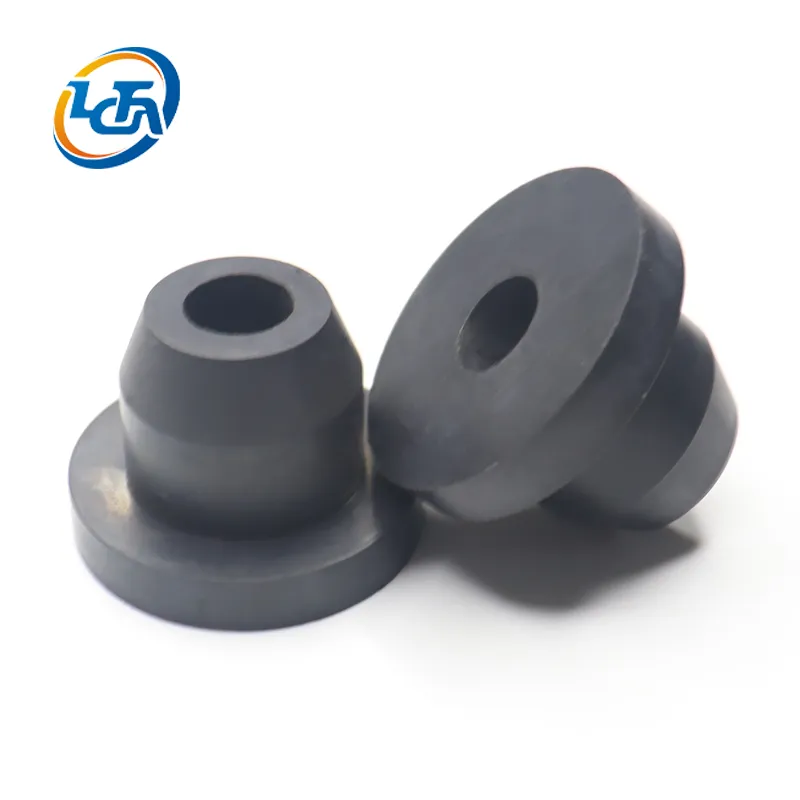
The Engineering Behind High-Seal Rubber Stoppers
A high-seal rubber stopper is not simply a piece of rubber shaped into a plug. It is an engineered sealing component designed to create a reliable barrier against liquid, gas, or contaminant ingress under specific pressure and temperature conditions. The production of such a rubber stopper requires precise control over material formulation, mold design, and the entire manufacturing process. Even a dimensional deviation of a few tenths of a millimeter can compromise sealing performance, especially in applications such as laboratory glassware closures, pharmaceutical vial sealing, hydraulic system plugs, and industrial pipeline stoppers. Understanding how these components are made helps industrial buyers evaluate supplier capability and make informed sourcing decisions. The production journey involves several interdependent stages, each contributing to the final product's ability to maintain a consistent, leak-free seal over its intended service life.
Material Selection for High-Seal Performance
The choice of rubber material is the foundation of a high-seal rubber stopper. The material must be compatible with the media it will contact, maintain elasticity to create a tight interference fit, and resist compression set so the seal does not relax over time. For general-purpose laboratory and industrial rubber stoppers, natural rubber offers good elasticity and rebound characteristics but has limited chemical and temperature resistance. EPDM rubber stoppers are preferred when the application involves water, steam, or outdoor exposure, as EPDM provides excellent resistance to polar solvents, heat, and weathering. Silicone rubber stoppers serve in high-temperature applications up to approximately 230 degrees Celsius and are commonly specified for pharmaceutical and food-contact applications due to their inertness and compliance with FDA and USP Class VI standards. NBR rubber stoppers are selected when oil or fuel resistance is required, making them suitable for automotive and hydraulic system plug applications. For aggressive chemical environments, FKM and FFKM stoppers provide near-universal chemical resistance at a higher cost. The material's hardness, typically measured on the Shore A scale, directly influences sealing force. A rubber stopper that is too soft may extrude under pressure, while one that is too hard may not conform sufficiently to the mating surface, leaving micro-gaps that compromise the seal. Most high-seal rubber stoppers fall within the 40 to 70 Shore A hardness range, with the specific value determined by the required insertion force, pressure rating, and surface finish of the mating component.
Mold Design and Precision Engineering
The mold is where the rubber stopper takes its final shape, and mold quality determines dimensional consistency across thousands or millions of parts. High-seal rubber stopper molds are typically precision-machined from hardened tool steel with cavity tolerances held to plus or minus 0.02 millimeters or tighter, depending on the application requirements. Critical design elements include the parting line location, which must be positioned away from sealing surfaces whenever possible to prevent flash from creating leak paths. Venting channels allow trapped air to escape during mold filling, preventing voids and porosity that would create weak points in the seal. Multi-cavity molds increase production efficiency, but they require balanced runner systems that deliver identical material volume and pressure to each cavity, ensuring that every rubber stopper in a production batch has the same dimensions and material density. For rubber stoppers used in pharmaceutical or medical device applications, the mold surface finish and release agent selection must also consider cleanliness and extractable requirements. Some manufacturers use chrome-plated mold surfaces to reduce sticking and improve part release without requiring excessive mold release agents that could leave residues. Xingtai Longcheng Sealing maintains a mold library of over 8,000 sets, which means many common rubber stopper sizes are available without new tooling investment. For custom sizes, the company's mold research and development team designs cavity layouts that optimize both part quality and production economics.
Compression Molding Versus Injection Molding
The two primary manufacturing processes for rubber stoppers are compression molding and injection molding, and the choice between them affects cost, precision, and production volume. Compression molding places a pre-weighed rubber preform directly into an open heated mold cavity. The mold closes under pressure, forcing the rubber to flow and fill the cavity shape while heat activates the curing reaction. This method uses simpler, lower-cost tooling and is well-suited for low to medium production volumes, large-diameter stoppers, and parts made from high-viscosity rubber compounds that do not flow easily. However, compression molding typically produces more flash that requires post-mold trimming, and dimensional consistency can vary slightly between cycles due to preform weight variations. Injection molding, by contrast, feeds rubber compound through a heated barrel and injects it under high pressure into a closed mold. This method provides tighter dimensional control, shorter cycle times, and less flash, making it the preferred process for high-volume production of small to medium-sized rubber stoppers where precision is critical. The injection molding process also allows for more complex geometries, including undercuts and integrated features that would be difficult or impossible to produce with compression molding. The trade-off is higher tooling cost and the requirement that the rubber compound have suitable flow characteristics for injection. A capable rubber stopper manufacturer should be able to recommend the appropriate molding method based on the part geometry, tolerance requirements, annual volume, and material choice.
The Curing Process and Its Impact on Seal Quality
Curing, also known as vulcanization, is the chemical process that transforms raw rubber compound from a plastic, formable state into an elastic, crosslinked material with stable physical properties. The curing parameters of temperature, pressure, and time must be precisely controlled to achieve optimal crosslink density for the specific rubber stopper application. An under-cured rubber stopper will have lower tensile strength, higher compression set, and may exhibit blooming of unreacted curatives to the surface, which can contaminate sealed contents in pharmaceutical or food applications. An over-cured rubber stopper becomes brittle, loses elasticity, and may crack during insertion or removal. The cure state is monitored during production by measuring properties such as hardness, tensile strength, elongation, and compression set on test specimens from each batch. Rheometer testing provides a cure curve that shows how the rubber's stiffness develops over time at a given temperature, allowing manufacturers to determine the optimal cure time and verify that each production batch achieves the target cure state. For high-seal applications where compression set resistance is critical, some manufacturers apply a post-curing step, holding the molded rubber stoppers at an elevated temperature for several hours after the primary molding cycle. This secondary heat treatment completes any remaining crosslinking reactions, drives off volatile byproducts, and stabilizes the final dimensions, reducing the risk of seal relaxation after installation.
Quality Control and Seal Verification Testing
High-seal rubber stoppers undergo a series of quality control checks to verify that every production batch meets the required sealing performance. Dimensional inspection using calibrated gauges, optical comparators, or coordinate measuring machines confirms that critical dimensions such as the sealing diameter, taper angle, and overall length fall within specified tolerances. Visual inspection identifies surface defects such as cracks, porosity, flow marks, and excessive flash that could create leak paths. Hardness testing per ASTM D2240 verifies that the rubber stopper is within the specified Shore A range, as hardness directly correlates with sealing force. For applications requiring quantitative seal performance validation, leak testing subjects the rubber stopper to the rated pressure differential, either with air or liquid, while monitoring for any pressure drop or visible leakage. In pharmaceutical applications, additional tests such as fragmentation testing, penetrability testing, and extractable and leachable studies ensure the rubber stopper meets pharmacopoeia standards. Manufacturers like Xingtai Longcheng Sealing, which operates under ISO 9001 certified quality management and holds CE and RoHS certifications, maintain documented quality control procedures and retain batch records that provide full traceability from raw material receipt through final inspection. This level of documentation is essential for industrial buyers who need to validate supplier quality for regulated or high-liability applications.
Production Scale and Customization Capability
The production infrastructure of a rubber stopper manufacturer determines both the range of standard products available and the feasibility of custom projects. A manufacturer with thousands of existing molds can offer standard rubber stopper sizes off the shelf, reducing lead time and eliminating tooling costs for common requirements. For custom rubber stoppers, the development process typically begins with a technical review of the customer's drawing or sample, during which the manufacturer evaluates material compatibility, mold design feasibility, and production process requirements. Prototype tooling may be used for small-quantity validation before investing in full production molds. The minimum order quantity varies by manufacturer and process, with compression molding generally accommodating smaller runs than injection molding. Companies that support low MOQ orders, as Longcheng does, provide flexibility for buyers who need to validate a new rubber stopper design or supply a niche product line without committing to high-volume inventory. The combination of standard product availability, custom development capability, and flexible order quantities allows buyers to source the right rubber stopper solution whether they need a few hundred pieces for a prototype or hundreds of thousands for ongoing production.
Table of Contents
- The Engineering Behind High-Seal Rubber Stoppers
- Material Selection for High-Seal Performance
- Mold Design and Precision Engineering
- Compression Molding Versus Injection Molding
- The Curing Process and Its Impact on Seal Quality
- Quality Control and Seal Verification Testing
- Production Scale and Customization Capability


