 EN

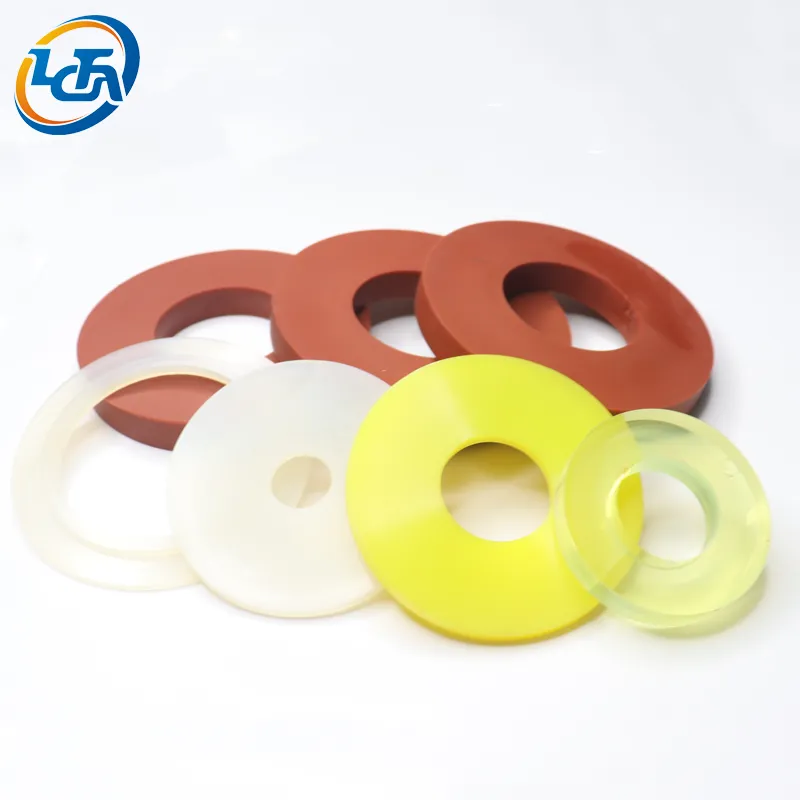
Why Silicone Parts Are Specified Differently
Most custom rubber work follows the same pattern: take a drawing, choose a compound, cut a mold, and mould the silicone part. Silicone parts add a set of variables that other elastomers do not present so strongly, and those variables are what a silicone-specific custom service is really about. Silicone rubber, or VMQ, is soft by nature, stays flexible from roughly -60 to 200 degrees Celsius, and is usually specified in a colour rather than left black. Softness, colour, and surface finish therefore become design decisions rather than fixed defaults, and each one changes how the silicone part is moulded and inspected. A supplier who treats silicone parts as ordinary rubber parts will usually deliver something that fits but does not perform, because the properties that make silicone worth choosing are exactly the ones that are easiest to lose in production.
Softness as a Design Variable
Hardness is the first silicone-specific decision. Standard production covers roughly 30 to 90 Shore A, and within that range silicone can be made soft enough to act as a cushion and firm enough to hold a shape under load. That range is wider in practical effect than the same numbers suggest for other rubbers, because silicone at the soft end is genuinely compliant rather than merely flexible. A soft silicone part conforms to an irregular surface and spreads contact pressure, which is why it appears in seals, grips, and protective covers. The same softness makes the silicone part easy to distort during demoulding, so the hardness has to be chosen with the geometry in mind, not in isolation. Buyers should state the hardness they need and the reason for it, so the supplier can flag a design that cannot hold that softness at the required wall thickness.
Colour and Visual Identification
Colour is the second silicone-specific service element, and it is functional more often than buyers expect. Silicone parts are commonly supplied in a specified colour so that a silicone part can be identified on an assembly line, matched to a product family, or distinguished from a visually similar part made in a different grade. Standard production can be specified to a customer colour requirement, which means colour becomes part of the specification rather than an afterthought. The practical consequence is that colour must be written into the drawing and the batch record, because two parts that look identical in shape can differ in grade and colour and still be confused at goods-in. Where colour is used for identification, stating it explicitly on the purchase specification prevents a batch being rejected on arrival for a mismatch that has nothing to do with performance.
Moulding, Flash and the Finish of a Soft Part
The third silicone-specific element is how the silicone part is formed and finished. Soft compounds are less forgiving in the mould: they fill fine detail well, but they also flash more readily at the parting line, and flash on a soft silicone part is more noticeable in service because it can tear away and leave a rough edge. Compression moulding is the common route for silicone parts, and the finish at the parting line, the gate, and any cored hole should be agreed in advance rather than discovered at first article. Buyers should ask what finish is standard, whether deflashing is done by hand or by a controlled process, and whether a specific cosmetic requirement is achievable at the chosen hardness. For a silicone part that seals or that contacts a product, a torn edge is a functional defect, not a cosmetic one.
Prototyping Before Tooling
The fourth element is the prototyping route, which matters more for silicone than for harder rubbers because softness changes how a silicone part behaves in the assembly. A prototype or sample batch produced before volume tooling lets the buyer confirm that the chosen hardness actually seals, cushions, or grips as intended, and that the part assembles without folding or pinching. Buyers should ask whether the sample is produced on the production mould or on a temporary tool, because a temporary tool can give a different finish and a different dimensional result. They should also ask how many iterations are included, since a soft part often needs one adjustment to wall thickness or hardness after the first fit. A supplier holding a large library of existing molds can often avoid new tooling for a standard geometry, which keeps the prototype stage short.
A Custom Silicone Part Scenario
Consider a machine builder that needed a soft protective cover for a sensor housing. The first version was specified only by outline dimensions, in a general-purpose 50 Shore A silicone, and it fitted but lifted at one corner after a few weeks because the wall was too thin to hold its shape at that hardness. The second version specified the hardness with a reason, increased the wall thickness at the corner, and added a colour requirement so the cover could be identified during assembly. The silicone part then stayed in place and the assembly line stopped confusing it with a similar black cover used on another model. Neither change was dramatic, but both came from treating softness and colour as engineering variables rather than as details to be settled by the supplier.
What to Put in a Silicone Part Enquiry
A useful enquiry states the function of the part, the hardness in Shore A with the reason, the colour and whether it is functional, the dimensions and any critical tolerance, the operating temperature range, the media or contact surface, and the quantity per order. It should also state whether the part must seal, cushion, insulate, or simply cover, because that determines which property has to be protected in production. Where a drawing does not exist, a sample plus a sketch with measured dimensions is usually enough to start. Buyers should ask which grade is proposed, how the finish will be controlled, and what documentation will accompany the batch. A supplier working to ISO 9001 with CE and RoHS compliance provides a documented quality baseline, and the documents should still be checked against the buyer's own requirements.
Questions Buyers Ask About Custom Silicone Parts
Can silicone parts be made in very soft grades? Standard production covers roughly 30 to 90 Shore A, so soft grades are available, but the achievable softness depends on the geometry. A very thin wall in a very soft grade may not hold its shape, which is why hardness and wall thickness have to be decided together. Is colour a real specification or just a preference? It is a real specification whenever the part is identified visually, matched to a product family, or must not be confused with a similar part. Colour should appear on the drawing and the batch record, not only in an email. Do custom silicone parts always need a new mold? No. Where the geometry matches an existing mold, no new tooling is required, which shortens lead time and removes the one-time tooling cost. A genuinely new shape needs a new mold, and that cost should be quoted separately from the part price.
Table of Contents
- Why Silicone Parts Are Specified Differently
- Softness as a Design Variable
- Colour and Visual Identification
- Moulding, Flash and the Finish of a Soft Part
- Prototyping Before Tooling
- A Custom Silicone Part Scenario
- What to Put in a Silicone Part Enquiry
- Questions Buyers Ask About Custom Silicone Parts


