 EN

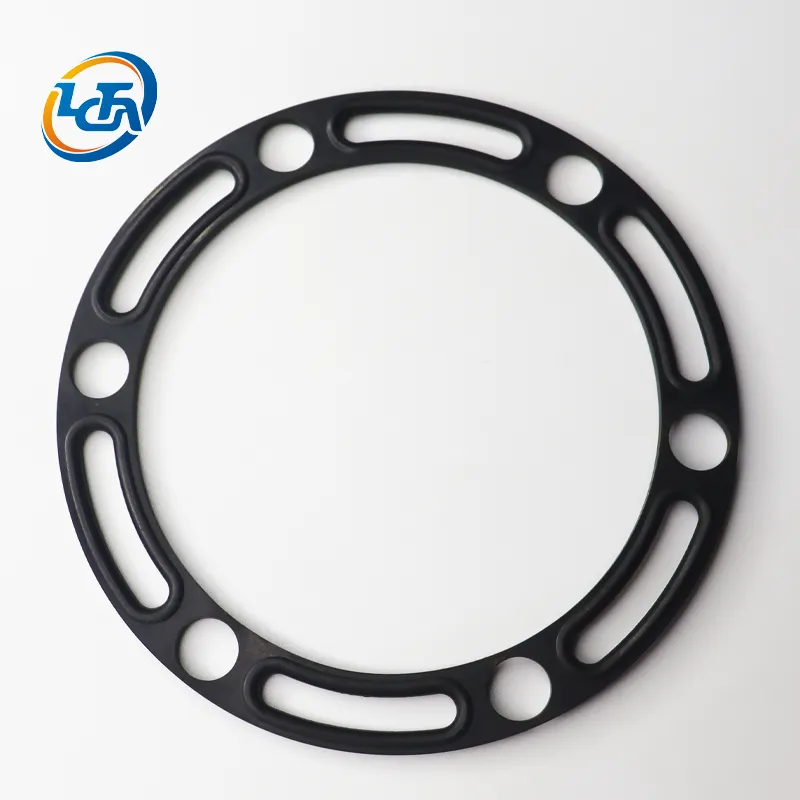
What Silicone Brings to an Industrial Gasket
Silicone gaskets are often specified for industrial equipment that sees wide temperature swings, outdoor exposure, or electrical components nearby, and the reason is a property combination rather than a single headline number. Silicone rubber, or VMQ, stays flexible from roughly -60 to 200 degrees Celsius, is chemically stable and relatively inert, and is a good electrical insulator. Those three properties together solve problems that oil-resistant rubbers do not: a silicone gasket that must still seal after a cold night and a hot day, a cover that must not harden in service, and a housing that must isolate a conductive part. A silicone gasket is not a universal upgrade, however. It has real limits, and understanding them is what separates a correct specification from an expensive mistake.
Temperature Range and Compression Behaviour
The temperature range is the most cited reason for choosing a silicone gasket, and it is genuinely wide. Because the material does not become brittle at the low end or degrade within its rated range at the high end, one silicone gasket can survive a cold store, a washdown, and a hot enclosure without changing shape. That matters for equipment that is started cold and runs hot, and for covers that are removed and refitted across seasons. Temperature also interacts with compression: a silicone gasket seals by staying compressed, and if the compound hardens it stops following the flange. Silicone resists that hardening better than many general-purpose rubbers within its range, which is why it holds compression on a cover that is opened repeatedly. The rated range should still be confirmed for the specific grade, because not every silicone compound shares identical limits.
Chemical Inertness and What It Does Not Resist
Chemical stability is the second reason silicone gaskets appear in demanding positions. Silicone is relatively inert, which is why it is used in food, medical, and electronic contact applications, and it resists swelling and hardening when it meets many of the fluids and cleaning agents found around industrial equipment. That stability is what keeps a silicone gasket's dimensions and sealing force constant over time, and a gasket that does not swell keeps its fit in the groove. The limit matters just as much: silicone is not the right choice for petroleum oils, fuels, and many hydrocarbon solvents, where it can swell or soften. A buyer who specifies a silicone gasket for an oil-filled housing because the temperature range looked attractive will usually regret it. Compatibility should be confirmed against the actual media and concentration, not against a general claim of inertness.
Where Silicone Gaskets Fit in Industrial Equipment
In practice, silicone gaskets suit three industrial patterns. The first is thermal cycling, where a cover or housing expands and contracts and the gasket must follow without taking a set. The second is weather and washdown exposure, where ozone, ultraviolet light, and water attack general-purpose rubber and where EPDM would also work but silicone adds a wider temperature window. The third is electrical isolation, where the silicone gasket sits between a conductive housing and a component and its insulating property becomes functional rather than incidental. Outside those patterns, a different elastomer is usually more cost-effective: NBR for oil contact, EPDM for pure water and steam service at moderate temperature, FKM for hot oil and aggressive chemistry. Choosing silicone for an application it does not suit is one of the more common and more avoidable specification errors.
Silicone Against EPDM, NBR and FKM
The comparison is not about which material is better but about which constraint dominates. NBR is the default for oil and fuel because it resists both across roughly -30 to 100 degrees Celsius, but it hardens and cracks under prolonged outdoor exposure. EPDM is strong on water, steam, ozone, and weather and is often the lower-cost answer for outdoor covers, but it swells in petroleum oils. FKM handles hot oil and aggressive chemicals to about 200 degrees Celsius but is a poor choice where low-temperature flexibility is needed. Silicone covers the widest temperature span and adds electrical insulation, at the cost of modest mechanical strength and poor oil resistance. Hardness, quoted in Shore A, is available across roughly 30 to 90 Shore A for standard production, and a softer silicone gasket conforms better to a rough casting while a harder one resists extrusion in a bolted flange.
A Practical Application Example
Consider an outdoor control cabinet with a bolted cover that leaked after two winters. The original gasket was a general-purpose NBR part chosen for its low cost, and inspection showed it had hardened and cracked along the bolt line, with a permanent set that stopped it recovering when the cover was refitted. The cabinet also housed electrical terminals, so the gasket had an insulating role as well as a sealing one. Replacing it with a silicone gasket of moderate hardness, sized to the groove and specified with the correct compression, restored the seal and kept the insulation property. In a second case, a silicone gasket was proposed for a gearbox cover carrying hot oil; the specification was changed to FKM before production because the medium, not the temperature, was the governing constraint. Both decisions came from the same question: which condition is actually limiting.
Specifying a Silicone Gasket Correctly
A clear specification records the material and grade, the hardness in Shore A, the dimensions and groove, the rated temperature range, the media it will contact, and whether electrical insulation is a functional requirement. It should also record the compression available at the bolt load, because a silicone gasket that is under-compressed will leak regardless of compound. Buyers should ask which grade is proposed and confirm that the rated range covers the peak temperature, not only the normal operating temperature. Where the joint is critical, a sample gasket should be checked before production, since conformability and fit are easier to confirm on a physical part. A supplier working to ISO 9001 with CE and RoHS compliance provides a documented baseline for the quality system, and those documents should still be reviewed against the buyer's own requirements.
Questions Buyers Ask About Silicone Gaskets
Are silicone gaskets suitable for oil sealing? Generally no. Silicone has poor resistance to petroleum oils and fuels and can swell or soften in service. NBR, HNBR, or FKM are the usual choices for oil contact, with FKM preferred where temperatures are high. Why use a silicone gasket instead of EPDM? EPDM is often adequate for water, steam, and weather at moderate temperature. Silicone is chosen when the temperature range is wider, when electrical insulation is required, or when the gasket must stay flexible at low temperature. Does a wider temperature range mean a silicone gasket suits any application? No. Temperature is only one constraint. Media compatibility, compression available at the bolt load, hardness, and the mechanical strength needed in the joint all have to be checked, and silicone is weaker in tear and abrasion than some alternatives.
Table of Contents
- What Silicone Brings to an Industrial Gasket
- Temperature Range and Compression Behaviour
- Chemical Inertness and What It Does Not Resist
- Where Silicone Gaskets Fit in Industrial Equipment
- Silicone Against EPDM, NBR and FKM
- A Practical Application Example
- Specifying a Silicone Gasket Correctly
- Questions Buyers Ask About Silicone Gaskets


