 EN
EN

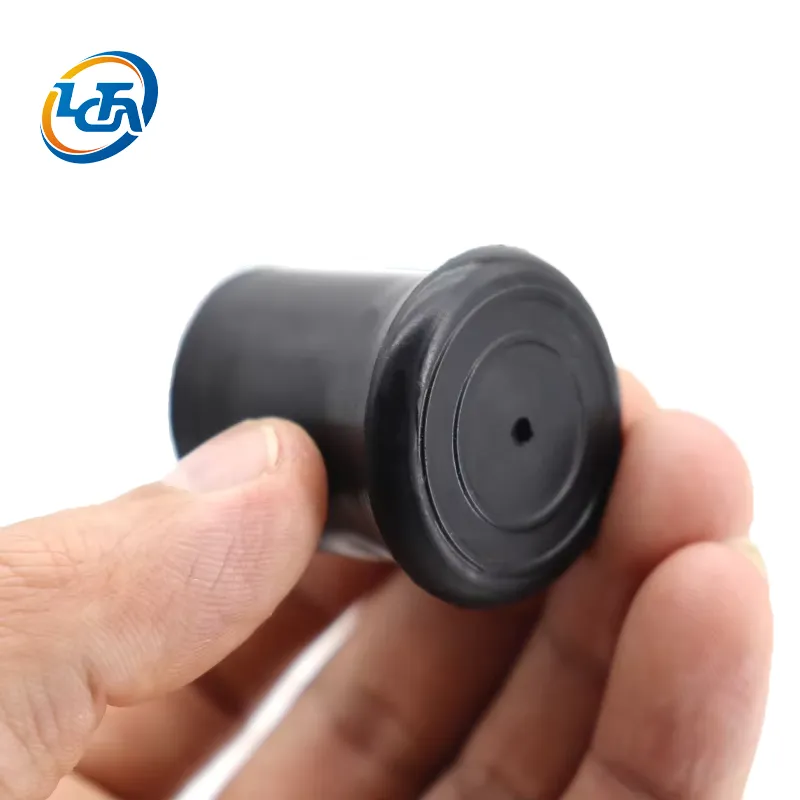
Selecting a rubber stopper supplier involves more than comparing unit prices. The right partner must demonstrate technical capability in material compounding, mold engineering, quality control, and global logistics. For manufacturers and distributors sourcing custom rubber stoppers, five key evaluation criteria help separate commodity suppliers from engineering-driven manufacturing partners who can deliver consistent quality over years of repeat orders. This article outlines what buyers should look for when choosing a rubber stopper manufacturer and how to verify these capabilities before placing an order.
Materials expertise and compound development
A rubber stopper's performance begins with its material formulation. The difference between a stopper that seals reliably for years and one that hardens and leaks within months comes down to the rubber compound. NBR rubber stoppers provide oil and fuel resistance for automotive and industrial fluid containers. EPDM rubber stoppers resist weathering and ozone, making them ideal for outdoor equipment and electrical enclosures. FKM rubber stoppers handle aggressive chemicals and temperatures exceeding 200 degrees Celsius for laboratory and aerospace applications. Silicone rubber stoppers meet food contact and medical certification requirements. The right manufacturing partner should offer an in-house rubber compounding team that can adjust formulations for specific requirements such as low-temperature flexibility, high-temperature compression set resistance, or compliance with FDA, USP Class VI, or EU 10/2011 food contact regulations. When evaluating a supplier, ask whether they compound their own materials or purchase pre-mixed compounds. In-house compounding provides faster formulation adjustments and better cost control for custom projects.
Mold design and manufacturing capability
The quality and consistency of a rubber stopper depend heavily on mold design. A well-designed mold accounts for material shrinkage during curing, provides proper venting to prevent air traps, and positions the parting line where it will not interfere with the sealing surface. Suppliers who own their mold design and manufacturing operations can iterate faster on prototype development and control the quality of the tool steel and machining accuracy that determine how many thousands of parts a mold can produce before requiring maintenance. For custom rubber stopper projects, a supplier with a library of tens of thousands of existing molds may be able to adapt a similar design, significantly reducing tooling costs and lead times compared to building a completely new mold. Ask about mold maintenance procedures, typical mold life in number of shots, and whether the supplier retains molds for future reorders.
Quality control throughout the production process
Consistent quality in rubber stopper manufacturing requires systematic inspection at multiple production stages. Raw material inspection should verify compound specifications against the formulation sheet before mixing begins. In-process checks during molding should monitor time, temperature, and pressure parameters that affect cure state and dimensional stability. Finished part inspection typically includes visual examination for surface defects such as flash, flow marks, and contamination, dimensional measurement against the drawing tolerances, and hardness testing to confirm the specified Shore A value. For critical sealing applications, additional tests may include compression set after thermal aging, tensile strength and elongation per ASTM D412, and immersion testing for chemical resistance. A supplier with ISO 9001 certification has documented quality management processes that provide lot traceability from raw material receipt through finished part shipment. Ask whether the supplier provides certificates of analysis with each shipment and whether they maintain retained samples for dispute resolution.
Customization flexibility and low minimum quantities
Many rubber stopper projects begin with small quantities for prototyping and market testing before scaling to full production. The ideal manufacturing partner offers flexibility in order quantities, accepting orders from a few hundred pieces for initial validation to hundreds of thousands for ongoing production. Low minimum order quantities indicate that the supplier has invested in quick-change mold systems and efficient small-batch production processes rather than being optimized only for mass production. This flexibility is particularly valuable for companies developing new products or entering new markets where demand is uncertain. For custom non-standard rubber stopper designs, the supplier should be able to work from dimensional drawings, CAD files, or physical samples to create production-ready tooling. Free sample availability for evaluation before production commitment is a practical sign of a supplier confident in their quality and interested in building long-term relationships rather than one-time transactions.
Global logistics and supply chain reliability
For international buyers importing rubber stoppers, supply chain consistency matters as much as product quality. The supplier should demonstrate reliable export packaging that protects parts from moisture, compression, and contamination during ocean freight. Experience shipping to the buyer's target region, whether Europe, North America, Southeast Asia, or South America, indicates familiarity with customs documentation, Incoterms, and regional labeling requirements. A supplier with dedicated international trade staff can respond promptly to shipping inquiries, provide accurate lead time estimates, and manage logistics disruptions effectively. For ongoing supply relationships, the supplier should offer production planning visibility so buyers can anticipate inventory needs without overstocking. Certifications such as CE marking confirm compliance with EU product safety requirements, while RoHS compliance ensures materials meet restricted substance limits for electronic and electrical equipment applications.
Practical sourcing scenario
Consider a manufacturer of laboratory equipment developing a new line of reagent bottles that require custom rubber stoppers. The stoppers must provide an airtight seal during storage, resist chemical attack from common laboratory solvents, and maintain their properties through autoclave sterilization cycles at 121 degrees Celsius. The sourcing team evaluates three potential suppliers and finds that while all three offer competitive pricing, only one demonstrates in-house compounding capability for silicone formulations certified to USP Class VI standards, owns a mold design team that can modify an existing stopper mold from their library to save 40 percent on tooling costs, provides a detailed quality plan including compression set testing after simulated autoclave aging, and ships to the buyer's region with a documented on-time delivery record above 95 percent over the past two years. This supplier also sends pre-production samples that pass the buyer's fit and function testing before tooling is finalized. The combination of technical competence, quality infrastructure, and logistics reliability makes the selection straightforward despite a slightly higher unit price.
What should I look for in a rubber stopper material certification?
Material certifications should include the compound formulation reference, physical property test results (hardness, tensile strength, elongation, specific gravity), and any regulatory compliance documentation relevant to your application, such as FDA 21 CFR 177.2600 for food contact rubber, USP Class VI for medical devices, or EU 10/2011 for food contact plastics. The certification should be traceable to a specific production lot and signed by the supplier's quality representative. For critical applications, request third-party test reports from an ISO 17025 accredited laboratory rather than relying solely on supplier self-certification.
How do I specify the right Shore A hardness for a rubber stopper?
Softer stoppers in the 30 to 50 Shore A range compress more easily and conform better to irregular sealing surfaces, making them suitable for low-pressure manual seals like laboratory flask stoppers. Harder stoppers in the 60 to 80 Shore A range provide better resistance to extrusion under pressure and are preferred for hydraulic and pneumatic system plugs. The correct hardness depends on the sealing pressure, the surface finish of the mating part, and whether the stopper must withstand repeated insertion and removal. A qualified supplier can recommend a hardness range based on your application parameters and provide samples across two or three hardness values for evaluation.
Can rubber stoppers be manufactured in colors for coding or identification?
Yes, rubber stoppers can be pigmented in a wide range of colors for visual identification, product coding, or branding. Most rubber compounds accept color pigments during the mixing stage. However, color pigments can slightly affect the cured physical properties of the rubber, so the supplier should verify that colored compounds meet the same performance specifications as the base formulation. Silicone rubber offers the widest color range, while EPDM and NBR have more limited color options. For food contact or medical applications, only FDA-approved pigments can be used.


