 EN
EN

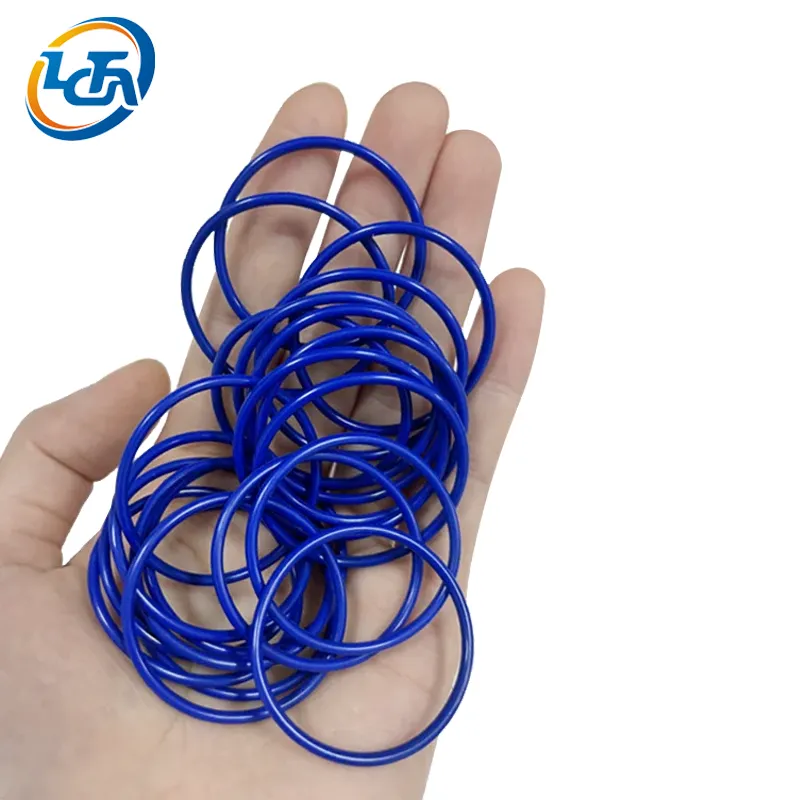
A superior rubber ring production process is defined by strict parameter control across every manufacturing stage, including raw material verification, compound mixing, precision molding, vulcanization, cryogenic deflashing, and final quality inspection. Procurement teams sourcing O-rings, X-rings, and custom sealing rings often observe that two suppliers quoting the same elastomer grade can deliver completely different field performance. The difference lies in process control and lot-to-lot repeatability rather than the engineering drawing. This guide outlines what a disciplined rubber ring production process entails and how global buyers can verify manufacturing capability through technical data.
Raw Material Quality Control and Compound Traceability
High-performance rubber sealing rings depend entirely on raw material consistency. A standardized production process verifies every incoming lot of raw elastomer against specified parameters, including polymer grade, density, and Mooney viscosity. Raw elastomers are compounded with curing agents, carbon black fillers, and plasticizers using automated weighing systems and documented recipes to prevent batch-to-batch variation. Uncured compound batches undergo mandatory rheometer testing to verify vulcanization kinetics prior to released molding. Maintaining complete lot traceability from raw polymer to finished O-ring ensures that dimensional tolerances and physical properties remain constant across production runs.
Precision Molding and Vulcanization Parameter Control
Rubber sealing rings are primarily produced through compression molding or high-pressure injection molding, followed by controlled thermal vulcanization. Compression molding utilizes pre-formed rubber blanks pressed into steel cavities, serving as an effective method for standard profiles and moderate quantities. Injection molding forces pre-heated compound into sealed, multi-cavity molds under elevated pressure, delivering superior dimensional consistency for complex cross-sections and high-volume orders. Cure time, platen temperature, and clamping pressure must be continuously monitored via automated sensors. Under-curing leaves rings soft and susceptible to high compression set, whereas over-curing causes thermal degradation, surface brittleness, and micro-cracking under pressure.
Cryogenic Deflashing and Surface Post-Processing
Following vulcanization, molded rubber rings carry thin flash along the tool parting line that must be thoroughly removed without damaging primary sealing surfaces. Micro-cuts or surface gouges along the cross-section create micro-leak paths that open under fluid pressure. Industrial post-processing employs automated cryogenic deflashing, tumbling frozen parts with polycarbonate media to remove parting line flash while maintaining seal integrity. Post-curing in secondary ovens stabilizes compression set properties and drives off residual volatile compounds, which is critical for dynamic hydraulic applications and food-grade sanitary systems.
Quality Control and Dimensional Verification Testing
Final quality inspection verifies that the production process operates within control limits. Critical dimensions—including inner diameter, cross-section thickness, and concentricity—are measured using calibrated optical sorting equipment and non-contact vision systems. Material durometer is confirmed using Shore A hardness testers, while sample lots undergo physical testing for tensile strength, elongation at break, and compression set according to ISO and ASTM standards. Manufacturing transparency requires shipping orders with complete inspection certificates (COA) and Statistical Process Control (SPC) data rather than generic packing slips.
How to Verify Process Quality When Sourcing Rubber Rings
To evaluate a rubber ring manufacturer effectively, request technical documentation before tooling release. Ask for material data sheets, compound formulation codes, and sample inspection reports showing actual measured dimensions against drawing tolerances. Inquire about vulcanization parameter logging, deflashing methods, and batch traceability protocols. While ISO 9001 certifications demonstrate quality management framework compliance, objective proof lies in lot-level measurement data, material test records, and process capability metrics (Cpk) provided with each shipment.
Application Example: Eliminating Dimension Drift in Hydraulic Valve X-Rings
A hydraulic valve manufacturer sourcing NBR X-rings experienced recurring assembly leakage due to dimensional drift between production lots from an unverified supplier. After transitioning to a manufacturer with documented process controls, the buyer required lot-level inspection reports mapping inner diameter, cross-section, and durometer across consecutive shipments. Automated optical inspection and tight vulcanization control maintained dimensions within a narrow band, allowing the manufacturer to increase assembly yields and reduce incoming inspection frequencies.
Frequently Asked Questions
What makes a rubber ring production process superior?
Superiority stems from continuous process monitoring and raw material traceability across every stage, including verified compounds, recorded vulcanization parameters, precise deflashing, and optical dimensional inspection.
How can I verify if a supplier maintains strict process control?
Request lot-level inspection certificates, raw material batch traceability logs, and rheometer test curves for previous orders. A supplier offering transparent measurement data demonstrates verifiable process control.
What is the most common quality defect in rubber sealing rings?
Dimensional variation between production lots is the most frequent defect, followed by parting line flash and surface cuts caused by manual trimming. Both issues result directly from inadequate mold parameter monitoring and improper deflashing methods.
Table of Contents
- Raw Material Quality Control and Compound Traceability
- Precision Molding and Vulcanization Parameter Control
- Cryogenic Deflashing and Surface Post-Processing
- Quality Control and Dimensional Verification Testing
- How to Verify Process Quality When Sourcing Rubber Rings
- Application Example: Eliminating Dimension Drift in Hydraulic Valve X-Rings
- Frequently Asked Questions


