 EN
EN

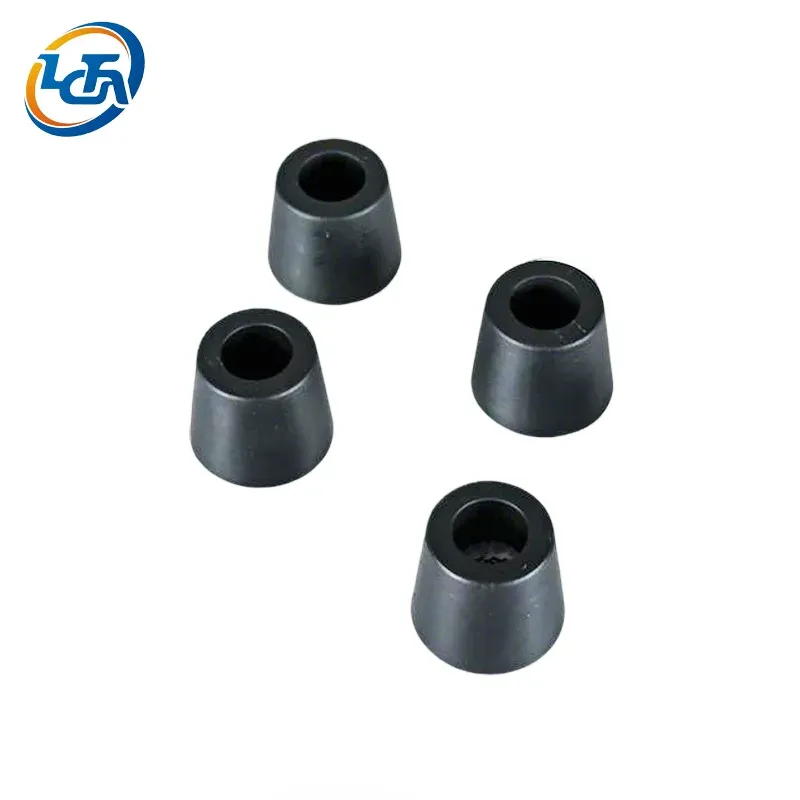
Yes, custom rubber molded parts for food tools are produced every day by experienced rubber manufacturers, and the key to success lies in three areas: food-grade material selection, mold design, and quality control. If you are sourcing grips, handles, seals, scrapers, or gaskets for kitchen utensils, baking equipment, or food processing tools, this guide walks through what a capable supplier should deliver and how to verify it.
What makes a rubber molded part suitable for food tools
A rubber molded part for food tools must do more than fit its metal or plastic counterpart. It needs to withstand repeated washing, hot water, mild acids from ingredients, and mechanical stress without degrading or transferring odor. Food-grade silicone is the most common choice because it resists temperatures from roughly -60 to 200 degrees Celsius, stays stable through dishwasher cycles, and does not release harmful substances under normal use. EPDM is a practical alternative for hot-water and steam exposure, while NBR is chosen when oil resistance matters more than heat. The material must also meet applicable food-contact regulations such as FDA 21 CFR in the United States or EU Regulation 1935/2004 for European markets. A reliable supplier should be able to state which standard a compound is formulated to meet before a single mold is cut.
How molded parts are produced for food-contact applications
Production typically follows a clear sequence. The compound is mixed first, with all ingredients selected for food-contact compliance; then the rubber is weighed and placed into a mold cavity; heat and pressure convert it into the final shape through vulcanization; and finally the part is trimmed, washed, and inspected. Compression molding suits simple geometries and low-to-medium volumes, while transfer and injection molding handle tighter tolerances and more complex contours. Because food tools often involve thin walls, sharp transitions, and smooth surfaces that resist bacterial buildup, the mold design must include correct draft angles, venting, and parting-line placement. Flash-free or clean-trimmed edges matter in food tools, since rough edges trap food residue and become hygiene risks.
Design considerations to discuss before production
Before tooling begins, share your operating conditions: maximum wash temperature, contact duration with food, exposure to oils or acidic ingredients, and the hardness you need, usually between 30 and 90 Shore A. Silicone parts for food tools commonly fall around 40 to 70 Shore A, balancing flexibility with durability. Surface finish is another decision point; a matte or textured finish reduces sticking and hides minor wear, while a smooth polished finish is easier to clean. Wall thickness should be uniform where possible to avoid sink marks and uneven curing, and undercuts need to be reviewed because they affect mold cost and whether the part can be ejected automatically. Ask the supplier for a material data sheet, a dimensional drawing review, and sample approval before committing to mass production.
Quality checks that protect food safety
A trustworthy supplier verifies more than dimensions. For food-tool rubber molded parts, inspection should cover visual defects such as flash, bubbles, and contamination; dimensional checks against the drawing; hardness testing to confirm the Shore A value; and compression set testing where long-term sealing or gripping force matters. For food-contact claims, the supplier should provide test documentation or a declaration of compliance for the specific compound. Batch traceability is important too: a clear lot number lets you trace a finished shipment back to its raw material batch if an issue appears downstream. These checks are standard practice for ISO 9001 certified rubber manufacturers, and you should ask to see the test records, not just a certificate.
Practical sourcing scenario: custom grips for a baking tool line
A kitchenware brand wanted a custom rubber molded part for a new line of silicone baking spatulas: a soft-touch grip overmolded onto a stainless steel handle. The operating requirement was dishwasher-safe performance at up to 90 degrees Celsius plus repeated contact with dough and oils. The supplier recommended a food-grade silicone compound at around 50 Shore A, designed the mold with a shallow undercut to lock the grip onto the handle, and ran initial samples to verify adhesion and heat stability. After three sample iterations to refine the parting line and remove a slight flash issue, the part passed the brand's dishwasher and food-contact tests, and mass production was released with a documented lot traceability system. This is a typical example of how material selection, mold engineering, and quality control combine to produce a compliant food-tool component.
Frequently asked questions
Can rubber molded parts for food tools be made in custom colors?
Yes. Colorants can be added to the compound, and many food-tool brands use color coding to distinguish sizes or product lines. Confirm that the chosen pigment is suitable for food-contact use.
How long does it take to produce a custom rubber molded part?
For a simple design, mold making typically takes two to four weeks and samples a further one to two weeks, depending on complexity and the supplier's workload. Request a timeline with sample and mass production milestones before tooling starts.
Do rubber molded parts for food tools require certification?
In most export markets, food-contact materials should meet regulations such as FDA 21 CFR or EU 1935/2004. Ask the supplier which standards their compound complies with and request supporting documentation before ordering.
If you are evaluating a supplier for custom rubber molded parts used in food tools, compare their material documentation, mold engineering capability, and quality records side by side. A supplier that can explain the compound, show the test data, and review your drawing for manufacturability is far more reliable than one that only quotes a price.


