 EN
EN

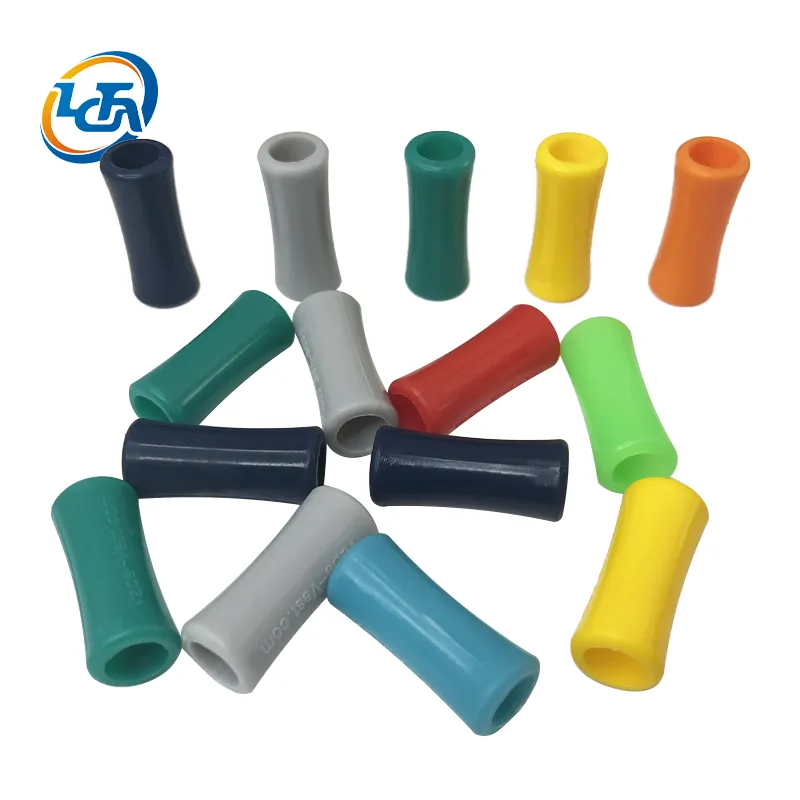
Industrial equipment and vehicles rely on numerous cables, wires, and hoses passing through metal panel openings. Without proper edge protection, vibration and movement cause these panels to cut through insulation, leading to short circuits, fluid leaks, and equipment failure. This is where heavy-duty rubber grommets become essential. Unlike standard snap-in bushings, heavy-duty rubber grommets are designed to withstand continuous mechanical stress, temperature extremes, and exposure to oil, fuel, and outdoor conditions. They serve as protective barriers that absorb vibration, seal against dust and moisture, and prevent metal edges from abrading wiring and tubing.
Key material options for demanding environments
The service life of a rubber grommet is determined primarily by its material composition. NBR rubber grommets offer excellent resistance to oils, fuels, and hydraulic fluids, making them the standard choice for engine compartments and hydraulic equipment. EPDM rubber grommets provide superior resistance to UV radiation, ozone, and weathering, which is why they are specified for outdoor electrical enclosures, solar panel wiring, and marine applications. FKM rubber grommets handle extreme temperatures up to 200 degrees Celsius and resist aggressive chemicals, meeting the requirements of aerospace and high-temperature industrial processing. For heavy-duty applications, hardness typically ranges from 30 to 90 Shore A, with higher durometer values providing greater resistance to extrusion under pressure while lower values offer better vibration damping. A supplier with ISO 9001 certification and in-house rubber compounding capability can adjust the formulation to match specific application demands, from cold flexibility to hot oil resistance.
Automotive and commercial vehicle applications
Heavy trucks, construction equipment, and agricultural machinery all depend on rubber grommets to protect electrical harnesses passing through firewalls, chassis frames, and engine bulkheads. A typical Class 8 truck contains over 100 individual grommet locations, from the cab wiring entry to sensor cable routing along the frame rail. In these applications, grommets must withstand continuous vibration from diesel engines, temperature swings from sub-zero cold starts to sustained highway operation, and exposure to road salt, diesel fuel, and hydraulic oil spray. Engineers evaluate grommets for tear strength, compression set after thermal aging, and resistance to automotive fluids per ASTM D471 immersion testing. Silicone grommets are sometimes chosen for high-temperature sensor wiring near exhaust components, while NBR remains the workhorse for general under-hood cable protection. A grommet that fails in a commercial vehicle application can cause a wiring short that disables critical safety systems, so material selection and dimensional precision are treated as safety-critical design decisions rather than commodity choices.
Electrical enclosure and control panel protection
Industrial control panels, outdoor telecommunications cabinets, and power distribution boxes all route cables through metal enclosure walls. Heavy-duty rubber grommets at these entry points serve multiple functions: they protect cable jackets from sharp cut edges, provide strain relief at the entry point, and maintain the enclosure IP rating against dust and water ingress. For outdoor telecom installations, EPDM grommets are preferred for their ozone resistance and ability to maintain flexibility at low temperatures. In food processing facilities, washdown-rated enclosures often require grommets that resist hot water, steam, and cleaning chemicals. The grommet must fit precisely to the panel cutout dimension; an undersized grommet can pull out during cable movement, while an oversized one leaves gaps that compromise the enclosure seal. For critical installations such as data center power distribution, grommet specifications often include flammability ratings and smoke density limits per UL 94 standards.
Agricultural and construction equipment
Tractors, combines, excavators, and drilling rigs operate in some of the harshest conditions for rubber components. Mud, crop debris, mineral dust, and constant shock loading punish every sealing component on the machine. Rubber grommets used on these machines need high tear strength to resist being torn when cables are pulled during equipment articulation. EPDM is commonly specified for exterior cable routing because it withstands sunlight and weather without cracking, while NBR is used where hydraulic oil exposure is unavoidable. In a practical sourcing scenario, an agricultural equipment manufacturer replacing standard chassis grommets with heavy-duty EPDM parts rated for 70 Shore A observed a measurable reduction in wiring harness failures during field testing over rough terrain. The grommets maintained their grip in the panel opening and did not harden or crack after one full season of outdoor exposure. This type of field-proven performance is what distinguishes a heavy-duty grommet from a standard hardware-store bushing.
Marine and offshore applications
Saltwater, constant humidity, and UV exposure make marine environments uniquely destructive to rubber parts. Heavy-duty rubber grommets used on boats, offshore platforms, and dock equipment must resist saltwater corrosion of the metal panel while protecting cables and hoses passing through bulkheads and deck penetrations. EPDM is the preferred material for above-deck applications due to its excellent weathering properties, while FKM may be specified for engine room penetrations where temperatures exceed 150 degrees Celsius. A critical specification for marine grommets is water absorption rate; materials with excessive water uptake swell and lose their retention force in the panel opening. For submerged or splash-zone applications, grommets are often part of a cable transit system that includes compression seals rated to specific water pressure depths.
How to evaluate a heavy-duty rubber grommet supplier
When sourcing heavy-duty rubber grommets, buyers should evaluate suppliers on more than unit price. Ask for material test reports covering tensile strength, elongation at break, compression set after 70 hours at 100 degrees Celsius, and fluid resistance per relevant ASTM or ISO standards. Confirm that the supplier can provide material certifications such as CE, RoHS, and ISO 9001 that verify consistent quality management. Verify whether the supplier has in-house rubber compounding and mold design capability, as these directly affect the lead time and cost of custom grommet solutions. A supplier with over 16 years of manufacturing experience and tens of thousands of existing molds can often match or adapt an existing design to save tooling costs. Request pre-production samples and conduct your own fit and function testing in the actual application environment before committing to production quantities. Low minimum order quantities and free sample availability are practical signs of a supplier willing to prove quality before scaling up.
What is the difference between a grommet and a bushing?
A grommet is specifically designed to protect cables, wires, or hoses passing through a panel opening, providing both edge protection and often environmental sealing. A bushing typically serves as a bearing surface or spacer for rotating shafts or moving parts. While the terms are sometimes used interchangeably in catalogs, grommets are selected for their ability to absorb vibration and seal against contaminants at cable entry points.
Can rubber grommets be custom made to fit non-standard hole sizes?
Yes, custom rubber grommets can be manufactured to match any panel thickness and cutout dimension. The process involves creating a custom mold based on the required groove width, panel thickness, and inner diameter. Suppliers with in-house mold design teams and extensive existing mold libraries can often adapt a similar design, reducing lead time and tooling costs. The key parameters to specify are the panel hole diameter, panel thickness, cable or hose outer diameter, and the expected environmental exposure conditions.
How do I choose between NBR, EPDM, and FKM for my grommet application?
Start by identifying the dominant environmental stress: if it is oil and fuel contact, choose NBR; if it is outdoor weathering, UV, and ozone, choose EPDM; if it is high temperature above 150 degrees Celsius or aggressive chemical exposure, choose FKM. Consider secondary factors such as low-temperature flexibility and cost. NBR offers the lowest cost but poor weathering, EPDM provides a balance of weather resistance and cost, and FKM delivers maximum chemical and temperature resistance at a higher price. A qualified supplier can recommend a specific compound formulation that optimizes performance for your exact conditions.


