EN
EN

Customized Material Formulation Depending on Environmental Stress
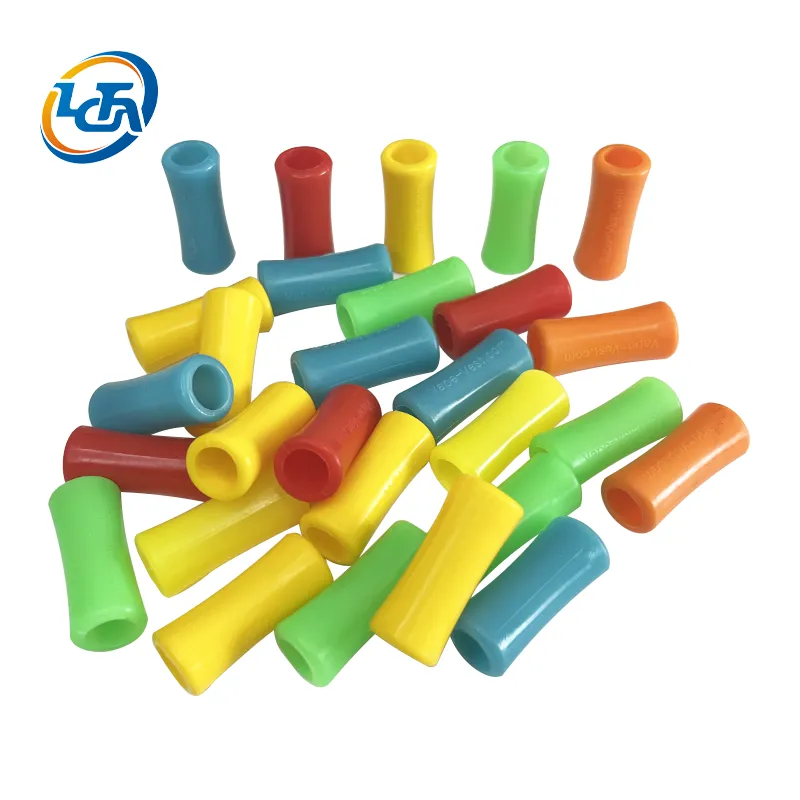
The most important part of our service is material science. At Longcheng, we do not choose a random rubber; we formulate a compound specifically for your application. Our experience has told us that a rubber bushing functioning at sub-zero Arctic conditions will demand different characteristics compared to a bushing that will work at high temperatures in an engine compartment. Depending on your customization, you choose Natural Rubber (NR) for a bushing that needs high elasticity, Nitrile (NBR) for a bushing that needs to resist oil, EPDM for weather conditions, or Silicone for extreme temperature conditions. We can control chemical additives to provide enhanced chemically and/or thermally flame retardant, UV resistant, and/or anti-aging properties to ensure that the bushing will not crack or deteriorate in service before the rubber bushing has served its useful life under the nominated conditions.
Accurate Geometric Design and Prototype Creation
For cutting-edge new hardware, conventional dimensions typically do not work. Our custom services provide you the freedom to specify anything you wish for the inner diameter (ID) and outer diameter (OD) and the length. Form and material customization is also possible: you may specify a flange, a taper, or an eccentric configuration. Using CAD and 3D printing for rapid prototyping means we can validate the fit of a rubber bushing in a housing prior to a production run. This DFM style approach minimizes errors and optimizes fit within your assembly.
Bonded Bushings and Other Multi-Material Devices
For many high-performance uses 'bonded' bushings are required, where the rubber is chemically bonded (vulcanized) to a metal sleeve (which can be steel, aluminum, or brass). Our approach is to choose both the metal substrate and the specific bonding agent that ensures that rubber bonded to metal does not delaminate under high shear forces. For example, we have had instances where customers wanted a rubber bushing with a particular knurled inner sleeve for anti-rotation, or a double bonded design for optimum isolation of vibrations. The integration of metal and rubber is relied on the profound knowledge of vulcanization and meticulous control of temperatures and pressures to achieve a strong and permanent bond.
Adjusted Shore Hardness for Vibration and Noise Control
Oftentimes, the primary purpose of a rubber bushing is to reduce vibrations or noise (NVH - Noise, Vibration, Harshness). Customization is a mean to achieve 'Shore Hardness' (Durometer) of the rubber. lower rubber (40-50 Shore A) gives very good isolation of vibrations, but can be prone to insufficient load-bearing, while upper rubber (70-80 Shore A) gives much better load-bearing support. We conduct dynamic stiffness testing on laboratory rubber to support our selection of rubber, aiming to identify the point of optimum to meet your specific load requirements, thereby ensuring that the bushing will produce the required amount of deflection for unobstructed operation of the isolation.
Custom Surface Treatments and Finishing Options
To aid the installation process and to increase the product's life cycle, several surface treatments can be applied. We do custom lubrication coatings, like PTFE or Molybdenum Disulphide, to reduce friction during the installation via press fit and to avoid the component “squeaking” during operation. Additionally, to protect against harsh chemicals and salt spray, the metal parts of the rubber bushing may be subjected to one of the following treatments: Zinc Plating, Powder Coating, or Electrophoresis (E-coating). Such protective coatings are essential for maritime and agricultural applications where corrosion is the prime reason for component failure.
Rigorous Quality Testing and Performance Validation
The trust in one’s manufacturing is earned through the verification. Custom services at Longcheng do not stop at the assembly line but go the additional mile to the verifications lab. We cater to customized testing protocols to comply with legal industry criteria i.e. standards such as ASTM or ISO. Be it for a fatigue test to mimic 1,000,000 compression cycles, a salt spray test for corrosion resistance, or a compression set test to ascertain the recovery of the rubber bushing after at load, we provide documented evidence. Such transparency gives one peace of mind in that the custom parts are indeed one of a kind and are robust enough for long-term operational safety.
Table of Contents
- Customized Material Formulation Depending on Environmental Stress
- Accurate Geometric Design and Prototype Creation
- Bonded Bushings and Other Multi-Material Devices
- Adjusted Shore Hardness for Vibration and Noise Control
- Custom Surface Treatments and Finishing Options
- Rigorous Quality Testing and Performance Validation