EN
EN

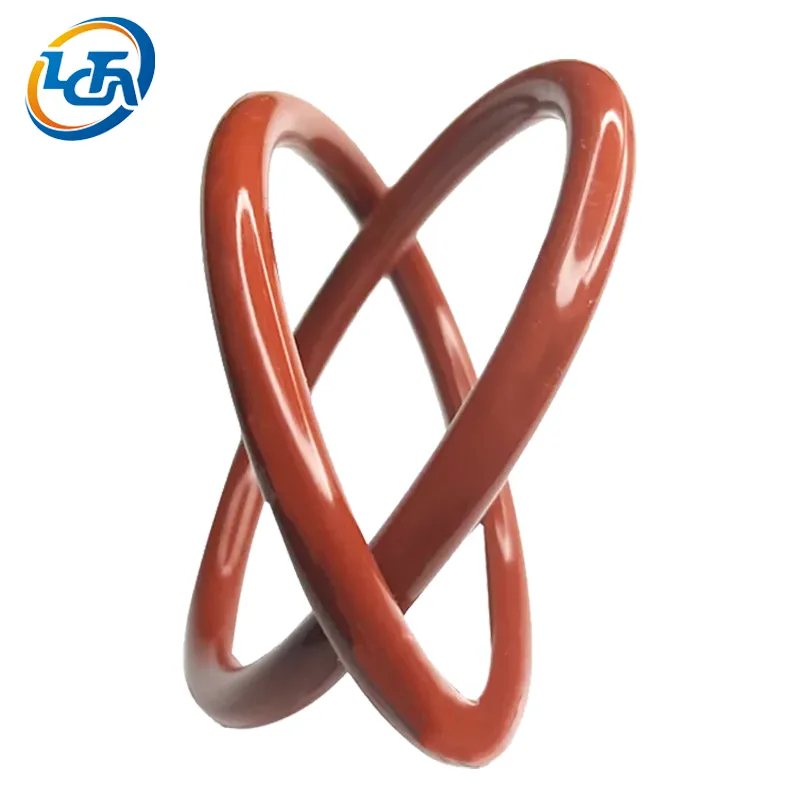
In terms of impact, choosing an oring for a specific medical device application is a critical task. In industrial applications, for example, a leak might simply mean an unsightly spill on the floor or a machine that has temporarily stopped operating. In the case of medical applications, however, a leak could endanger a patient’s life, compromise the integrity of surrounding sterile areas, or lead to the failure of a medical device that is designed to save lives. Longcheng has, over the years, worked with manufacturers of medical devices to understand the requirements of these high-risk applications. Our experience includes, among other devices, blood dialysis machines, surgical devices, and devices used for respiratory care. These experiences have shown us the impact of a small component like an oring on the overall success of a complex system. In this guide, we will summarize the important elements to help you with your decision, and we will merge the technical aspects with field experience for better understanding.
Biocompatibility and Regulatory Compliance Come First
The first and most non-negotiable step when considering an oring for the medical field is the biocompatibility of the material. In most cases, the medical field requires materials to pass USP Class VI or ISO 10993. These certifications mean the elastomer will not leach any toxic material when in contact with human tissue or fluid. Based on the FDA and medical-grade standards, Longcheng will only work with raw materials that meet these standards. For example, we recently helped a client design a handheld diagnostic tool. They wanted to use standard nitrile, but we found that only a high-purity, USP Class VI silicone oring would meet the safety requirements and would not cause skin irritation or leach materials chemically during prolonged use.
Evaporation is any chemical process in which molecules become a gas. In simpler terms, evaporation means losing molecules in the process. Evaporation from a liquid causes the liquid to shrink in volume over time. Many people believe that a liquid looks the same liquid every day, but the liquid is actually losing molecules as time passes. Even the moisture from our skin evaporates, but we don't notice a change when it is lost.
Choosing the Right Elastomer by Chemical Resistance
Devices in the medical field regularly come in contact with disinfectants, cleaning agents, and bodily fluids. Selecting an oring material that withstands these chemicals and will not break down is essential. Typical materials used are Silicone (VMQ), Ethylene Propylene Diene Monomer (EPDM), and Fluorocarbon (FKM). Silicone is commonly preferred for its thermal stability and flexibility; however, FKM orings will be required for devices that encounter aggressive lipids or oils as they have much better chemical resistance. In one of our projects with endoscopic cleaning devices, we observed that standard EPDM seals were swelling with some specific enzymatic cleaners. By using a custom designed FKM oring, we were able to extend the maintenance interval of the device by 300%, demonstrating that chemical compatibility is the basis of reliability.
Considerations for Sterilization Practices and Thermal stability
In regard to the longevity of an O-ring, the sterilization method used for the O-ring will make a significant difference. Irrespective of whether the sterilization method used is Autoclave (steam) or Gamma Radiation or Ethylene Oxide (EtO) the effect will be significant. For example, steam means high heat and moisture. Thus, some types of elastomers will become hard and may even crack or break. If your device is going to be repeatedly autoclaved, then it is necessary to use either high temp EPDM or a specialty Silicone o-ring. In contrast, some polymers may become brittle because of gamma radiation. It is common for us to recommend our clients to model their sterilization processes in the prototyping phase. One of our clients in the respiratory health space, uses our specialty EPDM o-ring because even after dozens of high-pressure steam cycles, it retains compression set and keeps the device airtight throughout the whole life cycle of the device.
Compression Set and Mechanical Requirements
An O-ring's sealing effectiveness will be reliant on a compression set. “Compression set” refers to your elastomer's inability to revert back to their original shape once a compression has occurred. Medical pumps and fluid delivery systems that incorporate O-rings demonstrate this scenario. O-rings mounted on piston heads that are poorly designed will achieve a set state and become “flattened,” causing leaks. Friction needs to be factored in as well. Stiction (static + friction) describes apathy of a moving element - like a syringe plunger or a valve - to start moving and cause jerkiness. At Longcheng, we tend to propose internal lubrication or PTFE coating on the O-ring to facilitate smooth mechanics. A case in point is the calibration problem we solved for a manufacturer of precision dosing pumps. Flow stability and dosage accuracy were improved by replacing their high-friction seals with a low compression set coated O-ring.
Creating for Specific Grooves and Fitments
When it comes to medical technology, precision and accuracy reach the micron-level. Regardless of the subsequent quality of the oring, it is guaranteed to fail if the design of the groove is not conducted properly. Designers must consider “gland fill, given that the oring must not be given too much space to expand if it is compressed or heated. If the oring occupies more than 90% of the groove volume, thermal expansion may result in the seal being extruded too and result in failure. It is for this reason that we guide clients with precision engineering to assist in the oring dimensions with respect to the clients hardware. With respect to Longcheng’s high-level molding technology, we achieve oring part production at this level of accuracy that is required for microfluid applications, where an error of only 0.05mm will result in total failure of the designed fluid path.
Keeping Things Clean and Avoiding Contamination
Medical-grade products should not have flash, mold release agents, and other foreign matter, including dirt or oil. An oring that goes into an implantable device or a fluid path must be manufactured in a cleanroom. Longcheng employs cleanroom-standard post-processing and specialized washing cycles for every oring we send to our medical customers to be “medically clean.” We once went to a competitor's audit of a seal for a client, and we discovered microscopic matter that was trapped in the surface pores of the o-ring. This matter could have caused an inflammatory response to a patient. This particular instance illustrates the value of a manufacturer with medical-grade quality control that is as stringent as the medical materials selected.
Documented Testing and Future Proofing
The selection process is not complete without testing and traceability. In medicine, if it isn't documented, it didn't happen. So, for every oring you should ask your supplier to provide a Certificate of Conformance (CoC) and batch traceability. At Longcheng, we assist our clients during the validation process by providing data on tensile strength, elongation, and hardness (Shore A). For the surgical robot project, we conducted accelerated aging tests on the oring components to assess their performance at the 5-year mark. This amount of data and transparency gives you the level of “Trustworthiness” for FDA and CE marking submissions.
Table of Contents
- Biocompatibility and Regulatory Compliance Come First
- Choosing the Right Elastomer by Chemical Resistance
- Considerations for Sterilization Practices and Thermal stability
- Compression Set and Mechanical Requirements
- Creating for Specific Grooves and Fitments
- Keeping Things Clean and Avoiding Contamination
- Documented Testing and Future Proofing